Alpe d'Huez Ski Season: Dates, Snow and Best Time to Go
Alpe d'Huez ski season dates, altitude and snow-sure sectors, plus early, mid and late-season trade-offs and lift-pass prices for 2026-27.
On this page
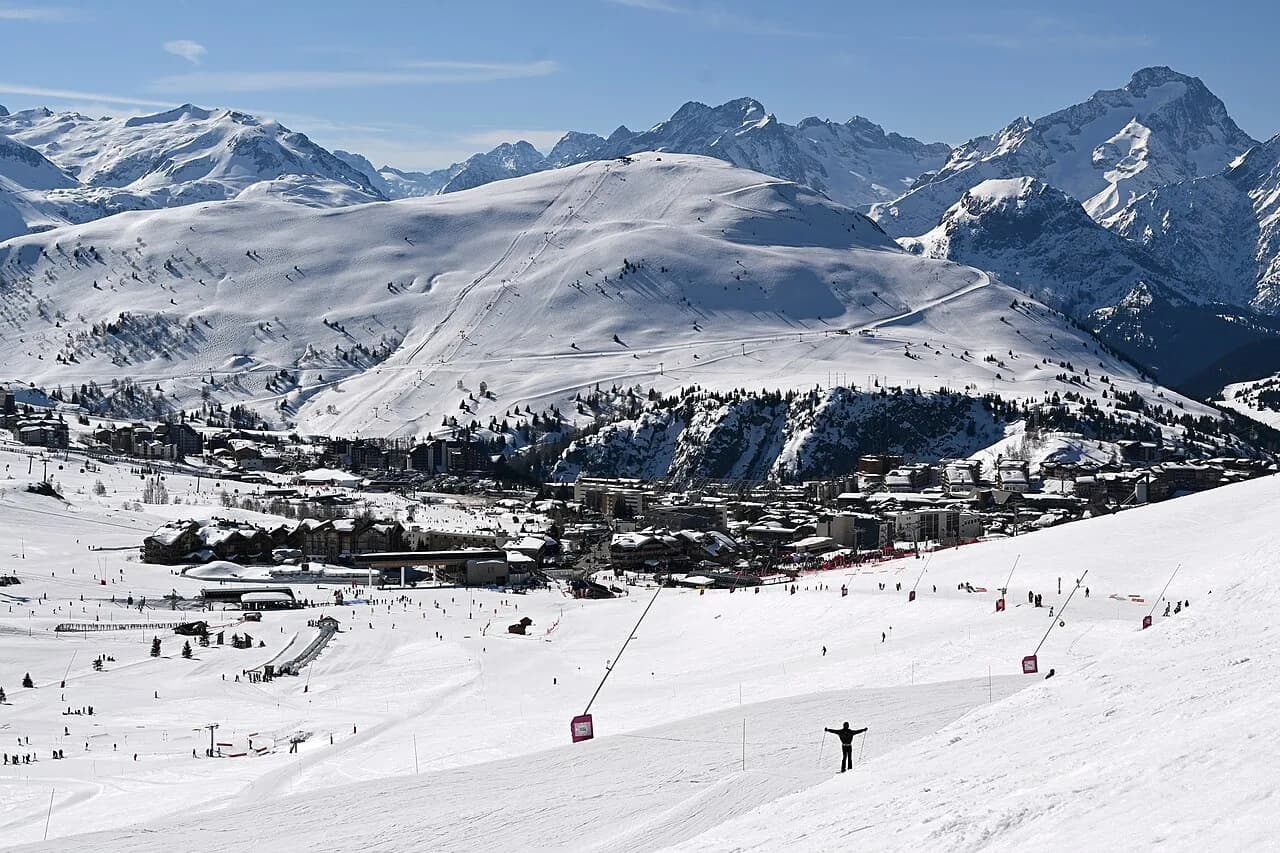
Alpe d'Huez plans its winter around a long window, from the first weekend of December to the final week of April, and that length is the single most useful fact when you are choosing dates. The resort publishes 250 km of slopes spread between 1,250 m and 3,330 m, which gives you a genuine high-altitude option on the Pic Blanc glacier and a lot of lower, south-facing terrain below it. If you are weighing this window against a shorter one, the Avoriaz ski season dates show how a neighbouring French resort's calendar is structured. This guide separates the published season from day-to-day lift running, so you know what to book and what to confirm closer to arrival.
The season at a glance: planned winter dates and what they cover
The winter 2026-27 season is scheduled to open on 5 December 2026 and close on 25 April 2027, and those dates apply across the Alpe d'Huez lift area rather than to a single sector.
A published opening date is a plan, not a promise of every lift turning on day one. Early and late in the window, wind, snow cover and maintenance can leave parts of the network closed, so check the live lift status page in the days before you travel rather than expecting the whole area to be running.
If you want the deeper context on how the sectors fit together, the Alpe d'Huez Skiing Guide covers the resort's layout, pass products and booking decisions in more detail.
How high the skiing goes: 1,250 m to 3,330 m and why that matters
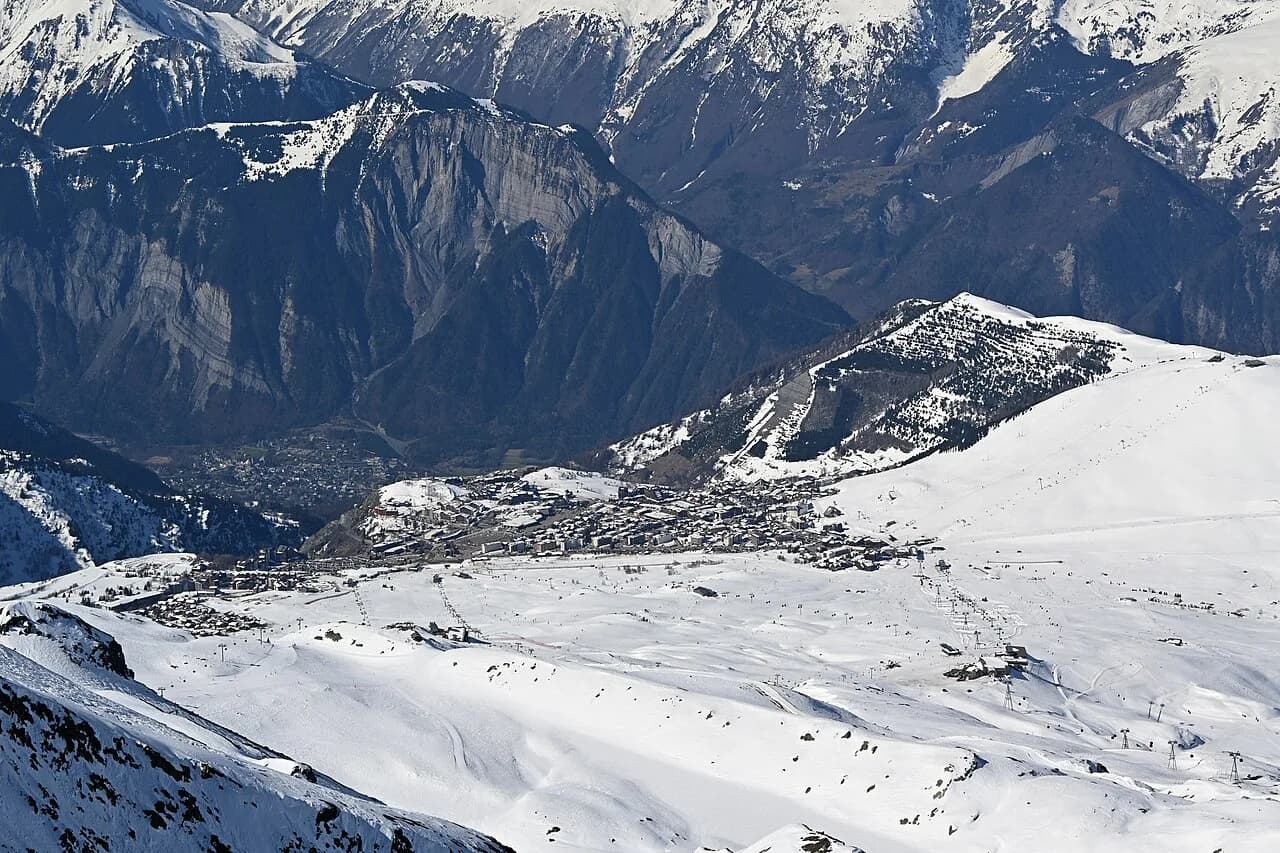
The vertical range is the key to reading this resort's season. The village base sits around 1,250 m while the top of Pic Blanc reaches 3,330 m, so a single lift pass covers everything from sheltered beginner meadows to glacier runs that hold snow long after the lower slopes have softened.
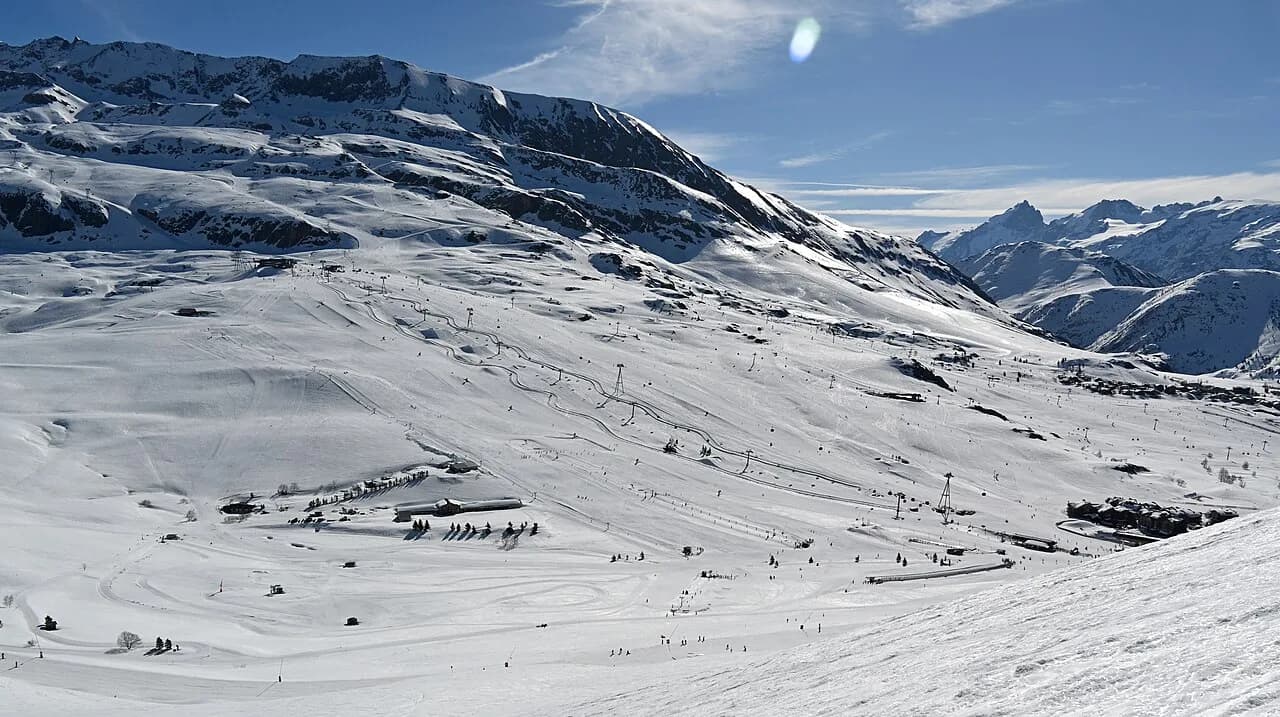
Think of it as two seasons in one resort. The top third stays wintery from opening week to closing week, while the lower, sunnier terrain comes into its own in midwinter and fades fastest in April. Plan your days around that split rather than treating the whole area as one uniform snowpack.
Orientation matters as much as altitude. Much of Alpe d'Huez faces south, which makes it a sunny, pleasant place to ski but quicker to soften; the northerly pitches and the glacier hold their snow longer when spring arrives.
Snow surety sector by sector: glacier, north-facing and south-facing slopes
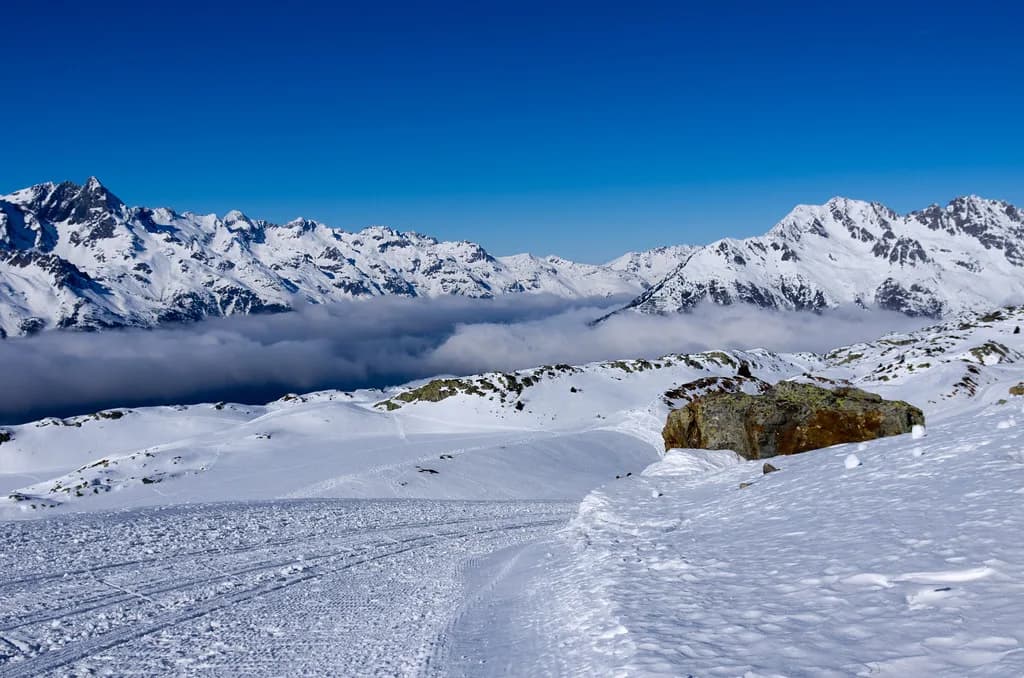
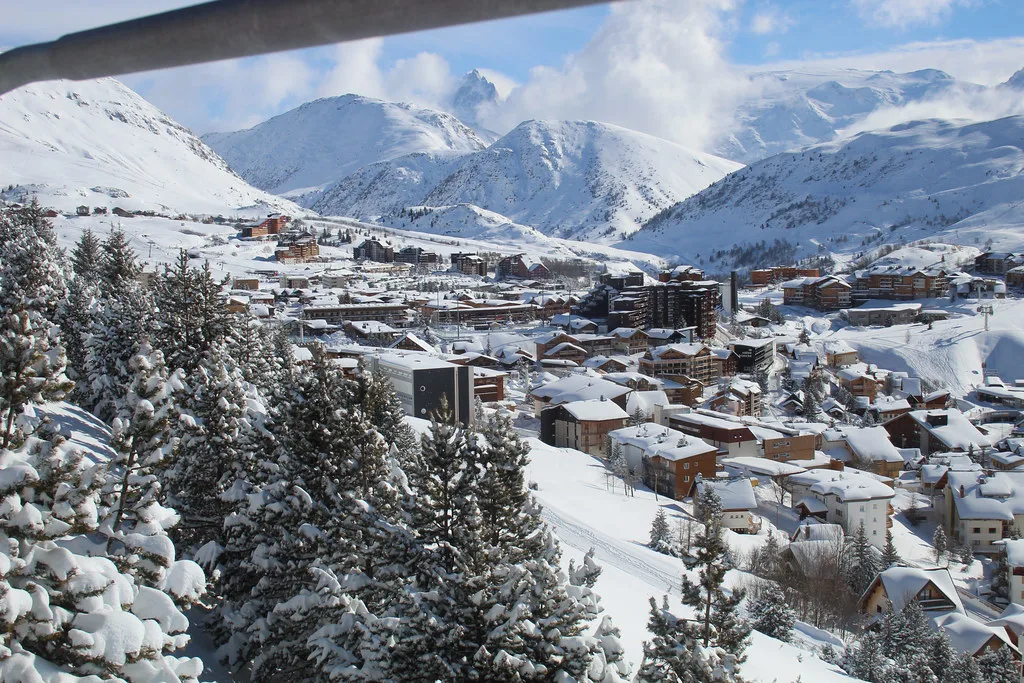
For the most reliable cover, aim for the glacier and the highest lifts above the main resort. This is where late-season skiing survives and where early-season conditions are most dependable when the lower slopes are still thin.
The outlying villages connected by the same pass give you alternatives when the main bowl is busy or the sun is doing damage. Vaujany and Oz 3300 sit at the northern end of the network, while Auris-en-Oisans and Villard-Reculas spread access to the southern and western edges, and Allemond links in from below.
Printed and digital maps make the sector logic much clearer than any written description, so the Alpe d Huez piste map guide is worth reading before you pick accommodation and a daily plan.
Early season: what the 5 December opening really delivers
The first fortnight of the season is a gamble with a payoff. From 5 to 18 December 2026 an adult day pass is 58.00 EUR, against 68.00 EUR in the core high season, so early skiing is both cheaper and quieter.
What you cannot count on is coverage across the whole 250 km. In early December the high-altitude terrain and the glacier are the sensible targets, and you should expect some lower runs and connecting links to be limited until the base builds, so use the early trip as a chance to ski the upper mountain rather than to tour every sector.
November is not part of the resort season. Snow can fall, but pre-opening skiing generally means touring on your own skis or splitboard, and is entirely weather-dependent rather than a lift-served product.
Christmas and New Year: the case for booking now
The festive weeks fall inside the high-season pricing band that runs from 19 December 2026 to 9 April 2027, so expect the full adult day rate of 68.00 EUR and no early-season discount.
What you get in return is the most dependable snow base of the year combined with the resort's busiest period. Book accommodation, lessons and hire well ahead for these dates, because the village fills and the best-positioned apartments near the main lifts go first.
The practical case for Christmas is about certainty rather than value. If your priority is skiing the whole network, including lower runs and links between villages, late December is far more likely to deliver it than opening week.
January and February: best snow base, busiest weeks
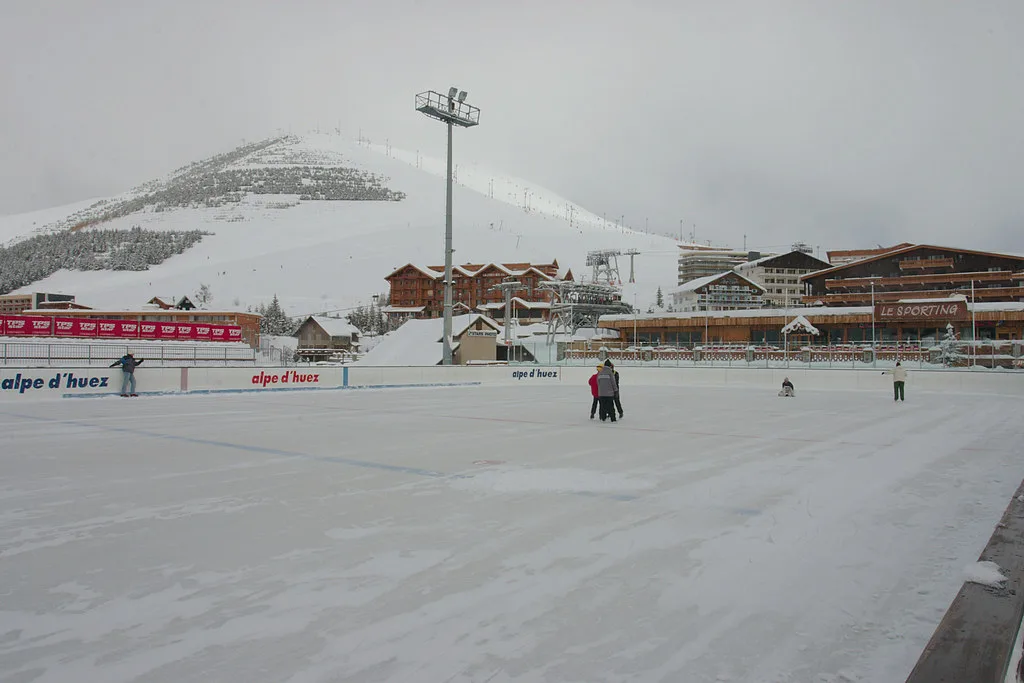
January offers the best balance of the winter: a settled snowpack, quieter slopes outside the first week and high-season prices that are at least predictable. It is the month to book if you want the full area open without half-term crowds.
February is the busiest stretch, and the resort's own advice points to late February as the sweet spot for snow depth and milder temperatures, with the caveat that much of the month is school half-term.
If you ski in February, choose your sector deliberately. Head to Vaujany and Oz 3300 for quieter access points on busy mornings, and save the glacier for the clearest days when the upper lifts are most likely to run.
Late season through 25 April: get up early, stay high
The final stretch runs to 25 April 2027, and from 10 to 25 April 2027 the adult day pass drops to 54.50 EUR, the cheapest daytime rate of the winter.
Late-season tactics at a south-facing resort are different from a north-facing one. Get out for first lift, ski the high glacier terrain while it is still firm, and take a long lunch when the lower slopes turn to slush, then finish the day back up top.
Spring snow also rewards flexibility: a warm, sunny week can transform conditions overnight, so treat the published closing date as the end of lift-served operations rather than a guarantee of good snow on every run.
Summer skiing and whether it still works
Alpe d'Huez has long maintained summer lift access thanks to the glacier, and the summer lift season is listed as running from 27 June to 30 August, though fewer lifts run than in winter.
Treat summer skiing as a bonus for strong skiers rather than a family holiday format. The terrain available is a fraction of the winter network, conditions vary with the weather, and summer lift hours are published separately from winter ones.
For the rest of the family, the summer lift system is really about hiking and mountain biking. If you are travelling in July or August with mixed ambitions, base your plans on the walking and riding rather than on skiing.
When to go: matching the season to your ability
Beginners and early intermediates are best served from mid-January onward, when the lower nursery slopes around the village have proper cover and the resort's gentle terrain is fully open. Arriving in opening week is a gamble for a first-timer.
Confident intermediates should aim for January or March. Both give you the run of the linked villages without the February crush, and March often combines a deep base with longer, sunnier days.
Advanced skiers chasing steep, high terrain should target February or early March for the glacier and the tougher runs off the top, and late April for a spring-snow trip with a lighter lift-pass bill. If your group splits across these levels, the ski Pass page explains how coverage and collection work when different people start on different days.
Lift passes for each season window: full, early and late rates
Prices are structured around three date bands. In the 5 to 18 December 2026 window an adult day pass is 58.00 EUR; from 19 December 2026 to 9 April 2027 it is 68.00 EUR; and from 10 to 25 April 2027 it is 54.50 EUR.
Multi-day passes reward staying put. A six-day adult pass costs 336.50 EUR, which works out cheaper per day than buying single days, and the average daily rate keeps falling the longer you ski.
Students should note that the student rate only runs from one to four days. From five days onward the adult pass becomes the better buy, so a week-long student trip should simply take the adult product.
A few operational details catch people out. A rechargeable pass card is needed, costing a small supplement if you do not already hold one, and children under five and seniors aged 72 and over ski very cheaply but still require a personal card with proof of age and a photo.
Booking direct also buys flexibility: passes can be cancelled free of charge up to seven days before your first ski day, which matters when you are booking months ahead around a weather-dependent early or late trip.
Where to stay to shorten the first chair
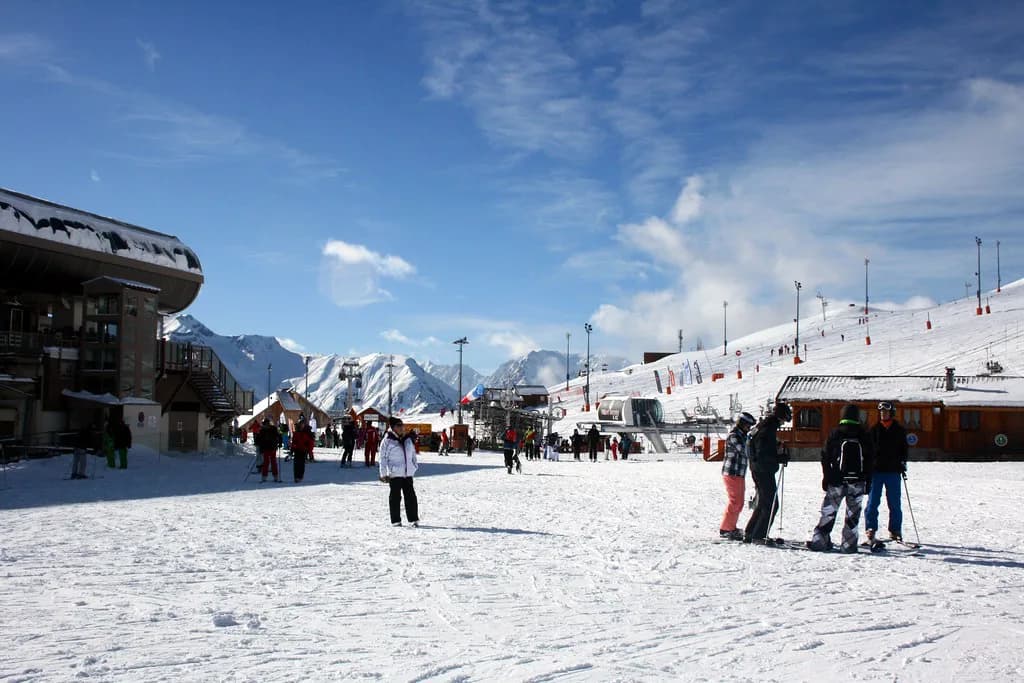
Where you sleep shapes your ski day more than any other booking. Staying in Alpe d'Huez village puts you closest to the main lift base and the largest choice of shops and restaurants, at the cost of higher prices and more traffic on peak Saturdays.
The satellite villages offer a different trade. Vaujany and Oz 3300 give quick access to the northern high terrain, Auris-en-Oisans and Villard-Reculas suit quieter stays, and Allemond is the lowest and least snow-sure base but connects into the network by lift.
For groups mixing abilities, base near the beginner zone and accept a short lift ride to the steep terrain. It is usually better than splitting the group across two valleys for a week.
Book-early checklist: passes, lessons, hire and cancellations
Sort your lift pass before you travel so it is loaded and ready. Online ordering lets you collect from automated points across Alpe d'Huez, Allemond, Vaujany, Oz 3300, Auris-en-Oisans and Villard-Reculas, or have the pass posted within mainland France with roughly ten days allowed.
Book ski school and equipment hire for the same dates as your pass, and do it early for Christmas, New Year and February half-term. The Alpe d Huez Ski Lessons page sets out course formats and what you need to confirm at booking.
Finally, decide on insurance at the point of purchase. Cover can be added to day and multi-day passes, which is worth considering for a late-April trip when soft snow and long days raise the risk of a tweaked knee.
Plan Your Trip Around the Right Week
Alpe d'Huez rewards matching your dates to your ability and budget rather than simply chasing the deepest snow. Opening fortnight is cheap and quiet but high-altitude only; January and March give the most complete experience; late April is the value play for strong skiers who start early and stay high.
Lock in passes, lessons and accommodation for the Peak weeks first, and leave the shoulder-season trips flexible enough to shift if conditions turn. That combination gets you the best of a long, varied season without paying high-season rates for terrain you cannot use.
Frequently Asked Questions
When does the Alpe d'Huez ski season start and end?
The winter 2026-27 season is scheduled from 5 December 2026 to 25 April 2027 across the Alpe d'Huez lift area. Opening and closing dates are plans rather than guarantees that every lift will run on those days, so check live lift status before you travel, particularly in early December and late April.
Can you ski in Alpe d'Huez in November?
November is not part of the resort's lift-served season. Snow can fall, but any skiing then generally means touring on your own skis or splitboard and depends entirely on the weather. Book from opening week onward if you want lifts and groomed runs.
Is late April skiing possible in Alpe d'Huez?
Yes, the season is scheduled to run to 25 April 2027, and the final weeks carry the lowest adult day rate of the winter. Much of the resort faces south, so ski the high glacier terrain early in the day and expect lower runs to soften quickly in the afternoon sun.
How snow sure is Alpe d'Huez?
Skiing spans roughly 1,250 m to 3,330 m, with the Pic Blanc glacier and high lifts holding snow throughout the winter. The lower, south-facing slopes are the first to suffer in mild spells and in spring, so snow surety depends heavily on which sector you ski.
Where can you ski with an Alpe d'Huez lift pass?
One pass covers the whole connected area, with access from Alpe d'Huez, Auris-en-Oisans, Oz 3300, Vaujany and Villard-Reculas across 250 km of slopes. That makes it easy to change sector and scenery during a longer stay without buying anything extra.
Do you need a lift pass card in Alpe d'Huez?
Yes. A rechargeable pass card is required to get through the lift gates, and you can add one to your order if you do not already hold a compatible card. Children under five and seniors aged 72 and over still need a personal card, with proof of age and a photo.
Is a multi-day pass better value than single days?
Generally yes. The average daily rate falls the longer you ski, so a six-day pass costs less per day than six separate one-day passes. Students should note that the student rate only applies for one to four days; from five days the adult pass is the better option.
Sources
Useful notes for your next ski trip
Optional updates to our Alpine resort guides.
You might also like
Continue reading
More guides you'll find useful