Alpe d'Huez Ski Lessons: ESF Group, Private & ESI Options
Compare ESF group and private ski lessons in Alpe d'Huez: published prices, timings, meeting points and the smaller ESI school, so you book the right format.
On this page
Booking lessons early does more than improve your skiing: in Alpe d'Huez it decides where your mornings start, which lift pass you should hold and how the rest of the group spends the day. The resort has two main ski schools, the large ESF operation and the smaller family-run ESI, and they suit different expectations. ESF publishes detailed timetables, prices and meeting points; ESI keeps things simpler and more personal.
This guide works through the formats, the seasonal pricing bands and the scheduling quirks that catch people out, such as the mid-season afternoon closures at the Grandes Rousses meeting point. It also explains the lift-pass logic ESF recommends by level, so you do not buy a full-area pass on day one for a beginner. Rates quoted here are the school's published 'from' figures and should be confirmed against current listings before you pay.
How Alpe d'Huez Is Laid Out for Lessons
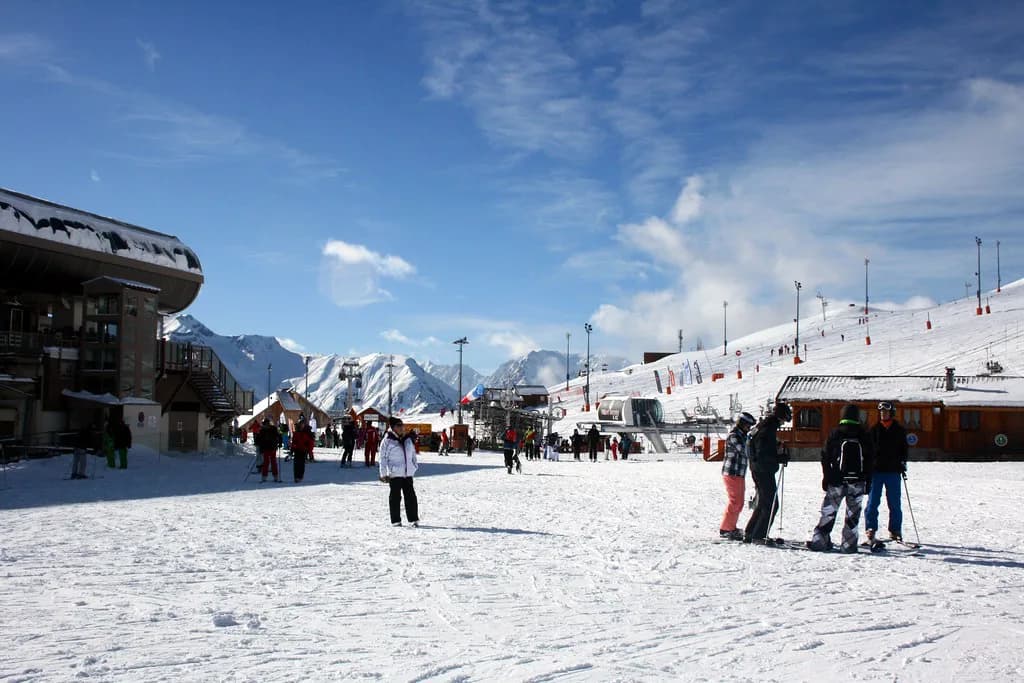
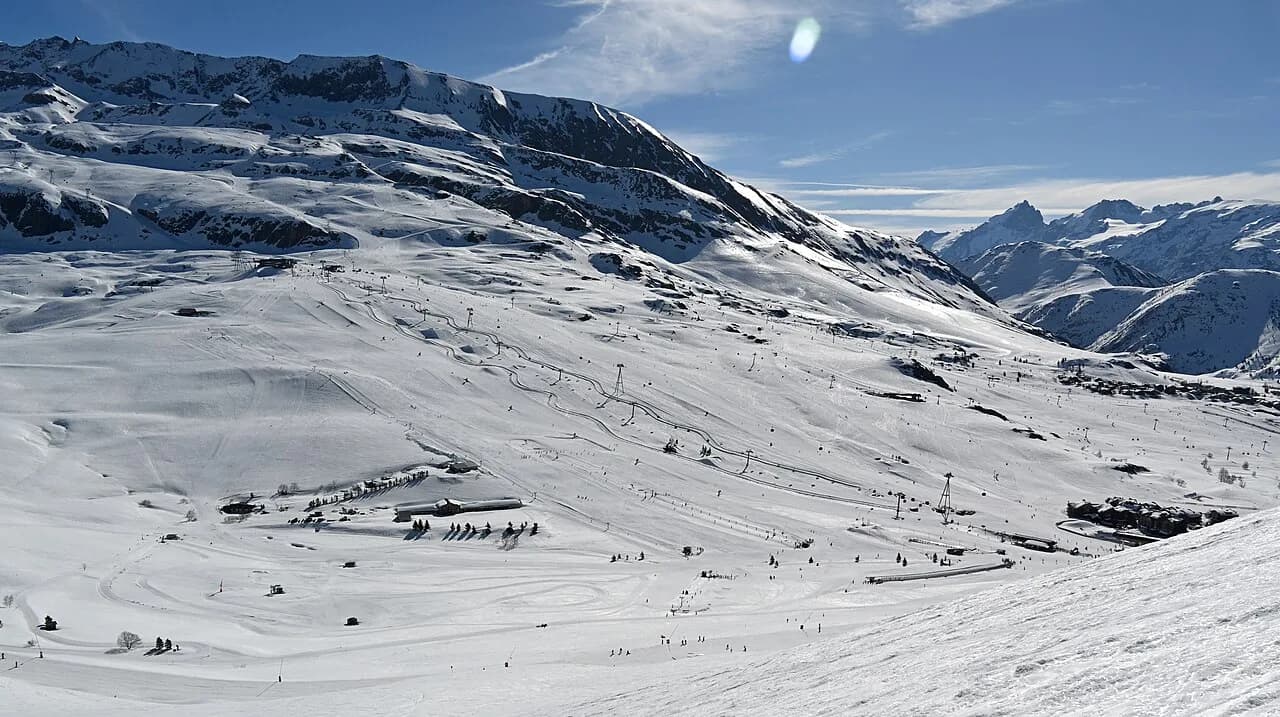
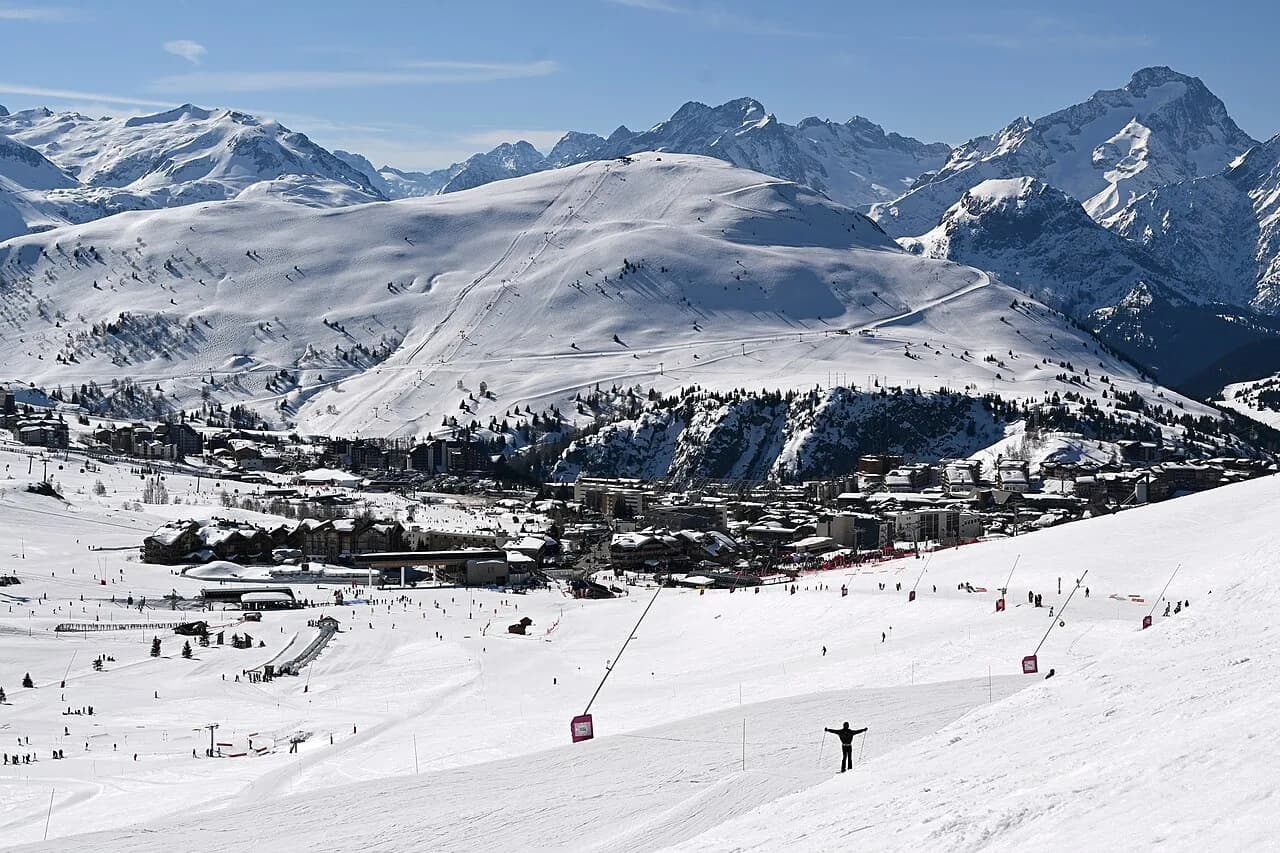
Alpe d'Huez spreads across several districts, and ESF runs four sales points and three lesson departure points to match. The main office is at La Maison de l'Alpe, by the tourist office, while lessons leave from Les Grandes Rousses at the roundabout at the bottom of the slopes, from Les Bergers at the commercial centre, and from the Children's Chalet at the foot of the Rif Nel slope. Choosing your meeting point by district is the single most useful booking decision you can make.
ESF's own guidance ties Grandes Rousses to skiers staying in Cognet or Vieil Alpe, and Les Bergers to those in Passeaux, Eclose, Outaris, Jeux or Bergers. The Children's Chalet handles children from two and a half years old. If your accommodation sits between two districts, pick the departure point that lets you walk to lessons in boots rather than the one with the nicer itinerary, because you will do that walk six mornings running.
The school's winter office at Maison de l'Alpe opens seven days a week from 9:00 to 18:00 during its published winter season of 5 December to 25 April 2027. Those are ESF's office dates, not a statement of when the lifts run. Use the office for last-minute changes, lift-pass questions and level queries, and use the school's online booking for anything you can arrange in advance.
ESF at a Glance: Group, Private and Special Programmes
ESF Alpe d'Huez is the largest school in the resort and covers far more than standard lessons: group and private ski and snowboard tuition, handiski, telemark, kitesnow, plus ski touring, freeride, Nordic, ladies camps and family packages under its ESF Alternatives banner. It also runs seminars and team-building days for companies. That breadth matters if your group mixes abilities, because you can book different formats for different people and still share a meeting point.
Private lessons are sold for one to five people, so a family or a pair of friends can split the cost of an instructor. Group lessons, by contrast, are sorted by level and capped at eight students as standard, though ESF notes the number can shift by two in either direction to keep groups homogeneous. If sharing with a partner who skis at a different level, book private rather than forcing one of you into the wrong class.
Lessons do not include equipment: ESF directs you to the resort's sports shops, which size and advise on gear for your level. Plan to collect hire skis the afternoon before your first lesson rather than on the morning itself. The wider resort picture, from sectors to pass choices, sits in the Alpe d'Huez Skiing Guide if you want to plan the week beyond the lesson hours.
Adult Group Lessons: Levels, Sizes and Assessment
ESF splits adult group lessons into beginner, intermediate and experienced strands, and within each there are numbered classes with clear technical descriptors. Beginners work on balance, snowplough turns, speed control and using lifts; intermediate classes progress to basic parallel turns, edging and skating steps; the experienced classes cover short turns, carved turns and all-terrain skiing. Read the descriptors before choosing, because the class numbers are the school's way of placing you correctly.
If you are unsure of your level, ESF offers video assessment to help place you in the right course. That is worth using if you have not skied for a few seasons or have only skied in another country, where the grading may not match. Getting the class right on day one saves the awkward conversation of moving groups mid-week.
Group lessons run as six-morning, six-afternoon or six-full-day packages, structured as Sunday to Friday or Monday to Saturday. Morning sessions usually start at 09:15 and run to 12:00 in low season; the whole six-day block is priced as a package, so there is no saving to be had from booking five days instead of six. Adding a seventh day or switching formats mid-week is where costs start to climb.
Group Lesson Prices and Seasonal Bands
ESF publishes 'from' rates in three bands: low season, the Christmas holidays running roughly 20 December to 2 January, and the February holidays running roughly 7 February to 6 March. For adult group lessons in low season, the six-morning package starts at 260 EUR, the six-afternoon package at 235 EUR and the six-full-day package at 430 EUR. In the Christmas and February bands, mornings or afternoons start at 275 EUR and the full-day package at 470 EUR.
Those figures are published as starting prices, so the exact rate for your week and class depends on the dates you book; check the live price when you enter your stay dates online. The bigger cost decision is the lift pass. For beginner and class 1 adults, ESF recommends the Initiation package at 296.50 EUR for six days, giving access to the whole area, rather than buying a cheaper restricted pass you will outgrow by Wednesday.
For stronger adults from class 2 upwards, ESF points you to the lift company for a full-area pass. If you only book half-day lessons, the pass is still valid all day for the six days, so a morning lesson does not restrict your afternoon skiing. That is worth knowing when comparing the cheaper afternoon package against the morning one: both leave the other half of the day free.
Private Lessons: Lunchtime, Half-Day and Full-Day
Private lessons come in several shapes. Lunchtime slots run one hour, ninety minutes or two hours and are the cheapest entry point, starting at 62 EUR for an hour in the advertised low-season rates. The pitch is quieter slopes and focused attention, which makes lunchtime lessons a sensible add-on for an adult who wants to fix one specific weakness without giving up a whole morning.
Longer private formats are morning sessions of two hours forty-five, afternoon sessions of two and a half hours, or full days. In low season those start at 218 EUR, 198 EUR and 450 EUR respectively for up to five people; during the Christmas and February holidays the half-day rate starts at 226 EUR and the full day at 540 EUR. Divide by five and a family of five pays roughly what a group lesson costs per head, but skis together and at its own pace.
Private lessons run every day, and ESF's low-season morning start shifts from 09:15 to 09:00 near the end of the season. Booking a private instructor for the first morning of your trip is often the better use of a short stay, because the instructor can assess the whole family at once and point each of you to the right group class for the rest of the week.
What Lesson Times Mean for Your Skiing Day
A six-morning group lesson effectively anchors your day: you are on snow from around 09:15 to noon, which leaves the afternoon for free skiing, lunch on the mountain or a second activity. Afternoon lessons run roughly 14:15 to 16:45, so you can ski first thing, have a proper lunch and still get coached. Full-day packages run both blocks and are best suited to adults who want rapid progression and can handle six days of sustained skiing.
Lesson end times are where a resort day can fall apart. If you ski away from the meeting point during a lesson, be back with time to spare; if you are collecting a child, ESF keeps late pick-ups at the Grandes Rousses chalet or the Bergers office with its hostesses, but you need to phone first. Families staying on the opposite side of the resort from the lesson point should factor in the walk or shuttle before booking the earlier start.
If you plan to use lessons as a warm-up for touring the wider area, look at the map before the week starts and know which sectors your lesson leaves you near so you can continue straight onto the slopes. The Alpe d Huez piste map guide explains the downloadable versions and how to check the current status of lifts and runs, which matters when lesson times shift toward the end of the season.
Seasonal Scheduling Quirks to Plan Around
ESF publishes a specific scheduling caveat: there are no afternoon lessons at Les Grandes Rousses from 3 January to 6 February 2027 and from 7 March to 19 March 2027, though afternoon lessons continue at Les Bergers in those windows. From 21 March 2027 only morning lessons run. If your holiday falls in those dates and you wanted afternoon coaching, you will need the Bergers departure point or a morning slot.
The season start has a related wrinkle: group lessons begin on Sunday 13 December, and during the first week of opening ESF asks skiers to book a private instructor instead. If you are travelling at the very start of the winter, that changes the booking sequence: reserve the private slot first, then switch to group lessons once the timetable opens. Confirm the current start date with the school before you lock in flights.
Late-March skiers also get a special format: the Tomorrowland Winter week, roughly 21 to 26 March, offers experienced group mornings at Les Bergers only, with a 2.5-hour block starting at 10:00. ESF lists it as a separate product rather than the standard group lesson, so search for it by name when booking if those dates are your target. That week is also a busier-than-usual period in the resort, so book early.
ESF Alternatives and Adult Specials
If you have already nailed your piste technique, ESF Alternatives is the more interesting product line: private escapes for adults covering ski touring, freeride, Nordic skiing, family sessions and ladies camps. These run away from the crowded pistes and are tailored between you and your instructor rather than following a fixed class ladder. They suit strong intermediate and advanced skiers who want something beyond another week of parallel turns.
The school also runs non-skiing activities including electric biking, paragliding, snow skating, avalanche transceiver initiation, igloo building and rifle shooting. For a group booking, these make a useful rest-day alternative when the weather closes in or when part of the party does not ski. Book them as add-ons rather than substitutes for lessons, as availability and meeting details differ from the ski programme.
ESI Alpe d'Huez: The Smaller Family School
ESI Alpe d'Huez is the resort's only ESI-branded school and has been running for more than 30 years as a family operation. It offers private ski and snowboard lessons for children, adults and families, group ski lessons for children aged 8 to 12, and equipment hire at preferential rates close to its meeting point at the foot of the lifts. Its main selling point is scale: a smaller instructor team and a more personal atmosphere than the large ESF operation.
Fewer published details exist for ESI than for ESF: the school does not list its lesson prices, times or meeting point on its public site in the same detail, and its site is in French. For a smaller school that can be an advantage, since the instructor team knows families and returning guests, but you should contact them directly for times and rates before booking flights around a lesson slot. It also does not publish an English-language version of its terms.
The realistic split is this: choose ESI if you want small classes and a long-standing local instructor team, especially for children in the 8-to-12 group age band; choose ESF if you want a published timetable, fixed meeting points and an online booking system with live availability. Both are qualified, but the experience differs, so match the school to the type of holiday you are taking rather than defaulting to one as simply better.
Ski Hire and Lift Passes for Lesson Days
Lift-pass decisions in Alpe d'Huez should follow lesson level, not habit. ESF recommends the Initiation package for beginner and class 1 adults and for the snowflake and first-star levels, and the Progression package at 237 EUR for six days, covering the entire area, for second-star to team-star levels. Under-fives ski free but need an access card collected at the lift office with proof of age and a photograph.
For beginners and the Teddy Bear level, ESF advises not buying a lift pass up front at all and waiting for the instructor's guidance during the week. That is a concrete saving: there is no reason to hold a full pass on day one if you spend it on the nursery slope. Once lessons are in the basket, the booking system offers its recommended pass option, which is the simplest way to avoid overbuying.
Hire follows a similar logic. Book basic equipment for beginners so upgrades can wait until their skiing warrants it, and for adult private lessons or ESF Alternatives sessions ask whether particular skis are advised. The Alpe d huez ski hire guide covers nearby branch choices, and the Alpe d huez ski guide puts both passes and hire in the context of the week.
Children, Beginners and the Children's Chalet
ESF runs its children's programme from the Chalet des enfants at the foot of the Rif Nel slope, taking children from two and a half years old and separating lessons into children up to 12, teens from 13 to 17, and adults. The chalet has its own hostess team and is where late pick-ups are held, so it is worth knowing the building even if your child's lesson leaves from elsewhere on a given day.
For beginners of any age, ESF recommends no lift pass on day one, or the Initiation pass if you need one that covers the week. Families should look at booking children's lessons before adult ones, since the child programme fills first in the high-season bands and the timing then dictates which adult format fits around drop-off and pick-up. Share private lessons at up to five people if your family's levels are close enough.
Booking Timeline: What to Reserve First
In Christmas, February and Tomorrowland Winter weeks, book lessons before flights if your dates can flex. Group spaces in those bands are the first to sell, and the seasonal price bands make the same six-morning package cost more in peak weeks. Private lessons and lunchtime sessions are easier to add late, but the most popular instructor slots on a given morning will go.
Once you have your dates, book the lesson format first, then hire equipment and then decide on the pass based on ESF's level guidance. If you are travelling outside peak weeks, you can leave the choice between group and private until closer to the trip. If you need to check lift availability, peak week congestion or how sectors link, the piste map and resort guide cover it.
English-speaking skiers have the best chance of a language-matched instructor by noting the request at booking rather than on arrival; neither school states instructor language on the public pages, so confirm when you book. If anything about your level changes, contact the school's office during the week; the Maison de l'Alpe office is open daily in the winter season and the school keeps late pick-ups at the Grandes Rousses chalet.
Matching School, Format and Meeting Point
Start from where you are staying, then choose the school and format. Grandes Rousses suits Cognet and Vieil Alpe; Bergers suits Passeaux, Eclose, Outaris, Jeux and Bergers. If you have never skied, ESF's beginner or class 1 group lesson with the Initiation pass is the simplest starting combination; if your group mixes abilities, a private session for up to five people usually fits better than splitting across classes.
For a smaller school with a long local history and smaller groups, contact ESI Alpe d'Huez directly, especially for children aged 8 to 12; it also offers preferential rates on equipment rental beside its meeting point at the foot of the lifts for those courses. For published timetables, English booking and clear meeting points, use ESF Alpe d'Huez, whose timetable and prices are posted on its own site. If you want to compare how another French resort structures its school options, our guide to Flaine Ski Lessons breaks down group, private and teen formats. Prices move by week and by level, so check current rates on the school's own site before paying, and confirm lesson language at the point of booking.
Frequently Asked Questions
Does Alpe d'Huez offer ski lessons?
Yes. The largest provider is ESF Alpe d'Huez, which runs group and private ski and snowboard lessons plus adult alternative programmes. The smaller ESI Alpe d'Huez also offers private ski and snowboard tuition and children's group lessons. Both schools operate in the resort throughout the winter.
Is Alpe d'Huez good for beginners taking lessons?
Yes. ESF runs dedicated beginner group lessons and its Children's Chalet takes children from two and a half years old. Beginners are advised not to buy a lift pass before their first lesson and to wait for the instructor's guidance, since early sessions are unlikely to use the wider mountain. The Children's Chalet is at the foot of the Rif Nel slope.
Is Alpe d'Huez hard skiing?
It is as hard as you choose to make it. ESF's experienced group classes cover short turns, carved turns and all-terrain skiing, and the school's ESF Alternatives programme includes freeride and ski touring for adults. That said, the piste teaching ladder starts from snowplough turns, so the resort is not pitched only at advanced skiers.
Where do ski lessons meet in Alpe d'Huez?
ESF runs three lesson departure points: Les Grandes Rousses at the roundabout at the bottom of the slopes; Les Bergers at the commercial centre; and the Children's Chalet at the bottom of the Rif Nel slope. ESF advises skiers in Cognet or Vieil Alpe to use Grandes Rousses, and those in Passeaux, Eclose, Outaris, Jeux or Bergers to use Bergers.
Should I book group or private ski lessons in Alpe d'Huez?
Choose group lessons if your ability fits a numbered class and you want a fixed daily rhythm at lower cost. Choose private lessons if you are mixed-ability family or friends, want lunchtime slots, or need faster progression in a short trip. Private lessons are sold for up to five people, so the per-person cost can come close to a group lesson.
Do I need a lift pass for ski lessons in Alpe d'Huez?
Not always. ESF advises beginner and Teddy Bear levels not to buy a lift pass before the first lesson and to wait for the instructor's guidance. For snowflake and first-star levels it recommends the Initiation package; for stronger levels it points to a full-area pass bought from the lift company. Children under five ski free with an access card.
Are lessons taught in English?
Neither school publishes instructor language options on its public booking pages, so request English-speaking instruction when you book and confirm it in your confirmation. ESF's site is in English and books online with live availability; ESI's site is in French but its booking page is in English.
Sources
Useful notes for your next ski trip
Optional updates to our Alpine resort guides.
You might also like
Continue reading
More guides you'll find useful