St Anton Snowboarding Guide: Terrain, Park and Lift Tactics
Plan a St Anton snowboarding trip with the Stanton Park setup, Rendl access, group course prices and how Arlberg terrain suits different riders.
On this page
St Anton am Arlberg rewards boarders who plan around sectors rather than around a single mountain. The village sits under the Galzigbahn and the Rendlbahn, and from there the Ski Arlberg circuit spreads across St Anton, St Christoph, Stuben, Lech, Oberlech and Zürs. The decisions that shape a trip are simple: how many days you give Rendl and its park, how much ground you want to cover on the wider circuit, and whether you are booking lessons. Start with the St Anton Ski guide if you want the full sector-by-sector picture before narrowing down to a board trip.
This guide sticks to what the resort and ski school publish: the Stanton Park setup, the piste grading bands, the season window and the group course tiers. Prices and open status change, so the two things to confirm close to departure are your ticket period and whether Rendl is running.
Why St Anton works for snowboarders: the Arlberg layout in brief
Ski Arlberg is marketed as Austria's largest connected ski resort, with more than 300 kilometres of piste and 85 cable cars and lifts across the network. For a boarder that number is less important than the shape of it: St Anton, St Christoph and Stuben form one block, Lech, Oberlech and Zürs another, and the two are joined into a single lift-linked circuit. That makes St Anton unusually good for riders who like moving rather than lapping one face.
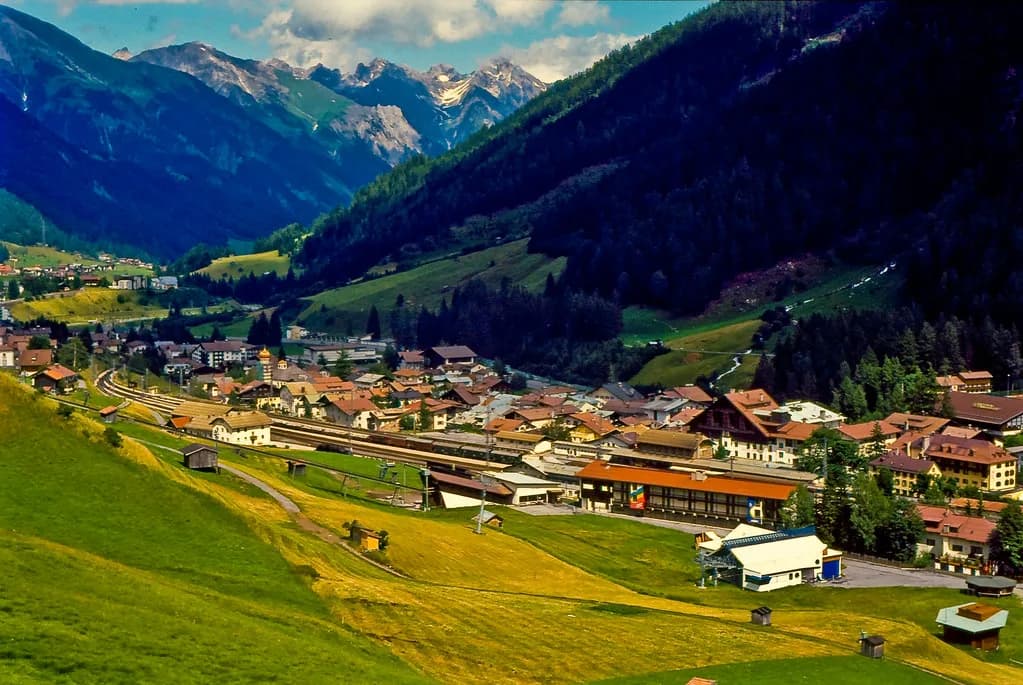
The village base is split between the Galzigbahn side, which points you towards St Christoph and the Valluga, and Nasserein, which serves the same sector from a quieter end of town. Rendl is separate again, reached by its own lift from the eastern edge of the village, and it is where the freestyle focus sits. Treat those three access points as your mental map before you look at a piste plan.
Because everything is on one pass, the practical question is not which area to buy but how far you are willing to travel in a day. A boarder who wants park laps and a couple of groomers can stay on Rendl; one chasing distance can cross towards Lech and Zürs and be back before the lifts close. Decide which of those riders you are before booking accommodation.
Stanton Park on Rendl: the setup, the three lines and how the lift access shapes a park session
Stanton Park sits on Rendl directly above the Rendl Beach Bar terrace, which makes it a park you can session properly rather than visit once. The resort describes 37 obstacles arranged into three lines: a Pro Line, an Advanced Line and a Beginner Line. That structure is the useful part for planning, because it means a group of mixed ability can ride the same park without splitting up entirely.
The park runs on the same lift as the rest of Rendl, so park laps and piste laps use one ticket and one uplift. Build a session around the lift rather than a single feature: warm up on the wider Rendl runs, move into the Beginner Line, and only then step up. The shaping team works with the local riding community, so the layout is refreshed through the season rather than frozen in one configuration.
The park is a live facility, not a permanent fixture, and its status changes with snow and shaping. Check the park's own live status on the morning you plan to ride it rather than assuming the lines are up because the calendar says mid-season. If the Beginner Line is shut, Rendl's ordinary groomed runs still make a worthwhile day.
If you want a second reference point for how a park-focused trip is structured, the Kaprun snowboarding Guide covers a smaller glacier-side setup with a different rhythm. Use it to judge how much of your holiday you actually want to spend in one park.
When to target Rendl: season timing and the typical pre-Christmas opening pattern
The Rendlbahn does not follow the same calendar as the main village lifts. The resort notes that Rendl typically starts its winter a week or the weekend before Christmas, with exact opening hours depending on conditions on the mountain. For a park-led trip that matters: an early-December arrival may find the Galzig side running while the park is still being built.
If Stanton Park is the reason for the trip, aim for the main season rather than the opening weeks, and keep a fallback plan of groomed laps on the Galzig and Valluga side. If you are coming primarily for piste mileage across the circuit, early season is less of a gamble because the wider lift network comes online first. That is the real trade-off between a December and a January trip.
Late season has its own logic: the sun ski weeks are a cheaper ticket period and the park usually has a settled shape by then, but lower-altitude runs suffer first. Rendl's Talabfahrt back to the village is a medium-difficulty descent and is one of the first things to thin out, so a spring trip should be planned around the upper mountain.
Rendl's runs beyond the park, from the Talabfahrt to the ski routes above Gampberg
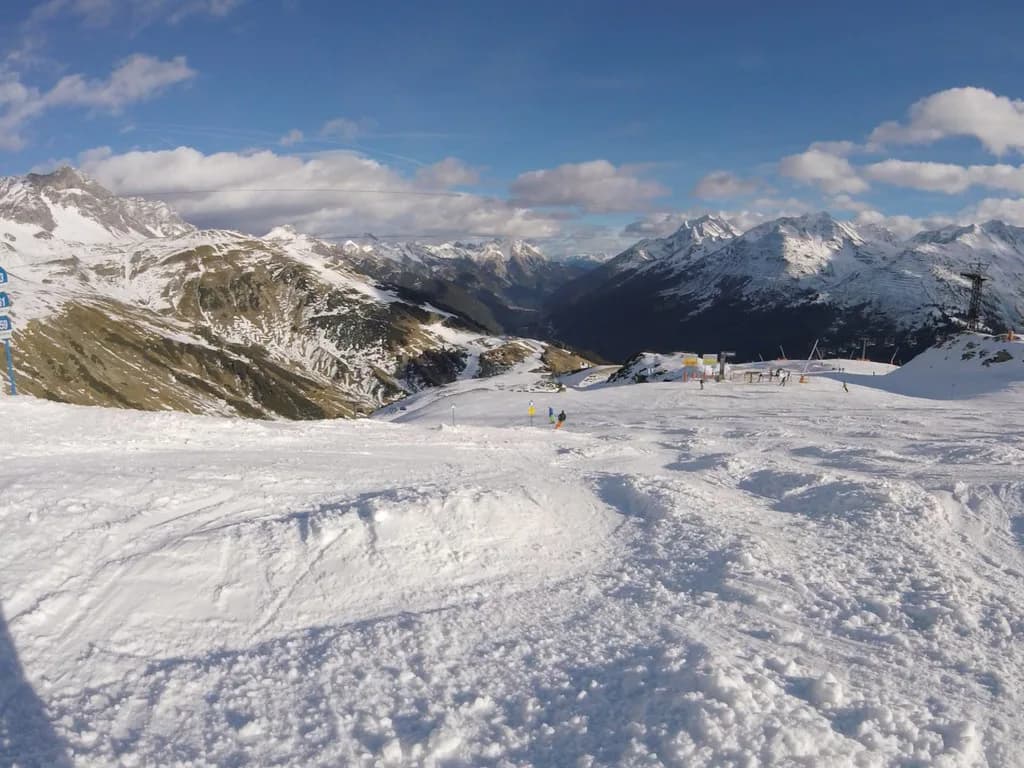
Rendl is not just a park hill. The sector lists groomed pistes including the medium Rendl Talabfahrt, the medium Tobel and Gampberg runs, the challenging Gampberg Direkte and the easy Übungswiese practice slope. For a boarder this is a compact, readable mountain: you can ride a warm-up lap, a couple of steeper groomers and the park in the same morning without long traverses.
Rendl also carries marked ski routes such as Wannele and Maass, classed as extreme, plus the Tobelroute and Restauranthang. Ski routes are marked and protected against avalanche danger but are not regularly groomed or consistently monitored, so they are a different proposition from a piste. On a board, an ungroomed route with variable snow is a genuine step up rather than a shortcut between lifts.
A sensible Rendl day for a confident intermediate is two or three groomed descents to find your feet, a park block once the lines are busy but shaped, and a final groomer when the legs go. Keep the routes for days when you have fresh information on conditions and are riding with someone who knows the exit. The Gampberg area is where the steeper groomed options sit if you want gradient without leaving the sector.
The wider Ski Arlberg area: how St Anton, St Christoph and Stuben connect to Lech, Oberlech and Zürs for boarders who cover ground
Ski Arlberg's two main blocks are St Anton, St Christoph and Stuben on one side and Lech, Oberlech and Zürs on the other, joined into one lift network on a single ticket. The resort publishes a separate live overview for each block, so you can see at a glance whether the link is running before committing to a crossing. That is worth checking on any day with wind or heavy snow, when upper lifts are the first to hold.
St Christoph is the natural stepping stone from St Anton towards the Flexenpass side, and Stuben sits at the far end of that block with its own quieter pistes. Lech, Oberlech and Zürs reward a full day rather than a quick dash, so pick one crossing day and one day to stay local instead of trying to do both halves in a morning.
The Vallugabahn above St Anton is the high point of the local sector and the reason many strong riders base themselves here. The resort publishes live status for Vallugabahn I and II separately, which tells you how the upper mountain is behaving before you commit to the climb. If the top is closed, the lower Galzig runs still give a full day.
Reading the piste grading system: blue, red and black thresholds and what ski routes mean for riders
Arlberg grades its pistes by maximum gradient: blue runs stay at or below 25 per cent, red runs sit between 25 and 40 per cent, and black runs exceed 40 per cent. Those are maximums rather than averages, so a blue can still have a steeper pitch in the middle. For a boarder choosing a first day's terrain, the band is a better guide than the colour alone suggests.
Pistes are marked, groomed where possible, monitored and secured against typical alpine hazards such as avalanche danger. Ski routes sit outside that promise: they are marked and avalanche-protected only, not regularly groomed or consistently monitored. The resort splits them into ordinary ski routes and extreme ski routes, and the extreme label on runs such as Wannele and Maass is a fair warning for anyone on a snowboard.
The practical translation for a board trip is straightforward. Blue terrain is where you build confidence and where beginners should spend their first two days; red terrain is the bread and butter of an intermediate holiday; black and extreme terrain is a decision made on the day, with conditions and visibility in mind. A piste map with these bands marked will do more for your planning than any trail count.
Where beginners should start and where intermediates get mileage without burning a day on drag lifts
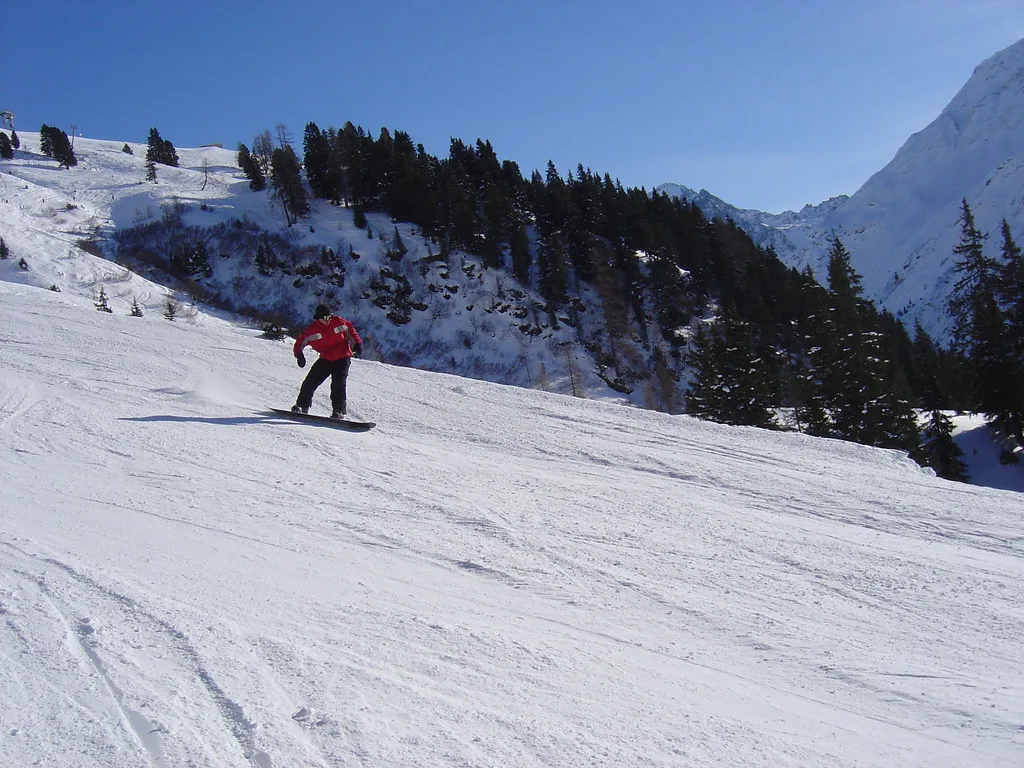
The resort points beginners towards blue slopes, practice lifts and kids' areas, all marked on the interactive piste map. In St Anton terms that means starting on the easy Übungswiese ground on Rendl or the gentler nursery terrain near the village rather than heading straight for the Galzig summit. A first-timer who begins high on a mountain spends the morning surviving rather than learning.
Intermediates have the better deal in St Anton. The red runs on Rendl and the Galzig side give long, chair-served descents without the short drag-lift circuits that eat a beginner's day. Build mileage by riding one sector properly in the morning and switching after lunch, which keeps you off the busiest lifts at the busiest times and gives your legs a change of pitch.
The classic local objective is Der Weisse Rausch, the legendary race course on the St Anton side, which the resort flags as a highlight for anyone wanting the Arlberg's history under their board. It is a proper run rather than a novelty, so save it for a day when you are riding well and visibility is good.
Where a resort splits its beginners across several bases, the layout decides your day more than the lift count does. Nasserein is the calmer end of St Anton village with its own access to the Galzig sector, while the Galzigbahn base is where lessons and groups tend to gather. Choose accommodation within walking distance of the one you will use most.
Steep terrain decisions: what to ride when the off-piste is not an option for you
St Anton has a reputation built on steep terrain, and the graded blacks plus the extreme ski routes such as Wannele and Maass are where that reputation lives. But a large share of a normal holiday happens on groomed red and black pistes, and those are demanding enough on a board without leaving the marked runs. Plan your steep days around groomed black descents and treat routes as a separate decision.
The resort is explicit that during and after heavy snowfall, slopes must first be secured by the avalanche commission before they can open, which is why some lifts and runs stay shut longer than others. That is the mechanism behind the frustrating blue-sky morning when half the mountain shows closed. Build flexibility into a short trip rather than a fixed list of runs you must tick off.
For riders who want steep groomers without route-finding, the Valluga sector and the Gampberg Direkte on Rendl are the sensible targets. Check the live status for Vallugabahn I and II in the morning and keep Rendl as the alternative if the upper mountain is on hold. That single habit saves more ski days than any equipment upgrade.
Season dates and ticket categories: Wedel weeks, main season and sun ski weeks and why they affect your budget
The published winter window for St Anton, St Christoph and Stuben, together with Lech, Oberlech and Zürs, runs from 2 December 2026 to 18 April 2027. Warth-Schröcken and Klösterle Sonnenkopf open slightly later and close earlier, from 4 December 2026 to 11 April 2027. Those dates are the framework for any booking, even though individual lifts start and stop on their own schedule.
Ski Arlberg divides the winter into three ticket periods: the Wedel ski weeks at the start of the season, the main season, and the sun ski weeks in spring. The period you travel in directly changes what your pass costs, so the same number of ski days can land at noticeably different totals depending on the week. If your dates are flexible, shifting by a week can matter more than shopping around for a cheaper pass product.
Pass products span season passes, flexible one- to fourteen-day tickets, and morning, afternoon and hourly options, all valid across the whole Ski Arlberg region. The morning and afternoon tickets are the useful ones for arrival and departure days, or for a park session when you fly out the same evening. The resort publishes current prices on its ticket pages, so confirm your period and product there before budgeting.
If you are weighing a spring trip, the March picture is different from February in snow, light and price. Skiing in St Anton in March is worth reading alongside the season calendar before you commit to the sun ski weeks.
Lift pass buying: online shop, ticket machines and split-day tickets
Ski Arlberg sells through its own webshop, and tickets bought online can be collected from ticket machines on site. For a snowboard trip that is worth doing before you travel: the first morning goes on the mountain instead of in a queue, and your pass is already loaded when you reach the lift. The resort also publishes a Ski Arlberg app with live information, a piste navigation tool and lift status.
Buy for the days you will actually ski rather than defaulting to a full-week pass. Snowboard trips often include a rest day or a travel day at each end, and the short-duration and part-day products cover those better than a long pass does. Match the ticket to your itinerary before you are tempted by the convenience of one long pass.
Photographs and pass media matter more than they used to. Have a suitable head-and-shoulders image ready when you order online, because a machine collection only works smoothly if your pass is properly issued. If you are travelling with a group, buy together so that collection at the machine is one process rather than four.
Snowboard lessons: Skischule Arlberg group course pricing, ability tiers and meeting points
Skischule Arlberg runs snowboard group courses split into four ability tiers: Green for complete beginners, Blue for riders linking drift turns with weight shift, Red for deeper drift turns and carving, and Black for short turns and funpark riding. Booking by tier rather than by vague confidence gets you into a group that actually moves at your pace. The meeting point is the snowboard flags at the Galzigbahn.
Published group prices range from €123 for one day to €629 for five days, varying with ability tier and with whether your dates fall in peak season or premium winter time. The school applies a discount in low season and adjusts the figures by period, so the same course can cost meaningfully less outside the peak blocks. Treat those numbers as the school's published rates and confirm your exact date and tier when you book.
Courses start at 10:00 and run two hours in the morning and two in the afternoon with an hour for lunch, every day except Friday and Saturday. Beginners start on Sunday or Monday, while riders who can already board can join daily. Arrive at the meeting point fifteen minutes early, and expect a minimum group size of five, below which the school may cancel and refund according to the days actually attended.
Off-piste groups meet at the central ski school by the Galzigbahn under the black flag, and there are none at Nasserein. An upgrade to six or more days can be arranged locally. Booking online means going straight to the meeting point with your ticket rather than visiting the office first, which on a short trip buys you an extra hour of riding.
Hire and kit logistics near Galzigbahn and Nasserein
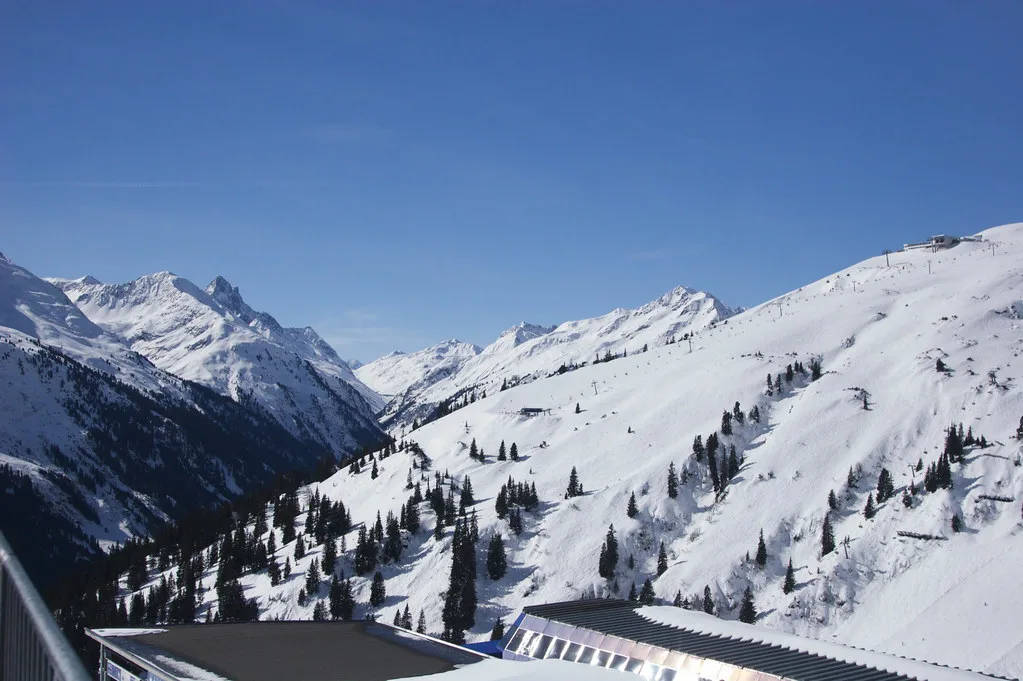
St Anton's two main access points, the Galzigbahn base and Nasserein, are where hire logistics make the most difference. Choose a shop at the base you will use in the morning, because carrying a board and boots across the village in ski boots is the least enjoyable part of any snowboard day. If your group uses both ends of town, split the hire rather than trekking.
Book boards and boots before you arrive if your dates fall in a peak week or if you ride an unusual size or a specific board profile. Hire shops near the Galzigbahn carry broad ranges, but popular lengths move first in the busy periods. Collecting on the evening before your first ski day rather than the morning of it is the single easiest way to start on time.
For lessons, the only kit you strictly need is a board, boots and a helmet, since the school groups riders by ability on the first morning. If you are hiring for a week, ask whether the shop allows a swap mid-holiday; a change of board after two days is often what turns a hesitant rider into a comfortable one.
Getting there and moving around without a car
St Anton sits on the Arlberg rail line, and the station is in the village within reach of both the Galzigbahn and, by a short walk, the bus link to Nasserein. Arriving by train means you skip winter road conditions over the Arlberg passes entirely, and the resort publishes its own getting-here information alongside live car park availability. For a short snowboard trip, the train is usually the lower-risk option.
If you drive, the resort tracks car park availability live, with eleven facilities listed in its overview. Winter tyres and chains are non-negotiable on the approach in snowy weather. Once parked, the village is compact enough to walk between the Galzigbahn and Nasserein, and local buses cover the rest.
Lift opening hours vary with conditions, so the daily routine is to check the live status before breakfast rather than relying on the previous day's pattern. The Ski Arlberg app carries lift and piste status in one place, which is the quickest way to decide whether to head for Rendl or the Galzigbahn. That two-minute check shapes a better day than any pre-trip plan.
Lodging choices by lift access
St Anton's accommodation is spread along a valley floor, so the meaningful choice is whether you stay near the Galzigbahn or near Nasserein. The Galzigbahn end is where lessons gather and where you reach the main sector fastest; Nasserein is quieter and serves the same sector from the other side. A third option is Rendl, where the park is on your doorstep but the rest of the Arlberg circuit is a lift and a ride away.
A park-focused rider who wants to session Stanton Park every day can reasonably base near the Rendlbahn and accept the commute to the rest of the network. A rider who wants distance across the circuit should stay within walking distance of the Galzigbahn. Anyone booking a short trip in a peak week should secure accommodation before passes, because beds run out faster than lift capacity.
If you want a single visual reference for how the village links to the lifts and sectors before choosing an address, the st anton ski map is the most useful thing to have open while you compare listings. A five-minute walk in ski boots is fine; a fifteen-minute one twice a day is not.
Common planning mistakes on a first snowboard trip to St Anton
The most common error is assuming Rendl and the park are running from the first day of the season. Rendl usually starts a week or the weekend before Christmas, and the park follows the shaping and snow. If freestyle is the reason for the trip, book January or later and keep an eye on the live park status in the days before you travel.
The second is buying a long pass for a short trip. Ski Arlberg offers one- to fourteen-day tickets plus morning, afternoon and hourly products, all valid region-wide, so a rest day does not need to be paid for twice. The third is mistaking a ski route for a piste: routes are ungroomed and only avalanche-protected, which on a board is a very different ride from a red groomer.
The fourth is booking lessons at the wrong tier. Skischule Arlberg's Green, Blue, Red and Black levels are specific about what you can already do, and joining a group above your level wastes the week for you and slows the group. Read the tier descriptors honestly, then book online so you can walk straight to the Galzigbahn meeting point on day one.
Plan Your Snowboard Trip to St Anton
Build a St Anton snowboard trip around three decisions: whether the park or the circuit comes first, which ticket period your dates fall into, and whether you want lessons. Rendl gives you the park, a readable set of groomed runs and a short lift ride from the village. The wider Arlberg network gives you the mileage and the link to Lech, Oberlech and Zürs on the same pass.
Confirm two things before you travel: your ticket period against the season calendar, and the current status of the lifts and park you care about. Everything else, including hire, accommodation and lesson booking, can be settled well in advance.
Frequently Asked Questions
Where is the snow park in St Anton and who is it for?
Stanton Park is on Rendl, directly above the Rendl Beach Bar terrace and served by the Rendl lift. It has 37 obstacles arranged into Pro, Advanced and Beginner lines, so it suits confident freestyle riders and newcomers to the park alike. Check the park's live status before travelling, because shaping and snow conditions determine when the lines are up.
Is St Anton good for beginner snowboarders?
Yes, provided you start in the right place. The resort marks blue slopes, practice lifts and kids' areas on its interactive map, and Rendl has an easy practice slope. Beginners are better off learning on that terrain than heading straight up the Galzig side. Skischule Arlberg's Green level is designed for complete beginners.
How much are snowboard group lessons in St Anton?
Skischule Arlberg prices snowboard group courses by ability tier and by season period, so a one-day booking and a five-day block sit far apart, and peak dates cost more than off-peak weeks. The school's own course pages list the current rate for each tier and date block, and a low-season discount applies. Confirm the figure against your exact dates when you book.
When does the St Anton ski season start and finish?
The published Ski Arlberg season for St Anton, St Christoph and Stuben, together with Lech, Oberlech and Zürs, runs from 2 December 2026 to 18 April 2027. Warth-Schröcken and Klösterle Sonnenkopf run from 4 December 2026 to 11 April 2027. Individual lifts and the Rendl sector start on their own schedule within that window.
Do Ski Arlberg lift passes cover St Anton and Lech?
Yes. Ski Arlberg tickets are valid across the whole region, which links St Anton, St Christoph and Stuben with Lech, Oberlech and Zürs. Products include season passes, one- to fourteen-day tickets and morning, afternoon and hourly options. Prices vary with the season period, so check the official ticket pages for your dates.
How do you get to the slopes from St Anton village?
The village is compact and served by the Galzigbahn base and the Nasserein access point, with local buses covering the rest. Rendl has its own lift from the edge of the village. St Anton also has a rail station on the Arlberg line, which avoids winter driving over the passes. Check live lift status before setting out each morning.
Sources
Useful notes for your next ski trip
Optional updates to our Alpine resort guides.
You might also like
Continue reading
More guides you'll find useful