Les Houches Ski Map: Sectors, Lifts and Slopes Explained
Read the Les Houches piste map with confidence: Bellevue and Prarion access, the Verte des Houches, beginner zones and links across the Chamonix valley.
On this page
The Les Houches piste map looks small next to the giant Chamonix valley domains, but it repays a proper read. The resort sits at the valley entrance, with its slopes spread across two access points and a tree-lined mountain that mixes gentle family terrain with a genuine World Cup run. Reading the map well decides where you park, which lift you take first and whether a day here suits your level.
This guide walks through the map the way you would use it: the sectors, the altitude bands, the grading of the runs and the lifts that stitch them together. It also covers how Les Houches fits into the wider Chamonix valley and how to check conditions before travelling.
What the Les Houches Piste Map Covers: Bellevue and Prarion
The map covers one ski area with two ways in. The tourist office lists the Bellevue cable car and the Prarion cable car as the two departures that give access to the slopes, so your first decision on any morning is which side to start from. Bellevue sits in the main village and serves the sector that includes the World Cup piste; Prarion has its own base station and a separate spread of runs.
That two-base layout matters because the sectors are not interchangeable on foot. If your group is split between abilities, pick the base that puts the weaker skiers nearest their terrain and arrange to meet at a named lift rather than a village square. The official ski-area page is the best starting point for the access points and downloads.
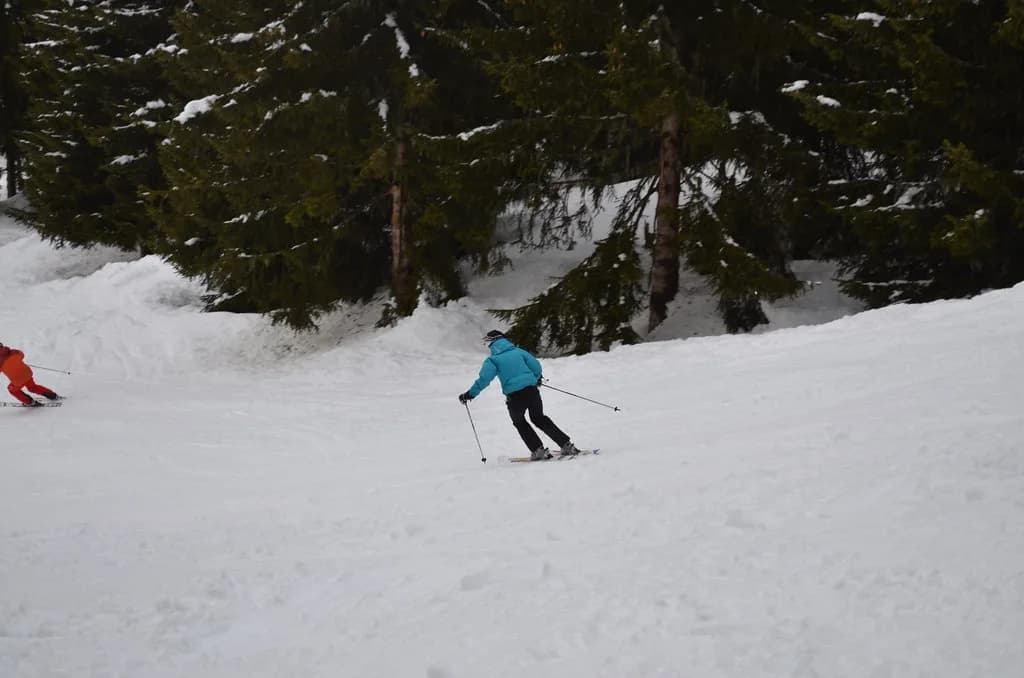
The ski area stretches between roughly 1,000 and 1,900 metres, which is modest by Chamonix standards but enough for a full day of tree-lined skiing. The forest setting is the map's defining feature: runs weave through firs rather than crossing open bowls, so visibility in poor weather is often better than on the high glaciers up the valley. Expect a compact mountain rather than a vast one.
Altitude, Terrain and How Many Pistes There Are
Piste counts for Les Houches vary by source, so treat any single figure as approximate. One mapping site records 4 black pistes including La Verte des Houches, 13 red, 8 blue and 2 green, with a snowpark and mixed lift types. Another puts the total at 34 runs graded by percentage, with 55 km of skiable terrain and a longest run of about 3.3 km. The discrepancy comes from how runs are counted and split; use the figures as a sense of scale, not a precise inventory.
The percentage breakdown from the second source is the more useful planning tool: roughly 6 per cent beginner runs, 32 per cent intermediate, 50 per cent advanced and 12 per cent expert. That profile tells you the mountain is weighted towards confident skiers, with a modest beginner share on the main map. If you are booking for a mixed group, plan where the less experienced skiers will spend their time.
Reading the Grading: Greens, Blues, Reds and the Black Run
The greens and blues sit low and in the trees, which makes them a sensible first-morning choice while the upper mountain settles. They are short rather than long cruising motorways, so beginners should expect to ride the same lifts several times rather than cover distance. The blue count is small on the map, so mix in the easier reds once your confidence builds.
The reds are the backbone of the area: 13 of them on one count, and half the runs classed as advanced on the other. That is where an intermediate who can turn reliably will spend most of a day, and the tree-lined routing keeps them interesting without the exposure of the high Chamonix terrain. Study the map for reds that feed back to your chosen base lift so you avoid long traverses at the end of the day.
The black is La Verte des Houches, the World Cup slope that gives the resort its reputation. A black grading on the map means exactly what it says: steep, sustained and worth an honest look at the map profile and conditions before you commit. If your group has mixed abilities, ski it as a pair or agree a meeting lift with the rest of your party.
Beginner Zones, including the Separate Tourchet Area
First-timers should look closely at the map before buying anything. The main area has a small share of green runs, but Les Houches also has a dedicated beginner domain at Tourchet, listed separately from the main ski area. That separation is the key detail: if you are teaching a family to ski, a base near the beginner area will give a better first two days than the main cable car.
Use the map to identify the nursery slopes, the carpets and the short lifts before you choose accommodation. The official ski-area page carries a download for the ski map and a separate link for the Tourchet beginner domain, so you can compare at a glance. Ski lessons and hire are best booked in advance for holiday weeks; the resort is popular with families and the school groups fill early.
The SKICAMP complements the map for non-skiing hours, with snowtubing tracks, a toboggan run, zip lines and play areas at the base. It is a useful bargaining chip when one member of the party is not skiing, and it sits naturally on the access map next to the lifts.
Where Intermediates Should Head on the Map
Intermediates get the best of the resort on the red pistes, which form the largest single band of the mountain. The practical approach is to pick one red run per lift and work systematically up the mountain rather than criss-crossing on every descent. A tree-lined red with a consistent pitch is a better use of a short ski day than three separate traverses.
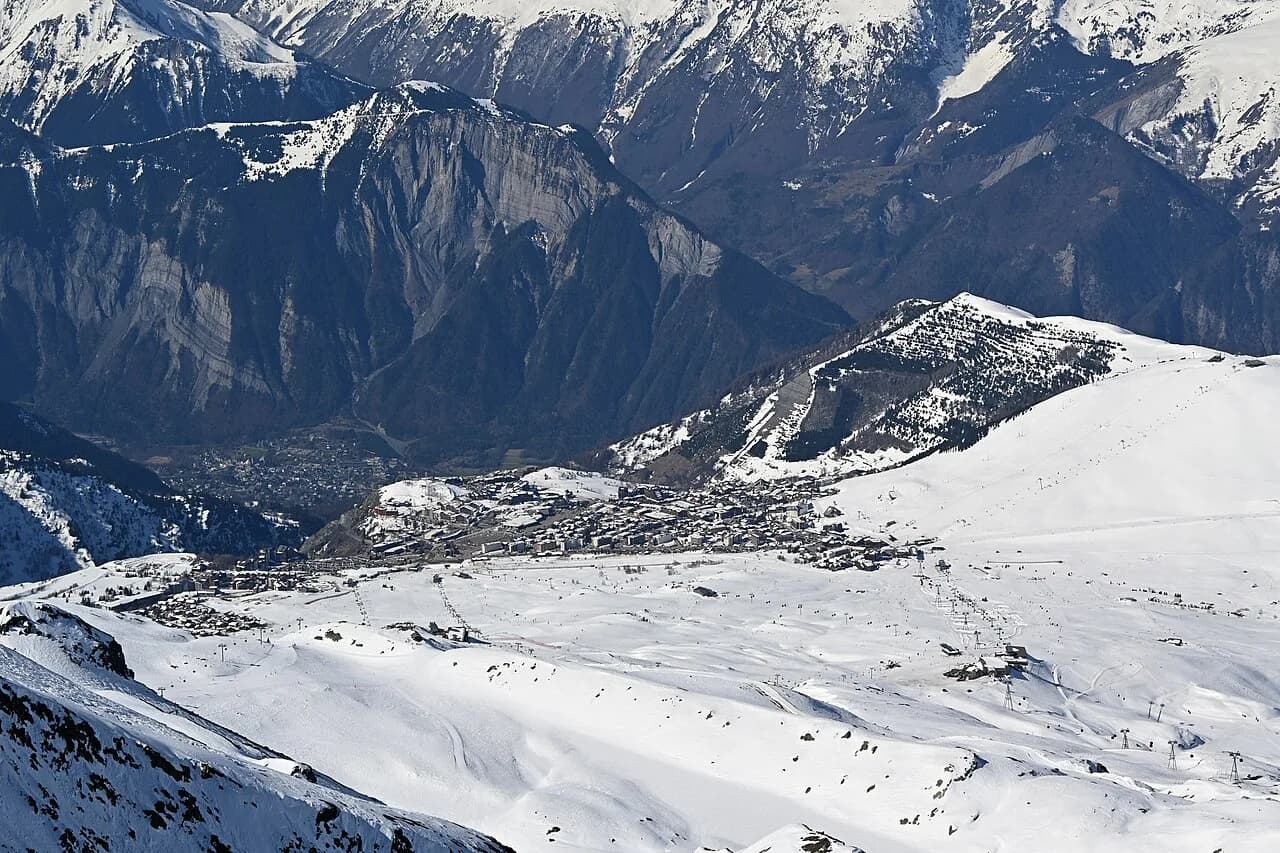
The map's moderate vertical means long top-to-bottom runs are limited, so plan your day around lift laps rather than endurance. The longest run on the percentage-based count is around 3.3 km, which is a solid descent but not a leg-burner. If you want big-mileage cruising, save it for another day in the valley and treat Les Houches as a technique day in the trees. If you are weighing up bigger, higher-altitude domains in the Alps instead, the Alpe d'Huez Ski Map guide shows how a much larger lift network is laid out.
Lift Layout in Practice: Cable Cars, Chairs and Drags
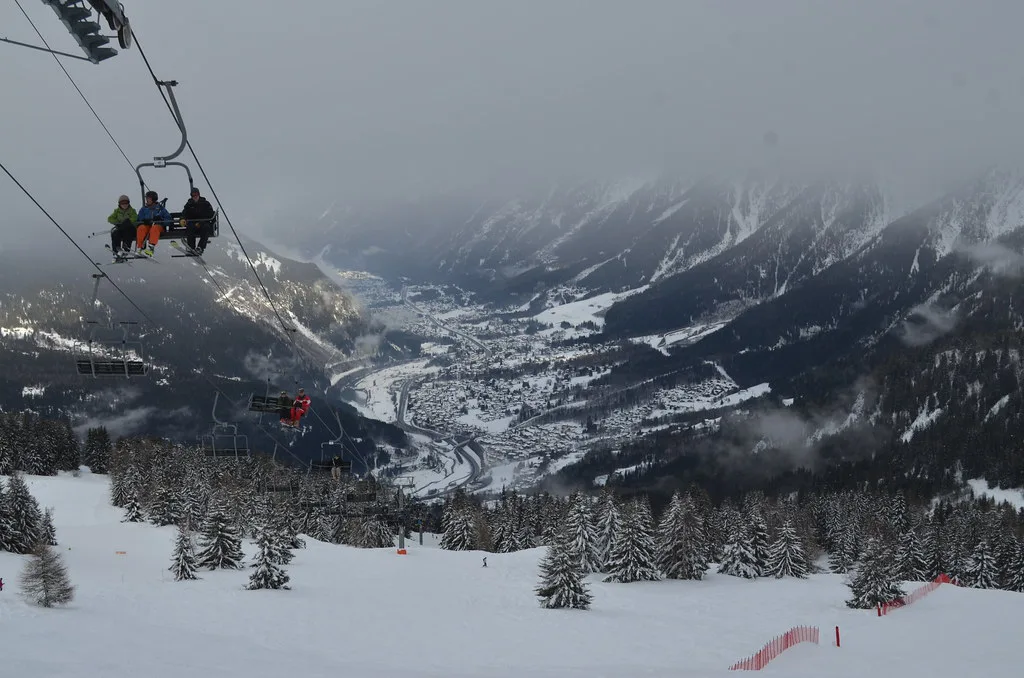
The lift map is short enough to memorise in a morning: a cable car at Bellevue, a gondola and a spread of chairs, drags and a carpet on one count, and 15 lifts with two gondolas or trams, a high-speed quad, seven quads and five surface lifts on the other. The mix means the higher ground is served by faster chairs and the lower slopes by surface lifts, which affects how quickly you can rack up vertical.
Plan around the two cable cars because they set the rhythm of the day. Arriving at the lift early on a holiday morning is more valuable here than choosing a particular piste, since the access lifts carry everyone from beginners to experts into the same mountain. Reading the queue at your chosen base on the map is a reasonable proxy for how crowded the upper lifts will feel.
The Tramway du Mont-Blanc and What the Pass Includes
One of the map's best features is a non-skiing connection: access to the Mont-Blanc Tramway is included in all Les Houches ticket packages. That opens up a day out for non-skiers and gives skiers a scenic option when the weather closes in on the slopes. Treat it as part of your trip planning rather than an afterthought, and confirm the current arrangement when you buy.
The pass is not only about the tramway. For a full run-down of the products, what each one covers and how they link to the valley, consult the dedicated ski pass page, so you arrive knowing which ticket matches your itinerary.
Linking to the Wider Chamonix Valley
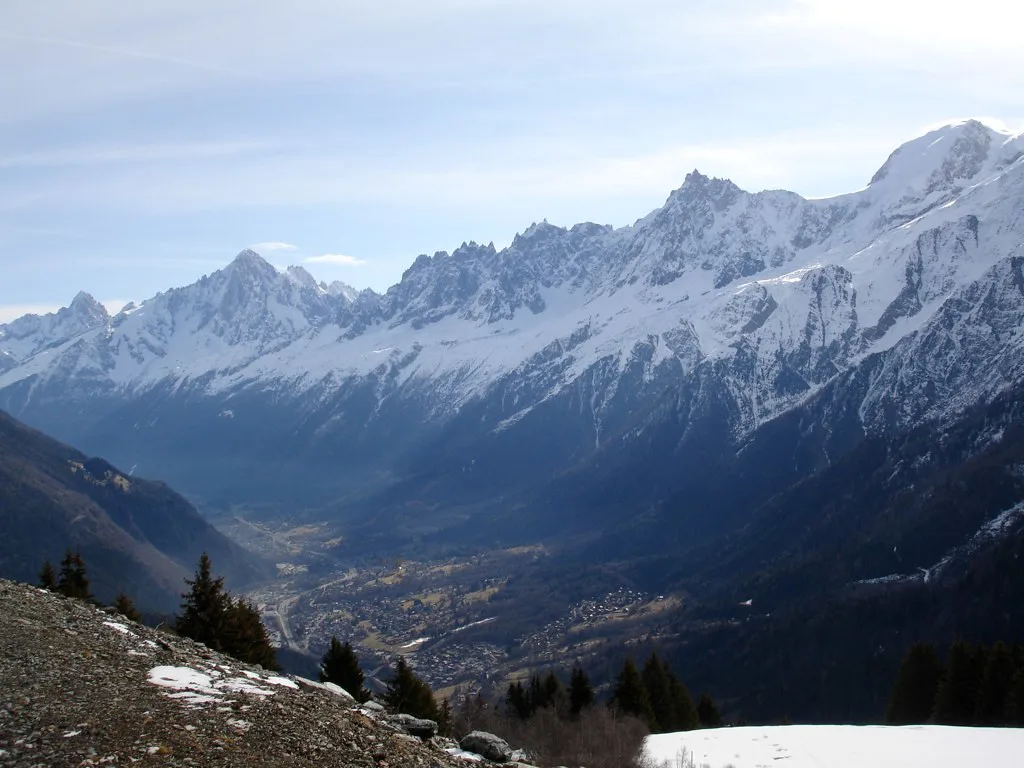
Les Houches sits at the valley entrance, and the piste map only tells half the story. Chamonix Mont-Blanc's network spans four main areas joined by a free ski bus along the valley: Grand Montets, Brevent-Flegere, Balme Vallorcine and Les Houches, with smaller areas such as Savoy, Tourchet and Vormaine scattered between them. That is why one map read is never enough; the valley map should sit alongside the resort map when you plan.
The valley-wide picture is 106 pistes roughly 119 km long, with 14 per cent green, 34 per cent blue, 38 per cent red and 14 per cent black, and a high point at Grand Montets of 3,275 metres. The vertical drop from there down to Argentiere is over 2,000 metres. Read those figures against the Les Houches numbers and you will see why a multi-day itinerary should split between tree skiing down low and altitude up the valley.
If you are building an itinerary around the resort rather than a single day, the broader Les Houches skiing guide covers the valley connections in more depth. It is a better place to compare transport, timing and how to divide your week than a piste map alone.
Downloading a Printable Map and Checking Live Status
Download a PDF or image file of the map before you travel and keep it on your phone as well as printed. The resort mapping site offers both, plus a direct link to the official ski-area page where the tourist office hosts its own map download and lift timetables. Getting the file before you leave avoids relying on mountain wifi at the lift station.
Never rely on the map alone for live conditions. Lift status, piste openings and snow depth change daily, and the official Chamonix valley pages and live piste information are the places to check in the morning. The printed map shows what could open; the live page shows what actually is.
Pass Products, Buying in Advance and the Hands-Free Card
Buy before you travel where you can, because the hands-free card is a practical requirement rather than an optional extra. Expect a small charge for the rechargeable card on your first purchase. For the 2026-27 season the tourist office publishes adult four-hour, day and six-day rates, child equivalents, family options, free entry for under-fives and a reduced senior day rate; check the official Chamonix-Mont-Blanc Valley site for current prices before you commit.
The pattern of the published rates rewards length: the six-day adult figure works out considerably cheaper per day than the single-day ticket, so decide your trip length before you buy a one-day pass. Cheaper shoulder-season rates apply towards the end of the season, so a late trip is worth pricing before you settle dates.
A Two-Day Plan Built Around the Map
Give Les Houches a full day and use the map to structure it: start at the base that suits your group's weakest skier, ride the access lift and spend the morning on blues and easier reds. Move to the steeper reds after lunch when the snow has softened. Finish with the tree-lined runs near your exit lift rather than a long traverse across the mountain.
Use the second day up the valley. Take the free ski bus to Grand Montets for altitude and a big vertical day, or to Brevent-Flegere for the classic views back to Mont-Blanc. Keep Les Houches for weather days when the forest is the better bet, and use the tall end of the valley for clear, cold mornings.
Timing the Season and the Day
For 2026-27 the tourist office lists the area opening from 19 December to 4 April, with three timing bands for lift hours. From 19 December to 5 February lifts run 8.45am to 4.30pm; from 6 February to 7 March they open earlier at 8.30am and close at 5pm; and from 8 March to 4 April they return to 8.45am to 4.30pm. These are subject to snow conditions, so confirm on the official page as your dates approach.
Use those hours to plan realistic ski days. A 4.30pm close means the last lift up is early enough that a late lunch can cost you an afternoon run, so eat at the top of your day rather than the middle. The February band gives an extra half hour in the morning, which is the best time to ski the colder, firmer snow.
If you need hire gear, sort it out before the first morning rather than queueing with the whole resort. The Chamonix Valley has a good spread of shops, and booking Les Houches ski hire in advance saves the first hour of a short trip.
Plan Your Visit
The Les Houches map rewards a short study: two access bases, a tree-lined mountain with a genuine World Cup black run and a beginner domain separate from the main slopes. Work out which base suits your group, read the grading honestly and you will get more out of a compact area than a rushed day in the valley's giant domains.
Build the rest of the trip around the map: book lessons and hire early, check lift status the morning you ski, and keep a day in reserve for the higher Chamonix areas. That combination gives you the best of both the forest and the altitude.
Frequently Asked Questions
Where can I download a Les Houches piste map?
The official Chamonix tourist office page for the Les Houches/Saint-Gervais ski area has a downloadable ski map and a lift timetable, and the Piste Maps website hosts a PDF and JPG of the resort map. Save the file to your phone before you travel so you are not relying on mountain wifi at the lift station.
How many pistes are there in Les Houches?
Sources count them differently. One mapping site lists 4 black, 13 red, 8 blue and 2 green pistes, while another reports 34 runs with a percentage-based grading and about 55 km of terrain. Treat the figures as a guide to scale and use the map's own grading when you plan your day.
Is Les Houches good for beginners?
The main area has a small share of green runs, so true first-timers do better at the separate Tourchet beginner domain. There are nursery slopes and easy terrain, but the mountain is weighted towards intermediates and experts. Check the beginner area on the map before you choose accommodation.
What is the hardest run in Les Houches?
La Verte des Houches is the World Cup piste and carries a black grading. It is steep and sustained, so assess the conditions and your group before committing. If your party is mixed ability, arrange to regroup at a named lift rather than expecting everyone to follow.
Does a Les Houches ski pass cover the Tramway du Mont-Blanc?
Access to the Mont-Blanc Tramway is included in Les Houches ticket packages, which makes it a useful option for non-skiers and for poor-weather days. Confirm the current arrangement when you buy, because inclusions can change between seasons.
How do Les Houches and the other Chamonix ski areas connect?
The Chamonix valley network groups Grand Montets, Brevent-Flegere, Balme Vallorcine and Les Houches, with smaller areas between them and a free ski bus running along the valley. Check which pass covers which areas before you buy, because not every product opens every lift.
When does the Les Houches ski season start and finish?
For 2026-27 the tourist office lists opening from 19 December to 4 April, subject to snow conditions, with lift hours shifting in three periods across the season. Confirm the current dates on the official page as your trip approaches.
Sources
Useful notes for your next ski trip
Optional updates to our Alpine resort guides.
You might also like
Continue reading
More guides you'll find useful