La Plagne Snowboarding: Choose Parks, Pistes and Stays
Plan a La Plagne snowboarding trip with the Riders Nation park, boardercross courses, beginner zones and the Paradiski link, plus pass and lesson choices.
On this page
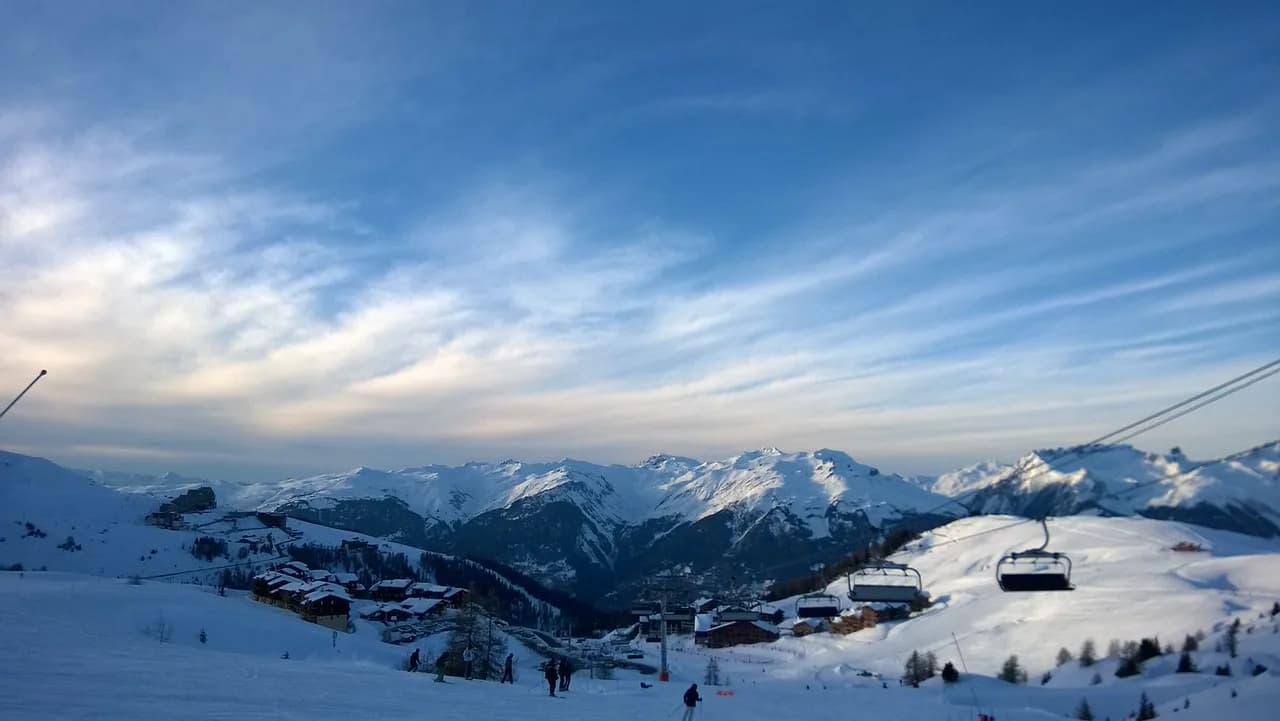
La Plagne works as a snowboarding base because the freestyle terrain, the cruising piste and the beginner zones sit in different parts of one big resort, so your choice of village shapes your week more than your ability does. Riders chasing park laps want to be near Belle-Plagne; riders who prefer tree-lined runs and quieter villages should look lower down at Montalbert or Montchavin-les-Coches. This guide sets out what the resort publishes about its terrain and then walks through the practical decisions: which pass, which lessons, which hire shop and when to travel.
What La Plagne Offers Snowboarders
The La Plagne ski area runs 139 downhill runs served by 77 lifts, covering 225 km of piste, and it tops out at 3,080 m where the Glaciers 2 gondola arrives for the Live 3000 experience. More than 70 per cent of the runs sit above 2,000 m, which is the single most useful fact for anyone booking a board trip: the upper mountain holds its cover while the valley warms up. A spread of 78 blue runs and 52 red and black runs within La Plagne gives a boarder plenty to ride without ever crossing into the linked area.
Add the Paradiski link and the count jumps to 425 km of runs and 129 lifts shared with Les Arcs and Peisey-Vallandry, joined by the Vanoise Express cable car. The crossing itself is part of the day out, with a transparent floor showing the ground far below. Treat the link as a day trip rather than a default: the riding on the far side is excellent, but you lose time in transit and the last lift back matters.
For a wider look at how the villages, sectors and lift system fit together before you commit to a base, the La Plagne Skiing Guide covers the resort layout in more depth.
Riders Nation Snowpark at Belle-Plagne
The Riders Nation snowpark sits at Belle-Plagne and is built around four freestyle lines and 36 modules, graded from XS to XL so that a first-time park rider and a seasoned jumper can share the same area. Seven educational totems at the entrance identify the difficulty of each level, and a 700 m visitor access line lets you move between the lines, inspect the modules and judge whether a feature is within your comfort zone before dropping in. A chill-out zone with deckchairs at the end of the course gives you somewhere to rest between laps.
The grading is the practical detail worth planning around. Start on the XS and S lines to dial in your board control and switch riding, then move up once you are clearing features cleanly and consistently rather than hopefully. The L and XL lines are where the serious riders congregate, and the visitor line means you can watch the standard before deciding whether to join in.
Basing yourself at Belle-Plagne or neighbouring Plagne Bellecôte puts you within a short lift ride of the park, which matters if you want a morning session before the snow softens. Plagne Centre is the other sensible option, with its own access to the upper mountain via the Grande Rochette funicular and the Colorado chairlift serving the Buffalo Park and Buffalo Kids fun runs.
Boardercross and the Mini Half-Pipe
La Plagne's freestyle terrain is not confined to one park. Two boardercross courses are cut into natural gullies with compression and banked turns, one in the Champagny-en-Vanoise sector and the other at Montchavin-les-Coches, which gives riders based in the lower villages their own race-style line without trekking to Belle-Plagne. A mini half-pipe sits just above the village of Plagne Bellecôte, pitched as a learning pipe: ride through it to get used to transitions and speed before attempting any tricks.
The distinction matters when you plan a week. The Riders Nation park is the place for technical progression on kickers and rails, while the boardercross courses suit riders who prefer flowing, turn-heavy terrain and the mini half-pipe is a low-pressure introduction to pipe riding. Spreading sessions across all three keeps a group with mixed ambitions happy.
Which Sectors Suit Which Rider
Plagne Centre, Belle-Plagne and Plagne Bellecôte form the natural circuit for park-focused riders, with the Funslope reached by the Arpette chairlift from Plagne Bellecôte and its picnic tables at the top making a family lunch stop easy. The Funslope is described as the longest of its kind in Europe, a gentle run punctuated with tunnels, bridges, banked turns and other modules that suit children and playful adults alike.
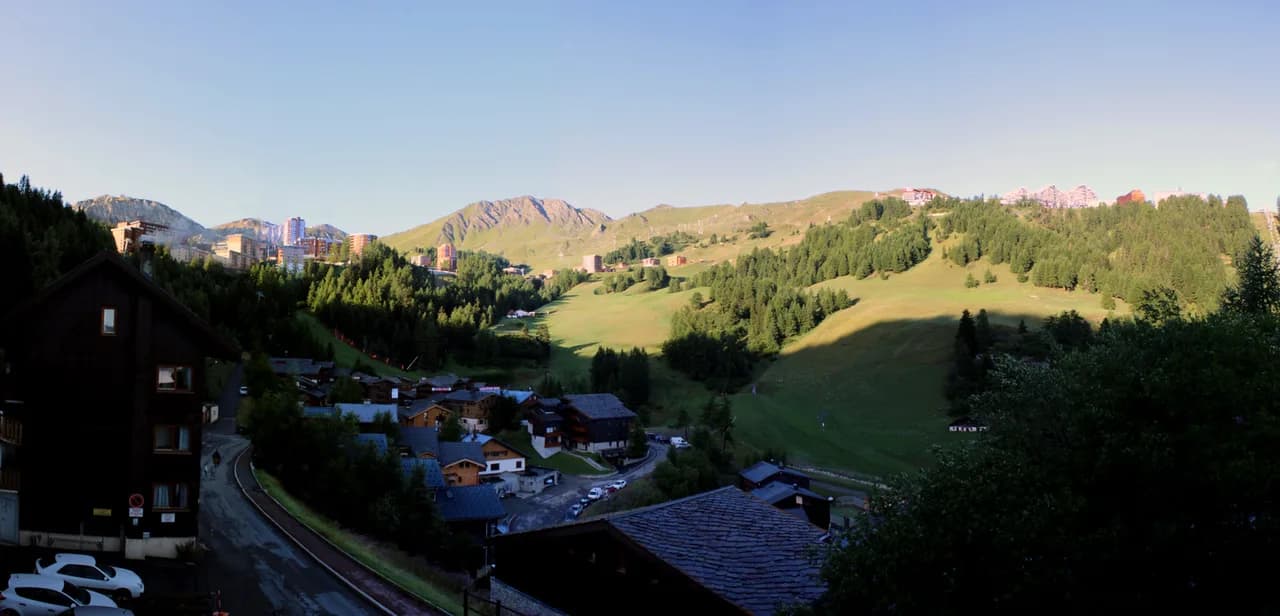
Montalbert, at 1,350 m, and Montchavin-les-Coches, between 1,250 and 1,450 m, offer the opposite experience: forest riding where the terrain is less mineral and the trees give definition on flat-light days at altitude. These low villages work well for beginners and for anyone who wants to ride back to their accommodation rather than download at the end of the day.
Blue-run riders are unusually well served here, with 78 blue runs inside La Plagne and 128 across Paradiski, enough to cross the whole area on gentle terrain. If your group mixes a confident cruiser with a nervous beginner, that density of blues is the reason La Plagne holds together as a shared trip.
Beginner Snowboarders: Free Lifts and First Days
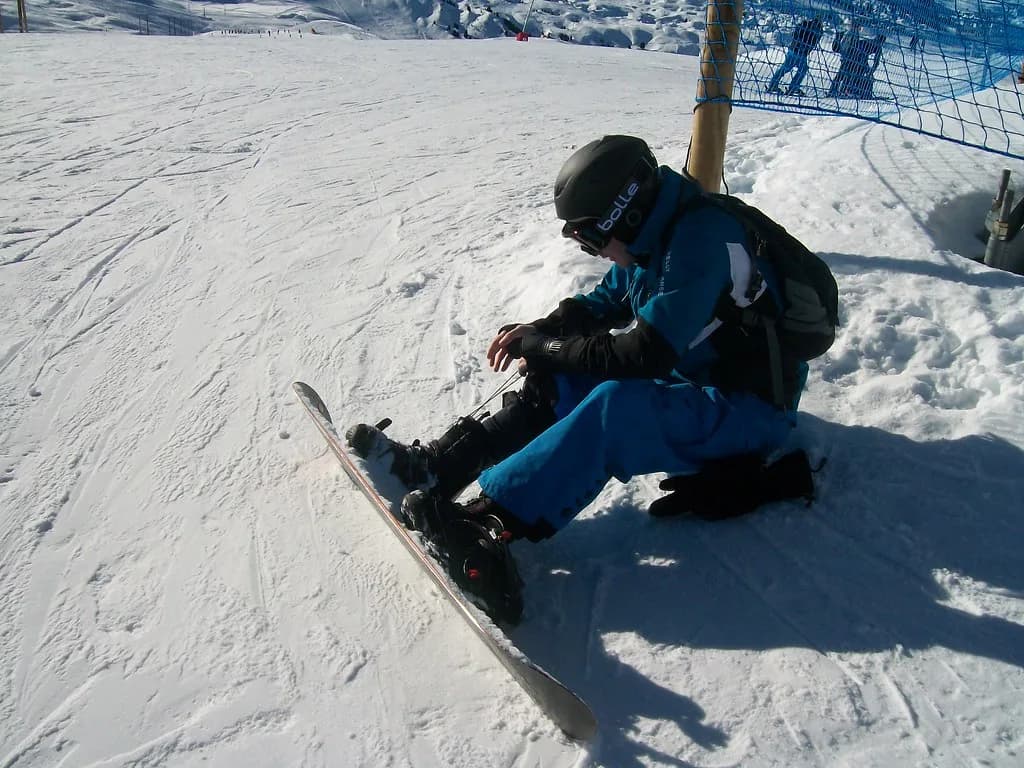
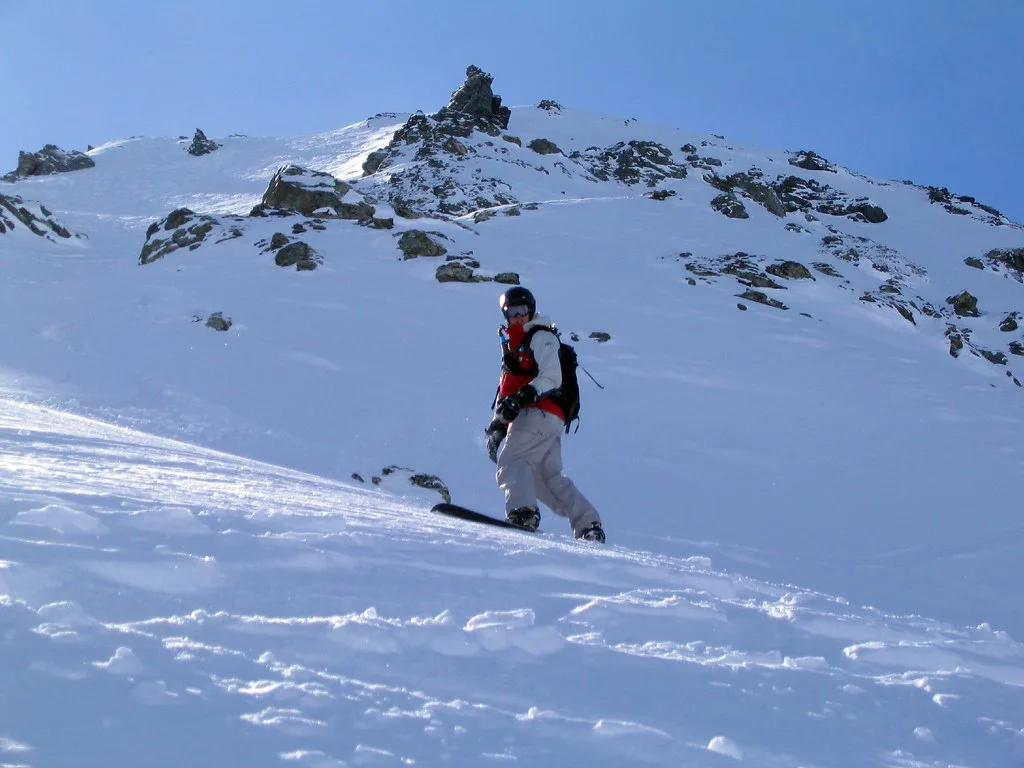
Sixteen lifts in the beginner areas are free, which changes the arithmetic of a first snowboarding week: you can learn on the lower slopes without buying a full-area pass on day one. Once you are linking turns and ready for more terrain, the Cool Ski package provides access to safe, beginner-friendly itineraries at a lower cost than the full pass. The resort also operates snow gardens that start children skiing from the age of three.
Base yourself close to a beginner zone rather than chasing the biggest village. Montalbert and Montchavin-les-Coches both pair easy local slopes with a village pass option, so a first-timer can ride outside the accommodation and add area coverage later in the week. The La Plagne ski pass guide sets out how coverage tiers compare if you are weighing a village pass against a full La Plagne pass for a mixed-ability group.
Pedestrian-accessible lifts, including some that lead directly to high-altitude restaurants, mean non-riding members of the group can still meet you up the mountain for lunch. It is a small thing that makes a family trip with one non-snowboarder considerably easier to organise.
Altitude, Season and the April Sequence
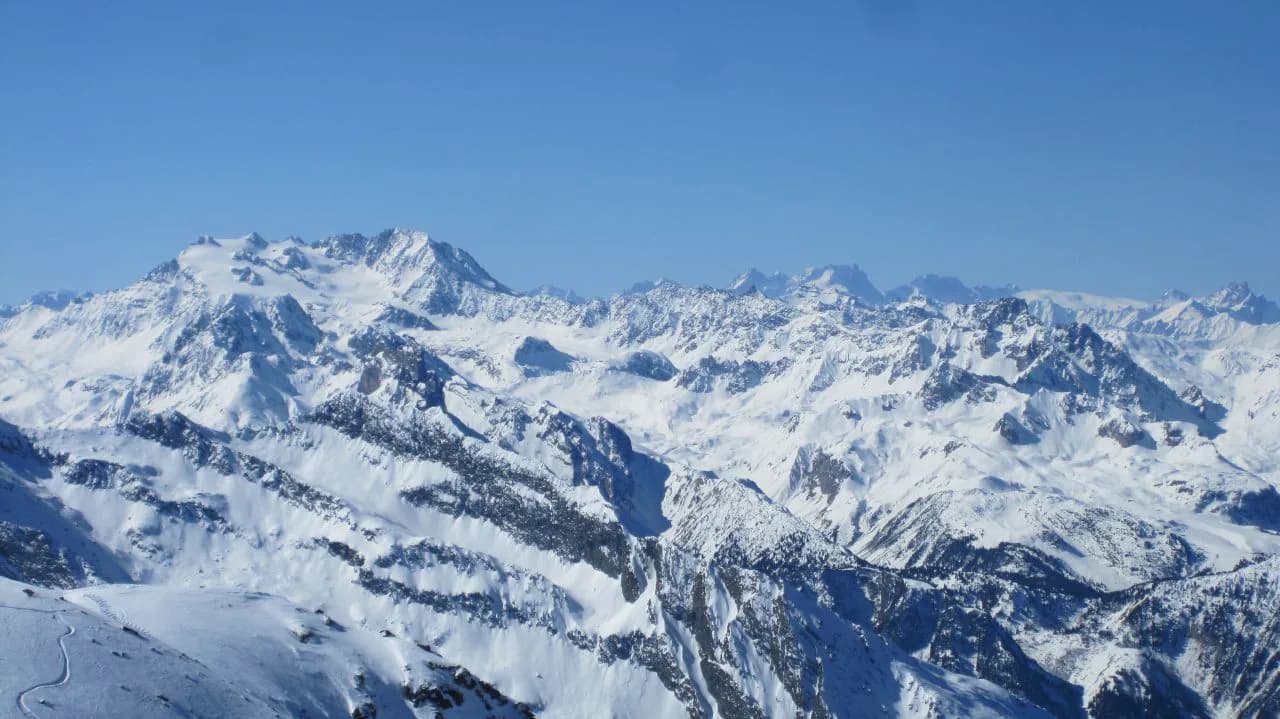
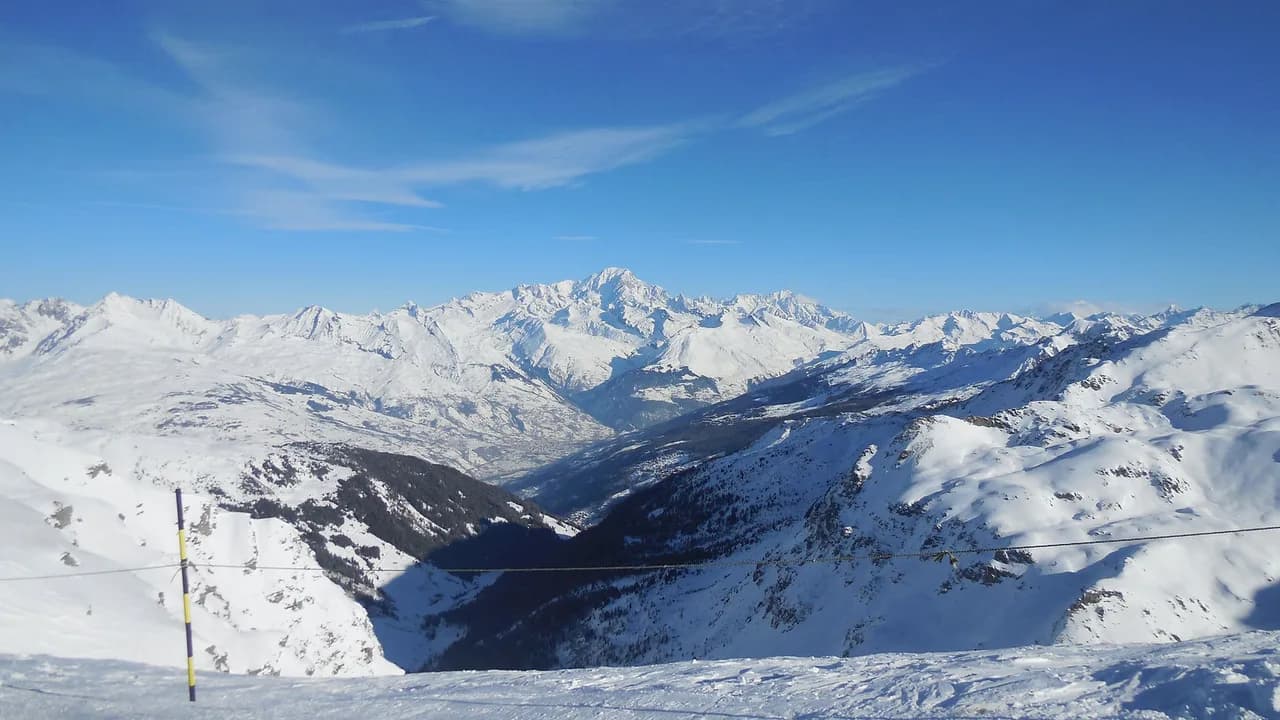
La Plagne's slopes are open from mid-December through to April, and the altitude profile explains the shape of the season: the top station at 3,080 m plus the Roche de Mio, Grande Rochette and Verdons summits above 2,500 m keep the upper runs in condition long after the valley has warmed. Exposures run both north and south, so spring riding is a matter of following the sun around the mountain rather than sticking to one face.
In mid-April the low-altitude slopes at Montchavin-les-Coches and Montalbert are the first to close, before the high-altitude area follows for a few weeks. If you are booking a late-season trip, plan to ride the upper mountain and choose a base with lift access to it rather than a village whose local runs may already have shut. The La Plagne Piste map Guide explains how to read the live opening information on the official map during the season.
For the opening and closing dates of the specific week you want, check the official La Plagne site rather than relying on last season's pattern, since the published dates are set per season.
Lift Passes: La Plagne, Village or Paradiski
Three pass decisions shape a snowboarding budget. The La Plagne pass covers the local 225 km; village passes for Montalbert and Montchavin-les-Coches suit riders staying low who mainly want their local slopes; and the Paradiski pass covers the full 425 km linked area. The official piste information describes the Paradiski choice as either a day or week pass or an extension added to a valid La Plagne pass, which means you can buy locally first and pay for the link only when you plan to cross the Vanoise Express.
The extension is the smarter buy for most riders. Weather windows close the link occasionally, and a boarder who has paid for seven days of Paradiski but spends five of them lapping the Riders Nation park has overpaid. Decide after your first two days, once you know how much of the local area you have covered.
Lift-pass prices change by season and by duration, and the official La Plagne site publishes the current tariff rather than a fixed figure. Buy online ahead of arrival where the resort offers it, and carry the pass somewhere it will not be lost in a deep snow fall. The La Plagne Ski Pass Guide compares the coverage tiers in more detail.
Snowboard Lessons and Equipment Hire
ESF La Plagne Centre publishes adult snowboard course formats by the numbers. A six-morning stage runs from Sunday to Friday, 9.15am to 12pm, at 299 euros, with a six-afternoon option at the same price, while a further six-afternoon format is listed at 224 euros. Mini stages of three afternoons, Wednesday to Friday, appear at 128 euros and 149 euros, and a full six-day stage combining mornings and afternoons is listed at 406 euros. A lift pass is compulsory and offered as an option for beginner and Snow 1 levels with a 36 per cent discount on the public rate, so choose the package that includes it if you have no pass yet.
Meeting points are spread across Plagne Centre, Plagne Villages, Plagne Soleil and Plagne 1800, so book the location that matches your accommodation rather than the one nearest the park. The published rates are a snapshot and should be confirmed when you book, since course prices and timings are reset each season.
For hire, INTERSPORT Plagne Centre runs an online booking service with web prices and a seventh day free on a six-day rental, and it allows boot exchanges during your stay at no supplement, which matters more for snowboarders than skiers because boot fit drives edge control. The shop also stocks snowboards and boots for all styles alongside its ski range and offers an option to cancel up to 24 hours before your first day. Book before you travel if you want a specific board size in peak weeks.
If you would rather compare shops across the resort before committing, the La Plagne ski hire guide covers named options and rental arrangements.
Getting Around and Crossing to Les Arcs
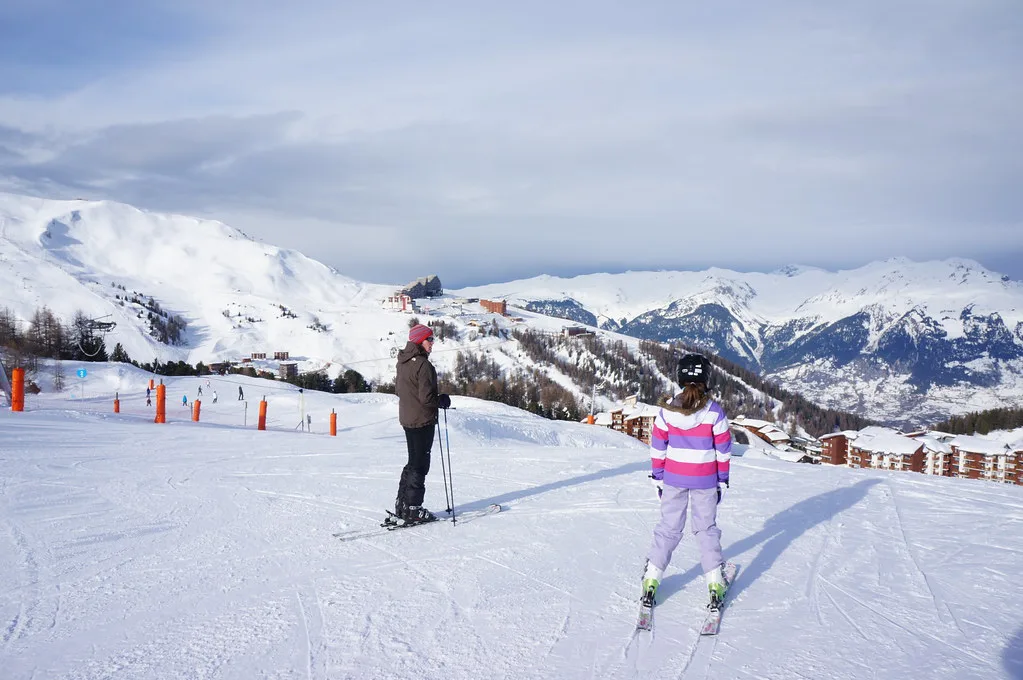
La Plagne is a string of purpose-built altitude villages plus lower traditional ones, and the lift system does the connecting rather than a road network. That means your day is shaped by which lift you start on: from Belle-Plagne the La Roche de Mio and Glaciers gondolas open the high terrain, while from Plagne Centre the Grande Rochette funicular puts you on the summit runs. Plan a circuit that returns you to your own village rather than relying on a bus at the end of the day.
Crossing to Les Arcs means riding to the Vanoise Express and taking the cable car into the Peisey-Vallandry and Les Arcs sectors. It is a full day if you want to ride anything meaningful on the other side, so pick a settled-weather day, start early and keep an eye on the time for the return crossing. Boarders who enjoy long, fast groomers will find the far side worth the trip; park riders will not miss much by staying put.
Two Things to Check Before You Book
First, confirm the season dates and lift-pass prices for your specific week on the official La Plagne site, because both are set per season and both affect whether a village pass, a La Plagne pass or a Paradiski extension is the right buy. Second, confirm your ESF course place and meeting point directly with the ski school, since formats and timings are republished each winter and popular morning stages fill early in peak weeks.
Beyond those two checks, the planning is straightforward: choose a base by riding style, budget for lessons and hire before you travel, and decide on the Paradiski link once you see how the week is going. The official piste map shows live lift and run openings during the season, which is the most reliable way to plan each morning.
Plan Your La Plagne Snowboarding Trip
La Plagne rewards a bit of forethought: the Riders Nation park at Belle-Plagne, the boardercross courses and the mini half-pipe give freestylers a genuine progression path, while the forest runs at Montalbert and Montchavin-les-Coches suit riders who would rather carve between trees than queue for a kicker. Match your base to that choice and the week organises itself.
Sort the pass type, the ESF course and the hire booking before you travel, keep the April close-down sequence in mind if you are travelling late, and treat the Paradiski crossing as an optional day out rather than the default. Riders weighing other French resorts can compare terrain and park provision in the Alpe d'Huez Snowboarding guide.
Frequently Asked Questions
Is La Plagne good for snowboarding?
Yes. La Plagne has a graded freestyle park at Belle-Plagne with four lines and 36 modules, two boardercross courses and a mini half-pipe above Plagne Bellecôte, plus 225 km of local piste and a link to the 425 km Paradiski area. The mix suits park riders, cruisers and beginners alike.
Where is the snowpark in La Plagne?
The Riders Nation snowpark is at Belle-Plagne. It has four freestyle lines and 36 modules graded from XS to XL, seven educational totems at the entrance and a 700 m visitor access line so you can inspect the features before riding them.
Do you need a Paradiski pass to snowboard in La Plagne?
No. A La Plagne pass covers the local area, and you can add a Paradiski extension later when you actually plan to cross the Vanoise Express to Les Arcs and Peisey-Vallandry. That keeps you from paying for the link on days you stay local.
Are there free lifts for beginners in La Plagne?
Yes. Sixteen lifts in the beginner areas are free, so you can learn the basics before buying a pass. The Cool Ski package then gives access to safe beginner-friendly itineraries once you are ready to progress.
How much are snowboard lessons in La Plagne?
ESF La Plagne Centre publishes adult group formats ranging from three-afternoon mini stages to six-day courses, with different rates for morning, afternoon and full-day options. The rates are reset each season, so confirm the current price and meeting point when you book.
When does the La Plagne snowboarding season end?
La Plagne's slopes run from mid-December into April. The low villages at Montchavin-les-Coches and Montalbert close first around mid-April, then the high-altitude area follows. Check the official site for the exact closing dates of your chosen week.
Sources
Useful notes for your next ski trip
Optional updates to our Alpine resort guides.
You might also like
Continue reading
More guides you'll find useful