Engelberg Ski Hire: Where to Rent and What to Book
Plan Engelberg ski hire with this practical guide to village and base-station shops, fitting, booking timing and how pass choice shapes the kit you need.
On this page
Engelberg ski hire is straightforward once you know how the resort is arranged. The village sits at the valley floor and the Titlis cable car station anchors the bottom of the lift system, so your choice of shop follows from where you start and finish each day. This guide covers shop locations, what to hire for which terrain, when to book and how to get boots fitted properly before you ride the first lift.
Treat hire as part of the trip design rather than an afterthought. The gear you want for a family day around Trübsee differs from what suits a full-area push up to the glacier, and the pass you buy should inform that decision. The rest is timing: reserve before a peak week, collect mid-week where you can, and leave enough slack in the first morning for a fitting that actually works.
The Resort at a Glance
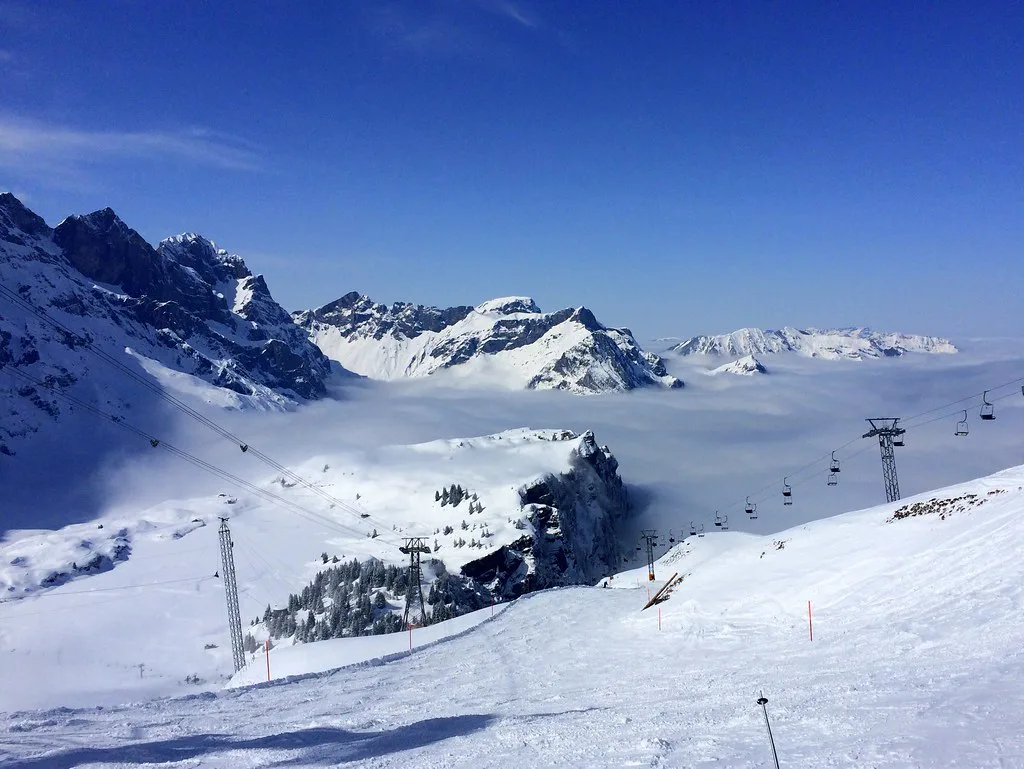
Engelberg's ski terrain runs from 1,050 m in the valley to 3,020 m at the top, with 82 km of piste served by 22 lifts, according to the resort's official skiing pages. That vertical range is the single most useful fact for hire planning, because conditions and terrain change markedly between the lower sectors and the upper mountain. A ski that feels comfortable on a groomed lower run may not be what you want on the glacier.
The 82 km divides into roughly 26 easy, 47 intermediate and 9 difficult kilometres, so the resort's centre of gravity sits firmly in the intermediate range. If you are hiring for a mixed-ability group, that distribution favours forgiving all-mountain skis rather than specialist carving kit. Check the current piste breakdown and lift status with the lift company before you travel, since figures and openings shift through the winter.
Named sectors matter for gear choice. Trübsee and Gerschni are the lower, gentler zones and have their own day-pass products, while the upper mountain around Stand and the Klein Titlis glacier serves stronger skiers. Read the terrain before you commit to a rental tier, then hire for the week you will actually ski rather than the most demanding day you imagine.
Village Shops vs the Titlis Cable Car Station
Most skiers face a simple trade-off: hire in the village or at the base station of the Titlis cable car. Village shops put you close to your accommodation, which makes early collection and end-of-day returns easy on foot, and lets you sort boots out the evening before your first ski day. Base-station shops save you carrying gear to the lift, which is worth real effort on a cold morning with children in tow.
Engelberg has established rental operators with shops in both locations. Titlis Sport's main rental shop sits at the Titlis cable car station, with two further shops centrally in the village, and Titlis Sport is described as a long-established local specialist that also supplies avalanche airbag sets. That layout means you can size and collect at the base station and, if something needs swapping, deal with it in the village.
International rental brand SKISET also operates in Engelberg, positioning its team next to the slopes and marketing its staff's familiarity with the resort's terrain, snow and weather. Its listing gives the resort's altitude and piste statistics alongside the rental service, which is a useful cross-check when you are sizing up the area before booking. What it does not publish there is pricing, so compare quotes directly between operators.
A practical rule: if you are staying within walking distance of the lift and skiing full days, the base station wins on convenience. If you have a car, small children, or plan rest days, a village shop gives you more flexibility to collect late or return early. Either way, settle the shop's location and collection arrangements when you book. Skiers weighing this same choice elsewhere can compare it with Andermatt ski hire.
What to Hire for Which Terrain
For the Trübsee and Gerschni zones, a mid-range all-mountain ski is the sensible default. These lower sectors are where families and newer skiers spend their time, and a softer, shorter ski makes the learning curve kinder. If you are booking a Trübsee day pass rather than a full-area pass, there is no point paying for a stiff expert carver you will never load properly.
Stronger skiers heading for the upper mountain and the glacier should hire accordingly. Longer, stiffer skis with a wider waist handle variable snow and the steeper pitches around the top stations far better than entry-level kit. Tell the shop where you intend to ski; the staff adjust the ski to your level, style and goals, and that conversation is exactly where the value of a shop fitting lies.
Snowboarders are served by the same operators, and the same logic applies: a softer board for the lower zones, something stiffer and longer for high-speed groomers and the glacier. Boots matter more than the board for most riders, so budget your fitting time there. Helmets are available to hire as part of standard rental packages at most shops, which saves luggage space.
Off-piste kit is a separate decision. Avalanche airbag sets are hireable rather than included in a standard package, and they are the item to reserve explicitly if you plan to leave the marked runs. Standard rental does not cover transceivers, probes and shovels in the way a dedicated backcountry set does, so confirm what is actually in the bag before you leave the shop.
Booking Timing: What to Reserve and When
Book ahead for peak weeks: Christmas and New Year, February half-term and the Easter period. In those windows, popular boot sizes and performance skis run short, and the shops' fitting benches get busy. Reserving online before you travel locks in the model tier and size range you want, and it usually shortens the collection process on arrival.
Outside peak periods, a day or two's notice is usually enough for standard recreational kit, and many skiers simply walk in on the first morning. The risk is boot availability in common sizes, not skis. If you have unusual foot sizes or need a specific boot flex, book regardless of the season; that is the one part of the package where a walk-in can genuinely fail.
Multi-day hire is the standard approach and generally better value than daily rental, since you keep the same fitted boots all week and only swap skis if conditions change. Ask about swapping before you pay: good operators will let you change skis mid-hire as snow conditions or your confidence shift. That flexibility is worth more than a small saving on a fixed single-model booking.
Fitting: How Long to Allow and How to Test Boots
Allow 45 to 60 minutes for a proper fitting on your first day, and treat it as a fixed appointment rather than something squeezed between breakfast and the first lift. Boots take the longest, because shell fit, flex and liner pressure all need checking. Bring the socks you will actually ski in; thin socks change the fit enough to matter.
Test boots before you leave the shop. Put them on, buckle them as you would on the hill, stand and flex forward, then walk a few steps and check the heel is locked down and the toes barely brush the front when you stand straight. If anything pinches or your heel lifts, say so there and then; fixing it in the shop takes minutes, while fixing it on the mountain ruins a morning.
Use the same routine for skis: stand on them, check the binding release setting against your weight, height and ability, and make sure the shop has recorded your details correctly. A quick visual check of edges and bases costs nothing and catches a poorly prepared pair before you get to the lift. If you are unsure about anything, ask the technician to explain it rather than nodding along.
Pairing Hire with Ski School and Beginner Kit
Beginners should hire at the lower end of the range and put the saved money into lessons. A soft, short ski is easier to turn and more forgiving while you learn, and beginner boots with a softer flex let you feel the front of the boot without fighting it. Book beginner equipment and lessons together where possible, so the first morning is one queue rather than two.
The resort's ski school and rental ecosystem is set up for first-timers, and the lower Trübsee and Gerschni zones give beginners terrain that matches hired beginner kit. Ask the school which lift pass they recommend for the first days; it may be a lower-zone product rather than a full-area pass, which changes what you need from your rental package.
Getting to the Shops and Around the Village
Engelberg is a compact village, and most accommodation is within a short walk of either the Titlis cable car station or the central shops. That proximity is why the village-versus-base-station decision is mostly about convenience rather than distance: you are choosing which end of your day carries the gear. Ski buses and on-foot transfers cover the rest, and the layout is easy to learn on the first morning.
If you are arriving by train, the station sits in the village and the lifts are a short walk or bus ride away, so collecting hire on arrival day is realistic. Travelling skiers should confirm luggage storage with the shop if they arrive before check-in. Arriving late in the evening, plan to collect the following morning and allow the full fitting window.
Money-Saving Levers
Hotel guest discounts are a concrete lever. Hotel Hoheneck, for example, advertises a 10 per cent discount on ski rental at its partner Titlis Sport for guests, alongside the same partner's main base-station shop and two village outlets. Treat this as a hotel-specific benefit rather than a resort-wide rule, and ask your own accommodation whether it has a similar arrangement.
Other levers are timing and packaging. Collecting mid-week often means quieter shops and better attention during fitting, and pre-season online booking tends to secure both the model and the price you expect. Multi-day packages beat daily rates, and returning gear the evening before departure can save a rushed final morning. Ask what is included in the package before comparing headline figures.
Common Mistakes to Avoid
The most common error is over-speccing: hiring stiff expert skis for a first week, then fighting them all holiday. The second is under-investing in boots, which matter more than skis for almost every recreational skier. The third is forgetting the off-piste extras entirely and either skiing without them or scrambling for an airbag on the morning you need one.
A fourth is treating the pass and the kit as unrelated decisions. A Trübsee or Gerschni day pass implies lower-zone skiing and therefore different equipment than a full-area day on the glacier. Decide the pass first, then hire to match it. Check pass products and current prices with the lift company before you commit, and confirm any hire discount at the same time.
Quick Checklist Before You Collect
Before you head to the shop, confirm your booking reference, the shop location and its collection window, and bring your own ski socks. Have your height, weight and ability to hand for binding setup, and know which pass you hold so the technician can match the ski to your terrain. If you are hiring for children, bring them along for the fitting rather than guessing sizes.
On collection, check boots as described, confirm the binding settings, and ask explicitly about mid-hire swaps and the return time. If you have booked an airbag set, inspect it in the shop and confirm how it is triggered and packed. Sort any problems before you leave; everything is easier to fix at the counter than at 2,500 m.
Plan Your Engelberg Hire Around Your Skiing
Engelberg ski hire comes down to three decisions: where you collect, what you hire for the terrain you will ski, and when you book. Choose the base station for convenience or the village for flexibility, match skis and boots to the lower zones or the glacier, and reserve early for peak weeks. Then let the pass you buy determine the kit you carry.
The rest is routine: allow an hour for fitting, test boots before leaving, and confirm swaps, discounts and return times at the counter. Prices and pass products change, so check the Titlis Cableways current pages and confirm rental quotes directly with the shop before you travel. With those boxes ticked, the equipment stops being a variable and the skiing takes over.
Frequently Asked Questions
Where can I hire skis in Engelberg?
You can hire at shops in the village centre and at the Titlis cable car station. Titlis Sport runs a main rental shop at the base station plus two central village outlets, SKISET operates in the resort, and other local operators offer similar services. Choose the base station if you want to walk straight to the lift, or the village if you prefer easy collection near your accommodation.
Is it cheaper to hire skis in the village or at the Titlis cable car station?
Location is usually not the main price driver; the rental tier, hire length and any guest discount matter more. Base-station shops save time and carrying, while village shops offer flexibility for late collection and early returns. Compare quotes from more than one operator before booking, and ask your accommodation whether it has a partner shop.
How much does ski hire cost in Engelberg?
Rental prices vary by operator, equipment tier, season and hire length, and are not published consistently across shops. Request quotes directly from the operators for your dates, and ask whether boots, helmets and insurance are included in the headline figure. Package pricing for a full week is usually better value than paying day by day.
Do I need to book ski hire in advance?
Book ahead for Christmas, New Year, February half-term and Easter, when popular sizes and performance models run short. Outside peak weeks, standard recreational kit is often available at short notice. Book in advance if you need a specific boot flex or unusual size, since boots rather than skis are the usual bottleneck.
Can I hire an avalanche airbag in Engelberg?
Yes, airbag sets are available for hire as a distinct item rather than part of standard rental, and Titlis Sport is identified as supplying them. Reserve explicitly if you plan to leave marked runs, and confirm what the set includes, such as canister type and pack capacity, before you collect it.
Which Engelberg ski pass should I buy for a short hire period?
For short trips focused on the lower mountain, Trübsee and Gerschni day passes cover the terrain most leisure skiers and families use. A full-area pass makes sense if you intend to ski the upper mountain and glacier. Match your pass to the equipment you hire; check current pass products with the lift company.
Is Engelberg good for beginners hiring their first kit?
Yes. The lower Trübsee and Gerschni zones provide gentle terrain, and rental shops stock beginner skis and softer boots. Hire at the lower end of the range and put the saving into lessons, and bring children to the fitting so sizes are right from day one.
How long does a ski hire fitting take?
Allow 45 to 60 minutes on your first day, with most of that spent on boots. Test them by buckling up, flexing forward and walking to check heel hold and toe room before leaving the shop. Skis and binding settings take only a few minutes once the boots are right.
Sources
Useful notes for your next ski trip
Optional updates to our Alpine resort guides.
You might also like
Continue reading
More guides you'll find useful