Cortina Snowboarding Guide: Terrain, Lifts and Where to Ride
Plan a snowboarding trip to Cortina d'Ampezzo: which ski areas suit which ability, how to link them, hire and school options, and what to book early.
On this page
Cortina d'Ampezzo rewards riders who plan around its layout rather than against it. The sectors sit above and around a real town at roughly 1,220m, separated by valley and road, so a board day usually means committing to one area or using the newer gondola link instead of cruising one unbroken circuit. That single fact shapes everything from where you sleep to which pass you buy.
What the resort does well is range: forgiving blues and reds in several sectors, a genuine race pedigree at Tofana, and access to the wider Dolomiti Superski network for riders who want to roam. What it does less well is the flat connecting traverse, which is where a board becomes a compromise. This guide works through the sectors, the practicalities that matter on a snowboard, and how to structure a trip.
The Four Sectors and How They Ride
Cortina's lift-served terrain splits into Tofana-Socrepes, Faloria-Cristallo, 5 Torri-Lagazuoi and the newer Cortina Skyline gondola, which starts at Son dei Prade and joins Tofana to the 5 Torri and Lagazuoi area. In practice that means you can now reach the Falzarego side without a bus or car, and riders coming from Alta Badia and Val Gardena can ski across to the foot of Tofana.
For a snowboarder, the useful way to read the resort is by pitch rather than prestige. Tofana and Faloria hold most of the cruising, 5 Torri-Lagazuoi is mellow and scenic, and the race-steep upper pitches at Tofana are where stronger riders head. Keep a copy of the sector boundaries to hand before you commit to a day's plan, because crossing between areas mid-morning can eat a surprising amount of time.
Tofana-Socrepes: The Biggest Sector
Tofana-Socrepes is the largest of the local areas, with easy-going blue and red pistes around Socrepes and Pocol lower down and steeper terrain higher up, including the Olympia piste that has long hosted a women's World Cup downhill each January. The area counts 37 slopes and 11 lifts, mixing one gondola, one cable car and nine chairlifts.
Socrepes is also where the dedicated children's slope sits, served by its own double chairlift, which makes it the natural first-day base for families and nervous beginners on boards. The trade-off is that the gentlest terrain is low and can be busy in peak weeks, so ride early and treat the upper mountain as the afternoon objective once confidence builds.
Faloria-Cristallo: Town-Centre Access
Faloria-Cristallo is the sector you can reach on foot from the centre of Cortina, via the cable car up to Faloria, and it is the most convenient choice for a short trip or a mixed-ability group staying in town. The riding is largely cruisy blues and reds with 15 slopes and seven lifts, including one cable car, five chairlifts and a T-bar.
This area is also known for a long season, typically stretching from November into May, which makes it the sensible bet for early or late trips when you want lift-served riding rather than a town break. Snowboarders should note the T-bar in the lift mix, since surface drags are the one lift type that asks more of a rider on a board than on skis.
5 Torri-Lagazuoi and the Armentarola Run
5 Torri-Lagazuoi stretches between the Giau and Falzarego passes and is the friendliest sector on paper: 16 slopes made up of nine reds and seven blues, with seven lifts. Its signature is the Armentarola, a roughly 8.5km run that finishes with the famous horse-drag tow across the flat to the road, a genuinely unusual end to a board run.
Plan the Armentarola as a destination rather than a lap, because the flat finish and the tow mean you will be unclipping and standing around. It is also the gateway into longer Dolomiti Superski tours and the connection towards Alta Badia, so riders with a full-area pass can use it as the start of a bigger day rather than a quick circuit; if you continue that way, our Alta Badia snowboarding guide covers the terrain on the other side.
Board Practicalities: Flats, Catwalks and Drag Lifts
The honest picture is that Cortina's layout puts some flat connecting sections and drag lifts between you and the best riding, and those are exactly where a snowboard is slower than skis. Build your day around one sector with a chairlift-based circuit, and treat the flat link between areas as a one-way move rather than something to repeat.
The Cortina Skyline gondola has improved this considerably by removing the bus or car transfer between Tofana and the 5 Torri area, so riders can reach Lagazuoi on skis and boards without a road journey. Use it for a single big day across the resort rather than expecting every sector to flow together.
Beginner and Improver Plan
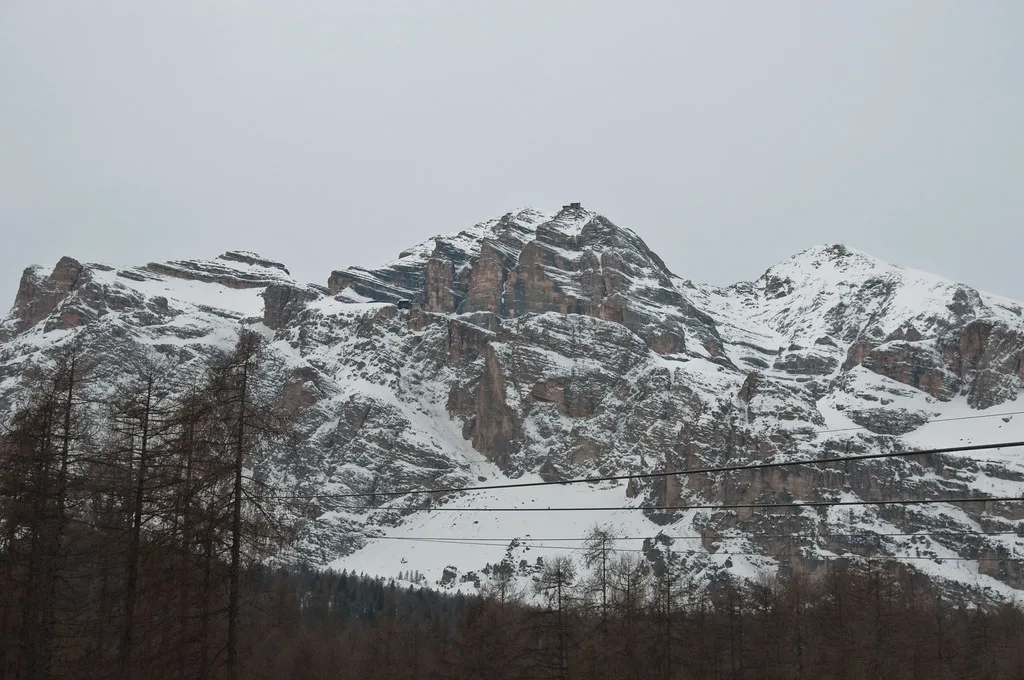
Beginners should start at Socrepes, where the children's slope and its dedicated chairlift give a contained space away from through traffic, or at Pocol, which is the area's other gentle zone and a common first base for new boarders. The lower pistes around Socrepes and Pocol are the easiest in the Tofana area; the steeper runs sit higher up.
Improvers should then move to the blue and red pistes of Faloria-Cristallo, which offer more length and variety without the intimidating pitch of the race terrain. Booking lessons for the first two mornings is the most efficient use of a short trip, and it is worth arranging them before you travel rather than queuing in resort during a peak week.
Hire and Schools
For town-centre convenience, Centro Boarderline is a shop, rental operation and snowboard school located in the middle of Cortina close to the Faloria cable car, which makes it a practical base for collecting a board before riding that sector.
Cortina has a well-regarded ski school and a spread of rental shops, so the real decision is whether to hire in town or at a lift base. Town hire gives more choice and easier swaps; base hire saves carrying a board across Cortina in the morning. Reserve your board size ahead of a February or Christmas trip and collect the evening before your first day.
Lift Pass: Local Cortina or Dolomiti Superski
The local Cortina pass covers the three local areas, Tofana-Socrepes, Faloria-Cristallo and 5 Torri-Lagazuoi. The full Dolomiti Superski pass opens up the wider network, which the resort describes as around 1,200km of piste across the linked valleys. For a week with a car or a taste for touring, the bigger pass earns its keep; for a short trip based in town, the local pass is usually enough.
Buy online before you travel where possible, because pass products and multi-day structures change from season to season and the official Dolomiti Superski site is the reliable place to compare them for your dates.
Off-Piste, Snowkiting and Fat Biking
Beyond the marked runs, Cortina has a reputation for freeride terrain, and the sensible way in is with a guide who knows the local snowpack and access points. The Ampezzo Dolomites also host snowshoe routes, ski mountaineering and heli-assisted options, all of which need proper planning rather than improvisation on the day.
For a change of pace, snowkiting runs on the open ground at Passo Giau, with a minimum age of 15, and fat bikes can be rented in town for the trails around Col Gallina. Both are weather-dependent and worth arranging through a local operator once you have a forecast you trust.
Getting There and Around
The usual arrival airports are Venice, Verona and Innsbruck, with road transfers of roughly two and a quarter hours from Venice, three and a quarter from Verona and three hours from Innsbruck, traffic depending. Innsbruck is the shortest rail-and-road combination for some UK travellers, while Venice has the most flight choice.
Once in resort, Cortina's sectors are spread around the town, so a base near the Faloria cable car or the centre puts you within walking distance of the most convenient lift. Local buses serve the outlying lift stations, and the gondola link has reduced the need to drive between areas. Timetables are posted at the bus stops and lift stations in town.
When to Go and What to Book Early
Faloria-Cristallo's long season, typically November into May, gives you early and late options that many Alpine resorts cannot match. January brings the World Cup downhill at Tofana, which draws crowds, and February half-term fills the town. Late January and mid-March are the sweet spots for quieter pistes and better-value accommodation.
Book accommodation, hire and lessons before you travel for Christmas, New Year, half-term and the World Cup week, when the town's hotels fill and the best-located rooms go first. For a ski-in, ski-out experience you will be limited, since most Cortina lodging sits in or near the centre rather than on the snow; budget for a short walk or shuttle each morning.
Where to Base Yourself
Staying in the centre puts you near the Faloria cable car, restaurants and the hire shops, which suits riders who want evenings in town and a straightforward morning start. Staying near Socrepes or Pocol suits families and beginners who would rather be on the snow quickly. Neither is wrong; they just serve different trips.
A practical compromise is a central base with a short morning transfer to whichever sector you ride that day, especially if you plan to use the Skyline link towards 5 Torri. For a full picture of the resort before you book, work through the skiing guide alongside this one.
Verdict: Who Should Ride Cortina
Cortina suits snowboarders who value scenery, cruising blues and reds, and a real town over a compact circuit. It also suits riders with a car or a taste for touring who will use the Dolomiti Superski network, and families who want a friendly beginner zone at Socrepes.
Riders who want everything connected under one lift pass, no flat traverses and a pure snowboard village should look at a more compact area. If you go, pick a sector per day, book hire and lessons early and keep the Skyline link for your big day out.
Frequently Asked Questions
Is Cortina good for snowboarding?
Yes, for riders who want variety, forgiving blues and reds, and a proper mountain town. The sectors are separated, so plan a day per area or use the Cortina Skyline gondola to link Tofana with 5 Torri and Lagazuoi.
Which Cortina ski area is best for beginner snowboarders?
Socrepes has a dedicated children's slope with its own chairlift and easy blue and red pistes nearby, and Pocol is the other gentle zone. Faloria-Cristallo is the next step for improvers once you are comfortable on blues.
Do I need the local Cortina lift pass or the Dolomiti Superski pass?
The local pass covers Tofana-Socrepes, Faloria-Cristallo and 5 Torri-Lagazuoi, which is plenty for a short trip based in town. The full Dolomiti Superski pass gives access to the wider linked network and is the better buy for a week with touring plans.
Can you snowboard the Armentarola run from Lagazuoi?
Yes, and it is worth doing once. The run is about 8.5km and finishes with a horse-drag tow across the flat to the road, so expect to unclip and stand around rather than lap it.
Where can I hire a snowboard in Cortina?
Centro Boarderline is a shop, rental and snowboard school in the town centre near the Faloria cable car. Resort ski schools and other rental shops also operate, and town-centre hire gives more choice and easier board swaps.
How long do transfers to Cortina take from Venice, Verona or Innsbruck?
Roughly two and a quarter hours from Venice, three and a quarter from Verona and three hours from Innsbruck, depending on traffic. Venice has the most flight choice for UK travellers.
Sources
Useful notes for your next ski trip
Optional updates to our Alpine resort guides.
You might also like
Continue reading
More guides you'll find useful