Cortina Ski Season: Dates, Snow Cover and When to Go
Cortina's ski season runs from late November to early May across four separate ski areas. See how snow, crowds and lift openings shift month by month.
On this page
Cortina d'Ampezzo is one of the oldest and most fashionable resorts in the Dolomites, and its ski season is longer than most Italian resorts can claim. The published winter window runs from late November into the first days of May, but that headline figure hides a simple truth: Cortina is four ski areas, not one, and they open and close on their own schedules. Planning around the right sector for your dates matters more here than in a resort with a single linked circuit.
This guide walks through the season month by month, from thin early-December cover to the high-altitude late-season skiing around Lagazuoi, and explains which weeks suit beginners, intermediates and strong skiers. It also covers the practical side of timing: when the Christmas rush hits, how Italian holidays shift the crowds, and what to book before you travel. Prices and daily lift hours change, so confirm them before you commit.
What the Cortina Ski Season Covers
The published season for Cortina d'Ampezzo runs from 21 November 2026 to 2 May 2027, according to the resort listing on bergfex. Treat that as the planned operating window rather than a promise that every lift and piste will run on day one: resorts publish a season envelope, then open terrain as snow and staffing allow. Your ski day is governed by daily lift hours and current piste conditions, which are published separately.
That distinction matters most at the edges of the season. A late-November trip and a late-April trip both fall inside the published window, yet they offer very different terrain. Check Cortina's own lift and piste status page in the week before you travel, and look at which sectors are actually running rather than assuming the whole mountain is open.
The Four Ski Areas That Make Up Cortina
Cortina's skiing is split into the Faloria-Cristallo-Mietres sector, the Tofana sector, and the Lagazuoi and 5 Torri area, all part of the wider Dolomiti Superski network. Together they offer 72 slopes of all levels, according to the Dolomites tourist portal. These sectors are separate mountains reached by road or shuttle rather than a single lift-linked circuit, so where you stay and how you travel between them shapes your day. The detailed layout is worth studying while planning, and a proper cortina ski map makes the road connections obvious.
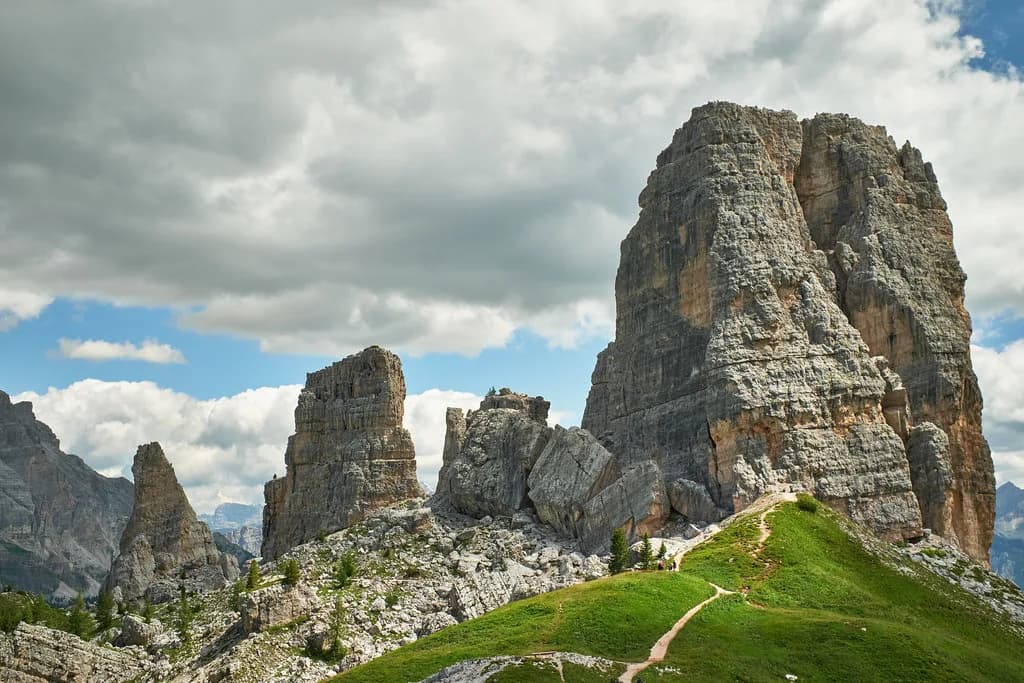
Each sector has its own character. Faloria-Cristallo-Mietres spreads 24 slopes, mostly easy and medium with five black runs, and its top station at 2,930 metres gives views across the Dolomite peaks. Tofana carries the largest single block of terrain with 47 kilometres of piste, from gentle runs at its foot to the steep black Canalone higher up. Lagazuoi and 5 Torri is the panoramic sector, reached via the Falzarego Pass and a cable car up to Rifugio Lagazuoi.
For a broader orientation to the resort, from village layout to lift bases, the Cortina Skiing Guide covers the ground this season article does not. Read the two together if you are choosing a base for a week rather than booking a single ski day.
Early Season: Late November to Mid-December
The first weeks of the published season are about altitude and snowmaking, not full-terrain skiing. Expect the higher, snowmaking-supported runs to come online first while lower and off-piste terrain waits for natural snow. The Telegraph's resort guide notes that even in a poor natural snow year coverage is usually solid because around 95 per cent of the slopes are covered by snowmaking, which is the reassurance that makes an early-December booking reasonable.
This is a good window for confident skiers who want quiet pistes and lower accommodation demand, and a poor one for beginners who need gentle nursery terrain open from day one. If your group is mixed, delay by a couple of weeks or base yourself near a sector with reliable early snowmaking. Cold, clear December days often deliver better skiing than their reputation suggests, provided you accept a partial mountain.
Christmas and New Year: The Busiest Fortnight
The Christmas and New Year fortnight is the peak of the Cortina season for demand rather than for snow. Italian and international visitors converge on the town, lift queues lengthen and accommodation prices climb, so this is the period to book furthest ahead. Ski school places and rental equipment in popular sizes go first, which is why locking in lessons and gear before autumn is the sensible move.
Snow cover is usually reliable by late December thanks to the snowmaking base, but the experience is about managing crowds. Start early, ski through lunch when others stop, and pick the sector that best matches your group's ability rather than following the masses to Tofana every morning.
January and February: The Most Reliable Snow
January and February are the safest bet for snow depth and cold, crisp conditions across all four sectors. The Christmas crowds thin after the first week of January, and the mountain settles into its most dependable stretch. This is the window to book if your priority is skiing the full spread of terrain, including the higher black runs and the Lagazuoi panorama, rather than saving money.
Cold spells are real, and the upper stations sit high enough that wind chill matters. Layer properly, plan shorter outdoor lunches and keep an eye on the daily lift status, since strong wind can suspend upper cable cars. The payoff is the most consistent snow of the winter and the best chance of skiing everything you came for.
March: The Sweet Spot
March balances snow depth, daylight and comfort better than any other month. The snowpack built through January and February is still deep, days are longer and temperatures are kinder, and the Dolomiti Superski network is fully running. For strong intermediates and advanced skiers who want long days and the freedom to roam across sectors, this is the month to target.
Crowds ease outside Italian school holidays and the spring sun softens the lower runs by afternoon. Ski the south-facing lower pistes in the morning and save the higher, colder terrain for later in the day. If you are flexible on dates and want one recommendation, March is it.
April to Early May: Spring Skiing and the Lagazuoi Advantage
The final weeks of the published season favour altitude, and Lagazuoi and 5 Torri is the sector built for it. From the 5 Torri area a lift reaches the Falzarego Pass and a cable car climbs to Rifugio Lagazuoi, where the panorama takes in the Marmolada, the Sella Group, Civetta, Pelmo and the Tofana group. Spring snow at that height holds up while lower runs turn slushy.
Late-season closing is staggered rather than uniform, so check which sectors and lifts are still operating before booking an April trip. Go for mornings on the lower mountain and the high panorama for the best snow, and expect some terrain to have shut for the year. Spring skiing here rewards flexibility over a fixed plan.
Altitude and Snow Reliability Across the Sectors
Cortina's terrain runs from beginner zones near the valley up to nearly 3,000 metres, and that range is what makes the season stretch from November to May. The high sectors hold snow when the lower runs struggle, so a trip outside the core months should be aimed at altitude. Snowmaking covers the vast majority of slopes, which keeps the piste network skiable even in a lean natural snow year.
Tofana's mix of easy runs at its foot and demanding blacks like the Canalone higher up means one sector can suit a whole group, provided everyone accepts the steeper options are for the strongest skiers. Faloria-Cristallo-Mietres leans easier overall, with most slopes rated easy or medium. Match the sector to the ability of your weakest skier and the whole day works better.
Beginner Timing: Nursery Slopes and First Lessons
Cortina's beginner infrastructure is concentrated in dedicated nursery areas rather than scattered across the mountain. Baby Socrepes is the classic first-ski zone, a separate slope with a conveyor belt and cartoon characters aimed at children. Baby Guargnè is a small nursery slope with its own baby chairlift, and Mietres adds a gentle sector within the Faloria-Cristallo-Mietres area.
For beginners, timing is everything. Avoid the opening weeks, when nursery terrain may not yet be running, and aim for January or March, when the teaching areas are fully open and instructors have space. Book lessons early for Christmas and February half-term, when demand peaks. The pistedesk guide to cortina ski lessons sets out what to look for before you commit.
Which Months Suit Which Ability
Strong intermediates and advanced skiers should target February and March, when every sector is running and the full spread of terrain, including the Tofana blacks and the Lagazuoi panorama, is accessible. Beginners do best in January or March, once nursery slopes are open and crowds have thinned. Early December and late April reward confident skiers who can live with partial terrain but punish first-timers who need the full teaching infrastructure.
Families with young children should favour the quieter weeks outside Italian school holidays, when the nursery areas and ski schools are less stretched. Whatever your level, the resort's piste grading rewards a bit of planning: check which sectors open earliest and base your accommodation accordingly. A look at the cortina ski map guide is the quickest way to see how the mountains relate to the town.
Crowds, Italian Holidays and the Race Window
Crowds in Cortina follow the Italian holiday calendar more than the snow. Christmas and New Year, the early-January Epiphany break and February school holidays are the busiest stretches, with lift queues and full accommodation. The women's World Cup race is held in the Tofana area each year, drawing spectators and closing some terrain around the event. No fixed race date is published here; check the resort's calendar before you book if you want to ski that sector during the race period.
If you want the mountain to yourself, late January after Epiphany and the first weeks of March are the quietest of the reliable-snow months. Booking outside Italian school breaks also eases pressure on ski school and rental capacity, which fills up quickly in peak weeks.
Lift Passes and the Season Calendar
Cortina sits inside the Dolomiti Superski network, so pass products come in two broad flavours: local passes for the Cortina sectors and superski passes that open up the wider Dolomiti network. Which suits you depends on how long you are staying and whether you plan to travel beyond Cortina's four areas. Short early- or late-season trips rarely justify the wider pass, while a full March week rewards the flexibility.
No lift-pass prices are published in the material available here, and they vary by season and duration. Check the official Dolomiti Superski site for current products and prices before you travel, and factor in that a partial mountain in early or late season may not justify a premium network pass. Buy before you arrive so you can go straight to the lift on day one.
Ski Schools and Hire Before Peak Weeks
Ski school places and rental gear are the two bookings most often left too late. In the Christmas fortnight and February school holidays, popular instructors and common boot sizes go early, so reserve before you travel. Group lessons work well for beginners and improvers, while private instructors are worth the outlay if you want to progress quickly or explore the steeper Tofana terrain.
Boot fit is the single biggest upgrade to a holiday, so if you can, choose a shop that lets you swap sizes during the week. The pistedesk guide to cortina ski hire explains what to look for in rental packages, and the cortina ski pass guide covers pass products if you have not already sorted those.
Getting There in Winter and Getting Around
Cortina sits in the Veneto region of northern Italy, within reach of Venice's airports and the rail network, and the final approach climbs into the Dolomites on mountain roads. Winter conditions can slow that last stretch, so allow extra time and check road conditions before you set off. A car gives the most flexibility between the four sectors, though winter tyres and snow chains are essential.
Without a car, you rely on the resort's shuttle buses and the local lift access, which is workable but slower between sectors. Base yourself near the sector you plan to ski most and use shuttles for the rest. If you prefer a resort where one lift pass and one village cover everything without transfers, the cervinia ski season article offers a useful contrast in how a different Italian resort is laid out.
A Month-by-Month Verdict
Late November to mid-December: quiet pistes, partial terrain, best for confident skiers, poor for beginners. Christmas and New Year: reliable snow, heaviest crowds and prices, book everything early. January and February: the most dependable snow and the coldest weather, good for all abilities, ideal for families outside school holidays.
March: the best overall balance of snow, daylight and comfort, with the full mountain running and fewer crowds; the pick for intermediates and advanced skiers. April to early May: spring skiing concentrated at altitude around Lagazuoi, with staggered closures, best for flexible skiers who love the big panorama and soft snow. Whatever month you choose, a week of cortina skiing rewards booking early and matching your base to the sectors you want most.
Plan Your Visit
Cortina's season is long, but the quality of your week depends on matching dates to sectors. March is the safest all-round choice, January and February are the most snow-reliable, and April belongs to Lagazuoi and the high panorama. Beginners should avoid the opening weeks and book lessons early for Christmas and February breaks.
Before you travel, confirm which lifts and sectors are running, reserve lessons and hire if you are visiting in a peak week, and buy your pass once you know your dates. A little preparation turns Cortina's four separate mountains from a logistical puzzle into one of the great Dolomites ski experiences.
Frequently Asked Questions
When does the Cortina ski season start and finish?
The published winter window runs from late November to the first days of May, but opening and closing dates vary by sector and lift. Treat the season envelope as a plan rather than a guarantee and check the resort's live lift and piste status before booking the edges of the season.
Does it snow a lot in Cortina, Italy?
Cortina sits in the Dolomites and receives reliable winter snow, and most slopes are covered by snowmaking, which keeps the piste network skiable even in a lean natural snow year. Natural snow depth varies by month and altitude, so the higher sectors hold up best at the start and end of the season.
Which month is the best to ski in the Dolomites?
For Cortina specifically, March offers the best balance of snow depth, daylight and comfort, with the full mountain running and fewer crowds. January and February are the most snow-reliable months, while April favours high-altitude spring skiing around Lagazuoi.
Is Cortina good for beginners early in the season?
Not especially. The dedicated nursery slopes are concentrated in a few areas that open once snowmaking and staffing allow, so first-timers do better in January or March when teaching terrain is fully running. Book lessons early for Christmas and February half-term, when demand peaks.
How many ski areas are there in Cortina and are they linked by lifts?
There are four main sectors, grouped as Faloria-Cristallo-Mietres, Tofana, and Lagazuoi and 5 Torri. They are separate mountains reached by road or shuttle rather than a single lift-linked circuit, so plan your base around the sectors you most want to ski.
Is April still worth skiing in Cortina?
Yes, if you aim at altitude. Lagazuoi and 5 Torri holds spring snow well, with the panorama from Rifugio Lagazuoi taking in the Marmolada, the Sella Group, Civetta, Pelmo and the Tofana group. Closing is staggered, so confirm which lifts still run before booking.
Where should I stay in Cortina to ski?
Choose a base near the sector you plan to ski most, since you will transfer by road between mountains. A car gives the most flexibility, while non-drivers can use resort shuttles but should expect slower transfers. Booking early matters most for the Christmas and February peak weeks.
Do I need the full Dolomiti Superski pass for a week in Cortina?
It depends how far you plan to roam. Local Cortina passes suit short trips or early- and late-season visits when terrain is partial, while a week in March, when everything is running, makes the wider network pass more worthwhile. Check current products on the official Dolomiti Superski site.
Sources
Useful notes for your next ski trip
Optional updates to our Alpine resort guides.
You might also like
Continue reading
More guides you'll find useful