Cortina Skiing in March: Your Late-Season Dolomites Guide
Plan a March ski trip to Cortina d'Ampezzo: which sectors hold up late season, how the Dolomiti Superski pass works, and what to book early.
On this page
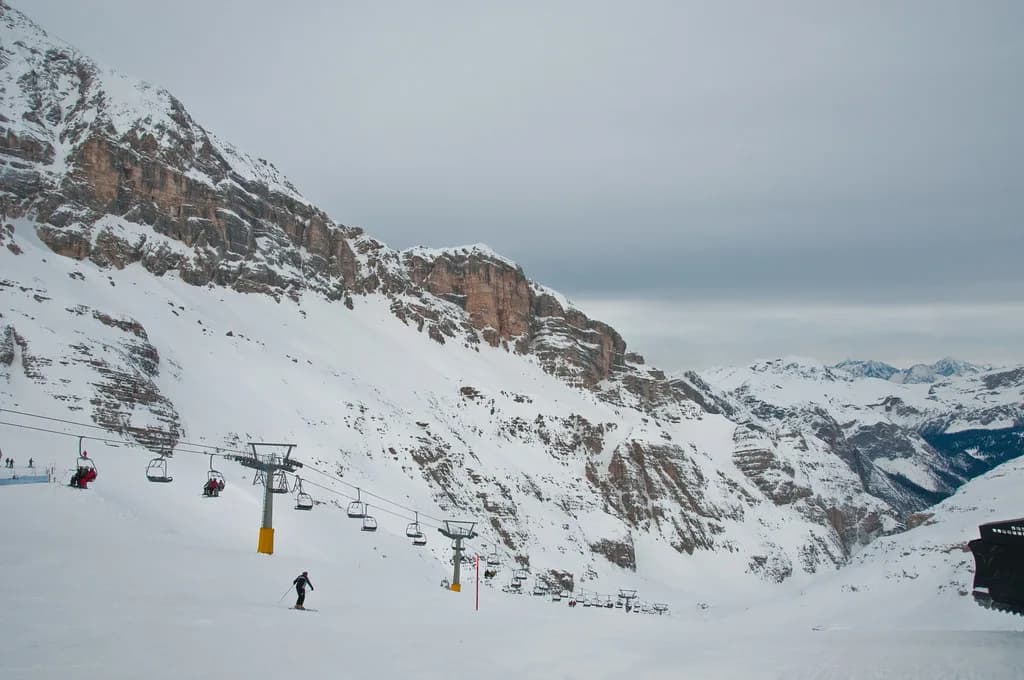
March sits at the point where Cortina changes character. The village base at around 1,224m warms through the day, the south-facing slopes soften by mid-afternoon, and the pistes that climb towards 2,742m and above hold winter snow far longer than anything at valley level. That split is the whole story of a late-season week here, and it should shape where you book and where you ski.
Cortina is not one mountain but three separate sectors spread around the Ampezzo valley, so a March trip rewards a bit of planning rather than a follow-the-crowd approach. This guide covers terrain by sector, how the pass works across the Dolomiti Superski network, the beginner zones, transport from Venice and Treviso, and what to book before you go.
Why March Feels Different in Cortina
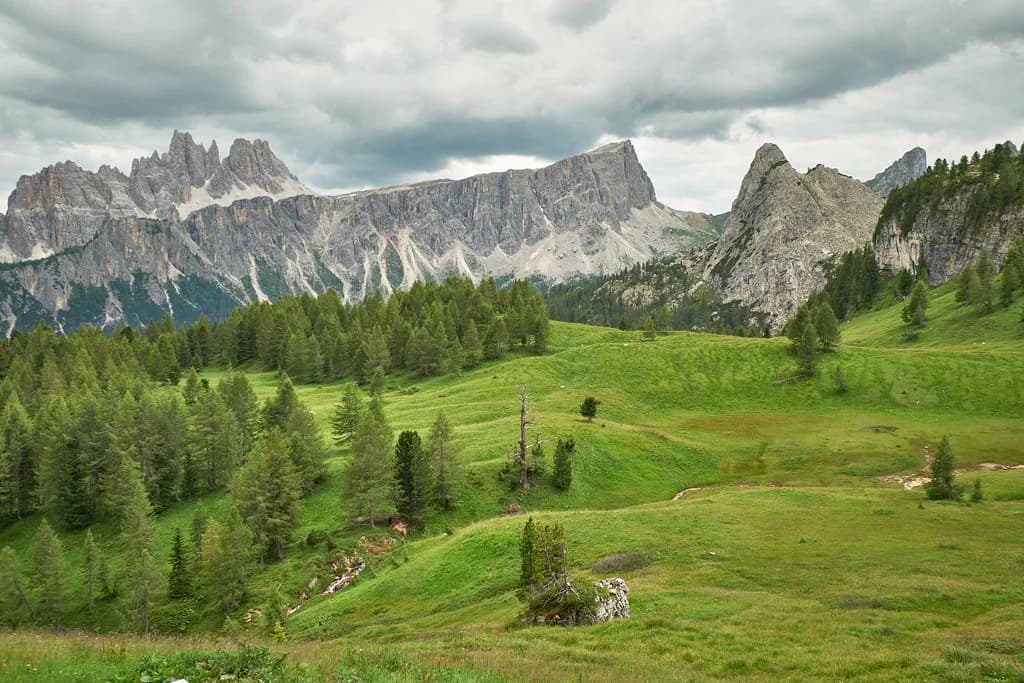
March brings the longest days of the ski season and, in the Dolomites, a light that makes the limestone peaks glow in a way midwinter rarely manages. The trade-off is that snow behaves differently: lower runs soften and turn slushy as the afternoon wears on, while higher, north-facing terrain stays firm. Plan mornings for the low and sunny sectors and afternoons for altitude, and you get the best of both.
The other March advantage is space. Cortina draws weekend crowds from Rome and Milan throughout the winter, and peak holiday weeks stay busy, but outside those dates the lifts and mountain restaurants feel calmer than in January or February. Midweek skiing is noticeably quieter, particularly on the Faloria side before midday.
No one can promise a specific snowpack for a specific week, so treat March as a bet on altitude and aspect rather than on fresh snow. What you can rely on is the terrain layout: a village base around 1,224m and summits pushing towards 2,742m according to OnTheSnow, with the highest lift-served ground reaching roughly 2,930m in some resort summaries. That vertical spread is your insurance.
Cortina's Layout and the Three Ski Sectors
Cortina's skiing divides into Tofana, Faloria-Cristallo and Lagazuoi-5 Torri, each with its own access point and character. Tofana is the biggest and most varied, reached via the Socrepes and Tofana lift systems. Faloria-Cristallo sits opposite and rises straight from the edge of town via a two-stage cable car. Lagazuoi-5 Torri lies further out towards Passo Falzarego and offers the highest and most scenic terrain.
That separation matters because you cannot ski between all three sectors on piste; you choose a sector for the day or move by bus. A good March rhythm is to pick one sector per day and ski it properly rather than chasing across the valley. The ski map clarifies which lifts connect, but the core message is simple: treat Cortina as three resorts sharing one town.
On paper the area covers around 120km of piste served by roughly 36 lifts, with a vertical drop of about 1,766m and a longest run of 7km. Lift counts vary between sources, some listing 46 and some counting higher summit elevations, so use these as a guide to scale rather than a precise inventory. The mountain is comfortably large for a week without being so vast that you waste days traversing.
Altitude and Terrain: What 1,224m to 2,930m Means in March
Cortina's village sits at about 1,224m, which is low by the standards of the highest Alpine resorts, and that is exactly why late-season planning matters. Runs that finish at village level face the longest softening window, while anything starting above 2,000m behaves much more like midwinter. Expect the bottom of the mountain to be spring-like and the top to feel like a normal winter day.
Crystal Ski quotes a snow range of 1,224m to 2,828m for the resort, which frames the practical ceiling nicely. Treat anything above roughly 2,400m as your reliable March playground and anything below 1,600m as terrain to ski early rather than late.
Terrain is weighted towards confident skiers, with roughly 38% intermediate and 49% advanced runs in the OnTheSnow breakdown, and only a modest share of true beginner terrain. For a March trip that distribution works in your favour: the blues and reds that make up most of the piste are wide and groomed, and they sit high enough across Tofana and Lagazuoi to stay in condition.
Which Sector to Ski in March
Tofana is the March workhorse. It has the widest choice of long, well-groomed blues and reds, plus the Olympia delle Tofane World Cup downhill run for strong skiers who want a proper test. Because much of the terrain sits high and faces a mix of aspects, you can follow the sun through the day rather than committing to one slope.
Faloria-Cristallo is the morning sector. Its south-facing slopes catch sun early and soften first, so ski it before lunch and then move on. Faloria suits intermediates on broad cruising pistes, while Cristallo, reached via Rio Gere and the Forcella Staunies side, adds steeper, more technical pitches for advanced skiers.
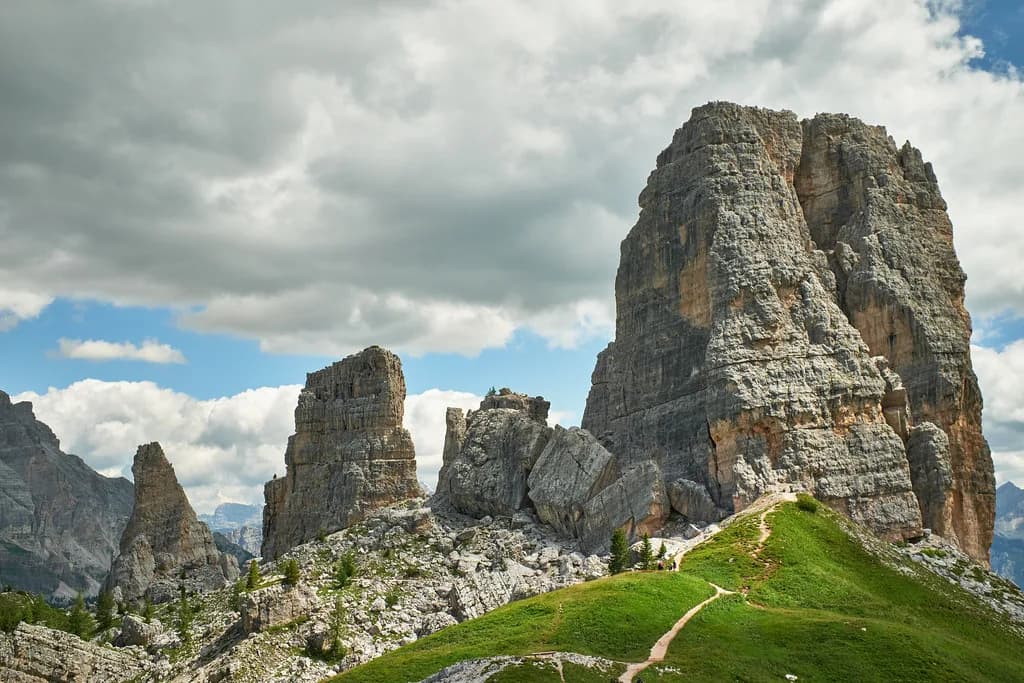
Lagazuoi-5 Torri is the high-altitude escape and the best March bet for scenery and snow quality. The Lagazuoi cable car climbs to one of the highest points in the resort, giving access to the long Armentarola descent, which famously finishes with a horse-drawn tow back to the lifts. The 5 Torri area stays quiet even in peak periods, which makes it ideal for a relaxed spring day.
If you want a single recommendation for a March week, base your mornings around Faloria, your midday and afternoon cruising on Tofana, and give at least one full day to Lagazuoi. That rotation keeps you on the best snow at the best hour and spreads your lift time across the most reliable terrain.
Beginner and Family Skiing in Spring Snow
Cortina's beginner hub is the Baby Socrepes area, a gentle zone served by magic carpets and soft gradients that sits alongside the Socrepes access to Tofana. It is well placed for families because it keeps young skiers close to the main lift base without dragging them up the mountain. Nursery slopes and ski schools are spread across the resort to support early-stage skiers.
March changes the learning experience, though. Lower beginner slopes soften by early afternoon, turning edges loose and frustrating tired legs, so book lessons and practice for the morning window. A child who skis confidently at 10am may struggle on the same pitch at 2pm, and a good instructor will move the session up the mountain as the day warms.
For strong-intermediate families, the progression from Baby Socrepes onto the blue runs around Socrepes and the wider Tofana pistes is straightforward and stays skiable later in the day because it starts higher. If you are weighing up where to put your group, the Cortina Skiing Guide is a useful cross-check before you commit to accommodation.
Season Dates and Timing a March Week
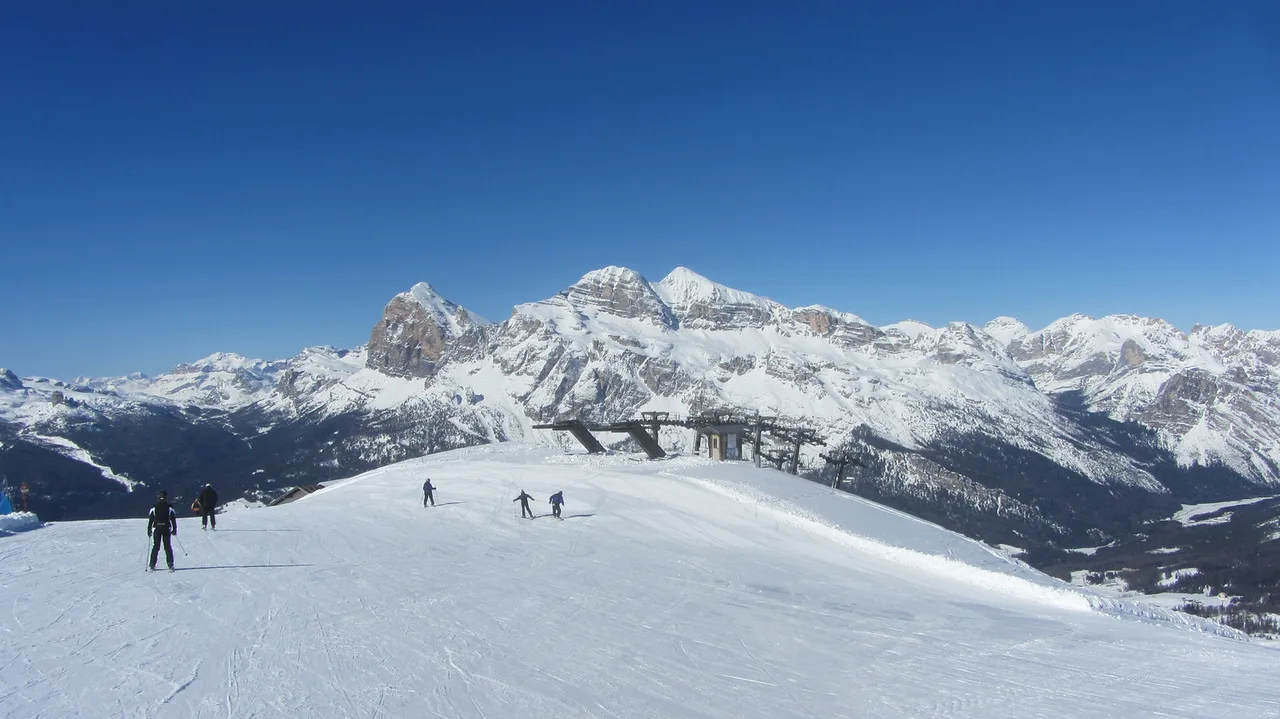
Cortina's published projections place the season from late November to mid-April, with OnTheSnow listing a projected opening on 29 November and closing on 12 April for the coming season. March therefore sits comfortably inside the operating window, and even a late-March week should have lifts running. Booking flights is a separate decision from the lift calendar, since these dates are projections from Cortina's lift companies rather than fixed guarantees.
Within March, earlier weeks generally give a more winter-like mountain and later weeks give longer days and warmer afternoons. If you want dependable top-to-bottom skiing, aim for the first half of the month. If you want sunshine, terrace lunches and quieter lifts, the second half rewards you, provided you accept that village-level runs may be soft or patchy.
Dolomiti Superski, the regional pass network that Cortina belongs to, usually operates its own season window that can differ slightly from individual resort dates. Check the current operating calendar on the official Dolomiti Superski site when you are ready to book, and match your flights to the lifts rather than the other way round.
Lift Passes: How Cortina Fits Into Dolomiti Superski
Cortina is part of Dolomiti Superski, the regional network covering a huge swathe of the Dolomites, including the Sella Ronda circuit. A Dolomiti Superski pass gives you access to Cortina's lifts plus the wider network, which makes a March trip more interesting if you plan to spend a day or two exploring beyond the Ampezzo valley. A local Cortina pass is the cheaper option if you intend to stay put.
Buying in advance versus in resort is a genuine trade-off. Online purchase usually means collecting a key card, skipping ticket-window queues and sometimes qualifying for early-purchase deals, while buying in resort gives flexibility if your plans shift. For a March week, advance purchase is the better bet if you are certain of your dates, because the resort is quieter and there is less reason to leave your pass purchase until arrival.
Prices for Dolomiti Superski passes change each season and the official network site is the only place to confirm current rates, multi-day discounts and any March offers. The cortina ski pass page explains the product structure and how Cortina's local options compare.
Ski Schools, Guides and Hire
Cortina has a good spread of ski schools and independent instructors, with lessons available for all ability levels from the beginner zones to advanced off-piste coaching. Peak weeks fill up fast, and March school-holiday dates vary by market, so book lessons as soon as your travel dates are fixed. Private guiding is worth considering for a first visit because the three-sector layout is not obvious from the valley floor.
Equipment hire is well supplied in town and at the lift bases, but March is late in the rental season and popular sizes and models can be picked over. Reserve skis or a board online before you travel if you want a specific category, and allow time on arrival day to collect rather than rushing to make the last lift. The cortina ski hire options are concentrated around the centre, which makes collection easy if you stay in town.
For lessons, the main decision is group versus private. Group lessons are sociable and cheaper per hour, but in March the mix of abilities can be wide; private lessons give you a faster route to the higher terrain where the snow is better. If you are travelling with children, ask the school which meeting points serve the Baby Socrepes area so you are not crossing town at 8.30am.
Getting There and Getting Around
Venice Marco Polo is the main gateway, roughly 150km from Cortina, with Treviso a little closer at about 135km. From either airport you can take a private transfer, hire a car or use a coach or shared shuttle, which many operators run during the winter season. Ski Solutions quotes a transfer time of around two hours from Venice and around two hours from Innsbruck, which is a useful alternative if Austrian flights are cheaper or better timed.
By train, the nearest station is Calalzo di Cadore, about 35km from Cortina, with connections from Venice and other northern Italian cities and onward Dolomiti Bus services to the resort. Driving is straightforward via the A27 from Venice, though mountain roads can be slow in bad weather and peak-season traffic builds on weekends, so travel early in the day if you are arriving on a Saturday.
Once in Cortina, local buses and hotel shuttles link accommodation, the town centre and the lift bases. The town centre itself is compact and pedestrian-friendly along Corso Italia, which makes an evening stroll easy. If you are staying outside the centre, check whether your hotel runs a shuttle to the Faloria and Tofana access points, because those are on opposite sides of town.
Where to Stay for a March Trip
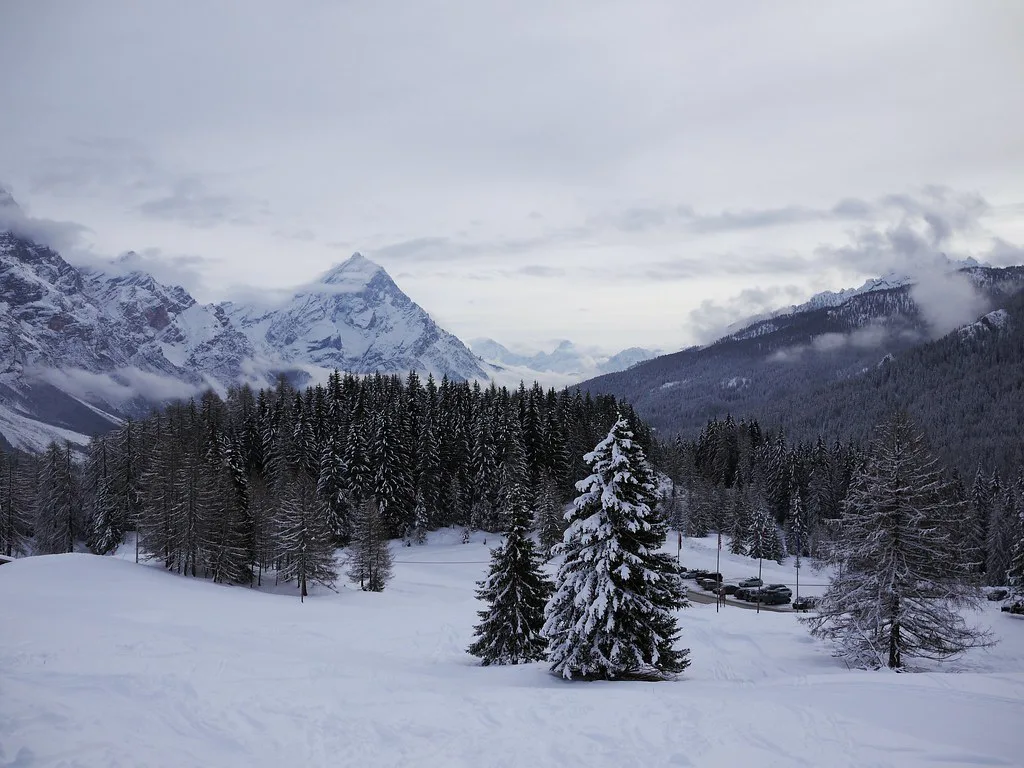
The main choice is town centre versus lift base. Staying in the centre puts restaurants, wine bars and shops on your doorstep and gives easy access to the Faloria cable car, which departs from the edge of town. Staying near the Tofana or Socrepes access points makes morning starts easier but leaves you reliant on a short bus or drive for evening dining.
In March, altitude within the resort matters less than you might think because almost all accommodation sits at village level. What does matter is morning convenience: a hotel within walking distance of a lift base saves you twenty minutes of faff when you want to be on the first cable car, and that early start is exactly what spring snow rewards. Reserve a place with parking or a shuttle if you are hiring a car.
What to Book Early and What Can Wait
Book flights, accommodation and ski school early for a March trip if you are travelling in a school holiday week, because those dates compress demand across the Alps. Hire equipment and lift passes can usually be booked online a few weeks out without difficulty. Travel insurance that covers winter sports should be arranged at the same time as your flights rather than left until the last minute.
Things you can leave later include restaurant reservations outside the peak weeks and most on-mountain lunch plans, since March crowds are lighter than in February. If you want a specific mountain hut for a long lunch, though, book it, because the best known terraces fill quickly on sunny weekends. The same logic applies to any guided off-piste day you have your eye on.
Who Cortina in March Suits
March in Cortina suits confident intermediates and advanced skiers who are happy to follow the snow quality around the mountain and do not need a huge beginner zone on the doorstep. It also suits anyone who values scenery, food and a stylish town alongside the skiing, because the valley's restaurants and wine bars are as much a part of the trip as the pistes.
It is a harder sell for absolute beginners or families with very young children, who will spend most of their time on lower slopes that soften in the afternoon. If learning is the priority, an earlier-season week gives more forgiving snow. If you are comparing Italian late-season options, our look at La Thuile skiing in March shows how a different resort frames the same month.
Plan Your March Week
Cortina in March is a bet on altitude and aspect, and it is a good one if you ski the mountain sensibly. Start on Faloria while it is firm, cruise Tofana through the middle of the day, and save Lagazuoi for the clearest forecast and the best snow. Book lessons, accommodation and your pass early, then leave the daily decisions to the weather.
Confirm the season dates and pass products on the official Dolomiti Superski and Cortina sites before you travel, and build your itinerary around the sectors rather than trying to cover all three in a day. Do that, and March gives you long days, quiet lifts and a Dolomites skyline at its most photogenic. For the full resort picture, the Cortina Skiing Guide is the place to start.
Frequently Asked Questions
Is March a good time to ski in Cortina?
Yes, for skiers who plan around altitude. The season typically runs from late November to mid-April, so March sits well inside the operating window, with longer days and quieter lifts than midwinter. Lower slopes soften in the afternoon, so ski the high sectors such as Lagazuoi and upper Tofana later in the day.
What are snow conditions like in Cortina in March?
Expect spring conditions rather than a guaranteed snowpack. Mornings are usually firm, south-facing slopes such as Faloria soften first, and terrain above roughly 2,400m holds winter snow much better than the village-level runs. No forecast can promise a specific week, so plan your sector choice around the daily weather.
When does the Cortina ski season end?
Published projections place the closing date in mid-April, with OnTheSnow listing 12 April for the coming season. These dates are projections and can shift with snow and demand, so confirm the current operating calendar with the lift company or on the official Dolomiti Superski site before booking flights.
Which ski area in Cortina is best in March?
Lagazuoi-5 Torri offers the highest, most reliable snow and the best scenery, including the Armentarola descent. Tofana is the best all-round sector for cruising blues and reds, while Faloria-Cristallo is best skied in the morning before its south-facing slopes soften.
Do I need a Dolomiti Superski pass to ski Cortina?
Cortina's lifts are covered by the Dolomiti Superski network, which also includes the Sella Ronda and many other Dolomites areas. If you plan to stay in the Ampezzo valley, a local Cortina pass is usually the cheaper choice; a full Dolomiti Superski pass pays off if you intend to explore further afield.
How do you get to Cortina from the UK?
Most skiers fly to Venice Marco Polo, about 150km away, or Treviso, about 135km away, then take a transfer, hire car or seasonal coach. Innsbruck is an alternative gateway with a similar transfer time. By train, Calalzo di Cadore is the nearest station, about 35km from the resort, with onward Dolomiti Bus services.
How many kilometres of piste does Cortina have?
Cortina's ski area covers around 120km of piste served by roughly 36 lifts, with a vertical drop of about 1,766m and a longest run of 7km. Some sources quote different lift counts and summit elevations, so treat these figures as a guide to scale rather than a precise inventory.
What should I book early for a March trip to Cortina?
Book flights, accommodation and ski school as soon as your dates are fixed, especially in school holiday weeks. Equipment hire and lift passes can usually be arranged online a few weeks ahead, and travel insurance covering winter sports should be sorted at the same time as your flights.
Sources
Useful notes for your next ski trip
Optional updates to our Alpine resort guides.
You might also like
Continue reading
More guides you'll find useful