Montgenèvre Ski Pass: Which Area, Which Duration, Where to Buy
Compare the Montgenèvre-only pass with the France–Italy option, match duration to your trip, and see where to buy and collect your pass before you travel.
On this page
Montgenèvre rewards a little planning before you buy a lift pass, because the resort sells two clear products rather than one: skiing on the French side only, or an international pass that continues into Italy as far as Cesana Torinese. The gap between them is small enough that the decision usually comes down to how long you are staying and whether you want the option of a day across the border.
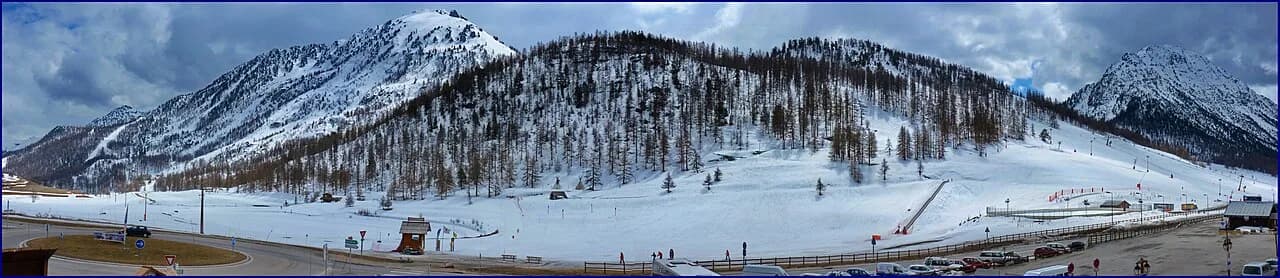
The resort sits just inside France at the top of a valley that leads to the Italian Piedmont, so the layout is genuinely cross-border rather than a marketing label. That shapes everything about the pass, from the piste count you get for your money to the sectors you can reach on a single lift ride. The rest of this guide follows the Montgenèvre ski guide.
What a Montgenèvre Ski Pass Actually Covers
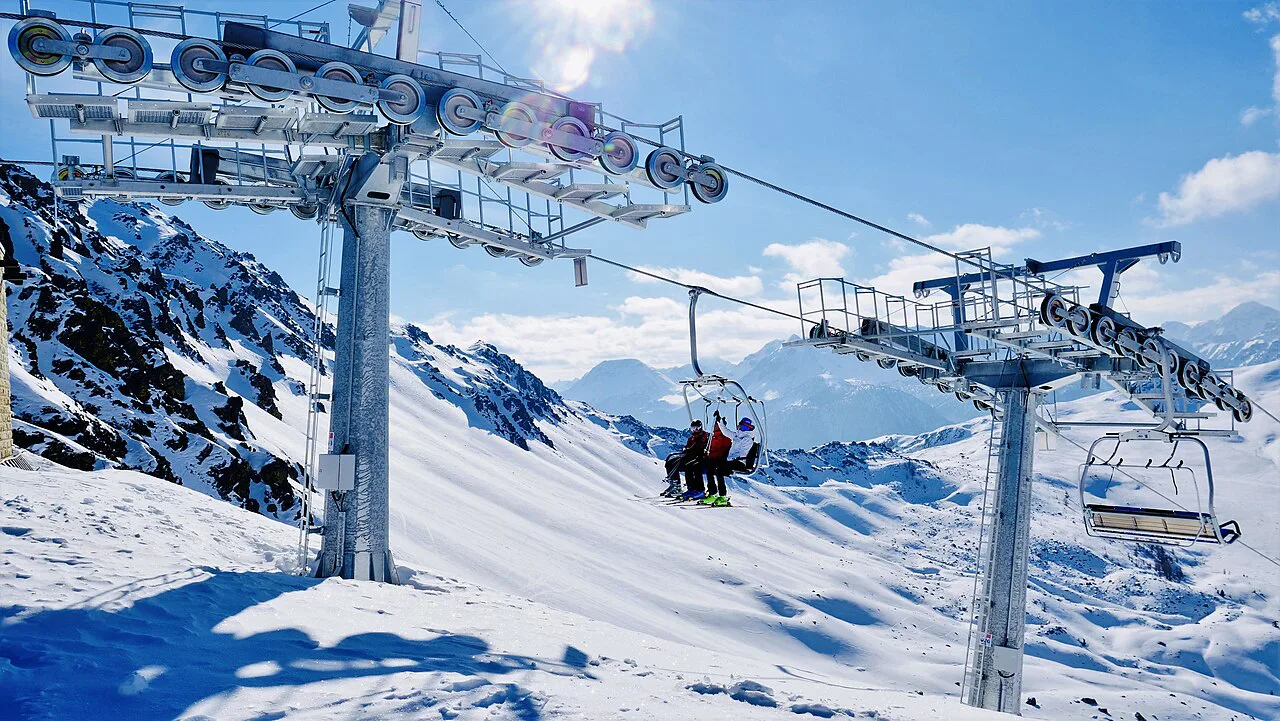
There are two lift-pass footprints. The French ski area keeps you on the Montgenèvre side, covering 95 km of slopes served by 23 lifts, and it still lets you ride the Gimont–Colletto Verde and Col Boeuf chairs over in Clavière. The international footprint, marketed as Montgenèvre plus Monts de la Lune, extends the same ticket across the Italian valleys to Cesana Torinese.
The headline numbers make the difference easy to picture: 110 km and 30 lifts on the international ticket against 95 km on the French one, with the extra terrain lying south of the border. Both are day-trip-scale areas compared with the full Milky Way network, but the international version is the one that behaves like a proper two-country ski holiday.
Picture the two products as nested rather than separate. Everything inside the French boundary is included in the international pass, so buying the larger one never takes terrain away from you. The only real question is whether your skiing style and schedule will use the Italian half.
Montgenèvre-Only Pass: 95 Km, 78 Pistes, 24 Lifts
The resort's own ski-area page counts the French domain at 95 km with 78 trails, split into 9 green, 22 blue, 38 red and 9 black, served by 24 lifts including two gondolas and two telemix cabins. The lift company's shop quotes 67 slopes and 23 lifts on the same French footprint, so you will see slightly different totals depending on which page you read. Either way, the mix is heavily weighted to cruising blues and reds with a small but real black-run selection.
This pass suits anyone treating Montgenèvre as a single-resort base for a week or less, especially groups who want simple logistics and no border crossing in the middle of a ski day. It also works well for skiers who like to know exactly where they are at all times and prefer a compact hill they can learn in a morning.
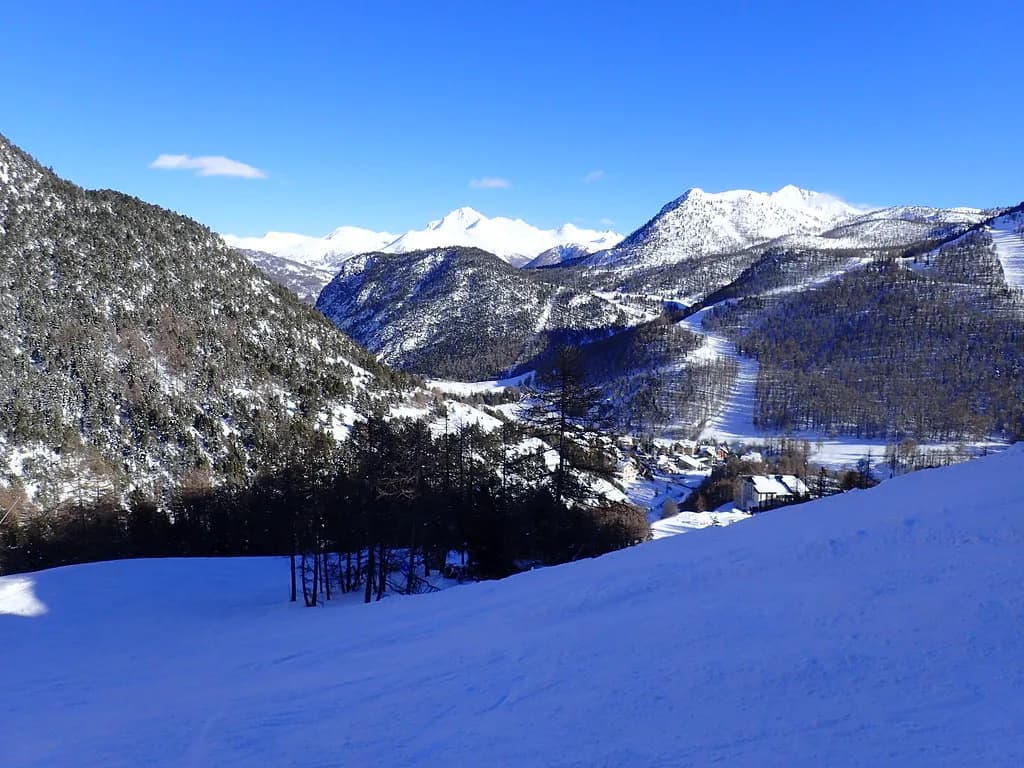
The French side rises from the village at 1,860 m to the Rocher de l'Aigle sector at 2,648 m, which gives you a genuine altitude spread without the distances of a mega-resort. More than 60% of the area is covered by snowmaking, so early- and late-season weeks have a reasonable base even when natural cover is thin.
Montgenèvre Plus Monts de la Lune: 110 Km, 87 Pistes, 30 Lifts
Adding Monts de la Lune takes you to 110 km and 87 trails, with 9 green, 25 blue, 43 red and 10 black, on 30 lifts. The extra terrain runs through Clavière and down towards Cesana Torinese, which means longer point-to-point days and a genuine change of scenery without a car.
The practical gain is itineraries rather than sheer size. On the international pass you can plan a loop that starts on the French side, drops into Italy for a long lunch, and returns over the ridge, which is exactly the kind of day that makes a week feel varied. On busy French holidays, the Italian sectors also give you somewhere to go when the home slopes are congested.
What you give up is simplicity. Crossing a border on skis means watching your return time and the weather on the far side, and weaker skiers in the group may not enjoy the longer, less forgiving runs back. If your party splits by ability, decide the pass tier after an honest look at the weakest skier's comfort zone.
Via Lattea Beyond the Pass Boundary: Where 400 Km Fits In
The Milky Way, or Via Lattea, is the larger network that Montgenèvre plugs into, with more than 400 km of slopes linking Sestriere, Sauze d'Oulx, Sansicario, Pragelato and Clavière. It is one of the biggest connected areas in Europe and the reason Montgenèvre appears on so many cross-border ski itineraries.
Do not confuse the international Montgenèvre plus Monts de la Lune ticket with a full Via Lattea pass. The two-country product covers the Montgenèvre and Cesana end of the network; reaching Sestriere and Sauze d'Oulx requires the wider Via Lattea product, which is sold separately. Check the lift company's product list to confirm which ticket unlocks which sectors before you commit.
For most one-week visitors the international pass is the sensible ceiling, because the far Italian resorts are a long day out from a Montgenèvre base. A full Via Lattea pass makes more sense if you plan to stay in Italy for part of the trip or want to tick off Sestriere without moving hotels.
Published Adult Prices: Day, Six-Day and Season Products
The official shop lists a one-day adult international pass from 55.50 euros and a one-day French-area pass from 53 euros. A six-day adult international pass is priced at 301 euros, while the Montgenèvre-only season pass is 897 euros and the combined Montgenèvre plus Monts de la Lune season pass is 925 euros. The shop also advertises a promotional season product at a much lower rate, so compare the live total at checkout rather than assuming the standard figure.
These are published adult rates for the 15–64 age band and they move with the season, so treat them as a planning baseline rather than a fixed budget. Child, senior and family rates sit alongside them in the same shop and are the ones worth checking if you are pricing a group.
Season passes here can pay for themselves across roughly three weeks of skiing, which makes them relevant for anyone planning repeat visits in the same winter rather than a single half-term week. The international season pass is only a little more than the French one, mirroring the day-ticket pattern.
Reading the Price Gap: Why the International Pass Costs Only a Little More
Per day, the gap between the French and international one-day passes is small, which is deliberate: the lift company describes the international area as only slightly more expensive than the French one. That pricing quietly pushes most competent skiers towards the larger ticket, because the marginal cost is trivial against the extra terrain.
The sensible way to read the gap is per skier-day rather than per ticket. If you ski five or six days and cross into Italy even once, the upgrade has probably justified itself; if you are on the hill for two days and never leave the French side, keep the money for lunch.
Be cautious about extrapolating from one season. Published rates change annually and promotional season products skew the comparison badly, so the only reliable check is the live shop total for your exact dates and age band.
Matching Duration to Your Stay: Day Passes, Six-Day Passes and Season Passes
Day passes make sense for arrival and departure days, for a taster before committing, or for a trip where you plan to ski only two or three mornings. Six-day passes are the workhorse product for a standard Saturday-to-Saturday week and normally undercut buying six separate day tickets.
If your trip is longer than six ski days, run the arithmetic before defaulting to another six-day block, because a weekly product or a season pass may already be cheaper by day seven or eight. The same logic applies to a second visit in the same winter: one season pass can cover both.
Half-day and afternoon products sometimes appear in the shop but are not guaranteed, and they rarely suit anyone planning a long Italian loop. For a short break, buy the smallest pass that covers the terrain you actually intend to ski and add a day ticket on the day if the snow tempts you into staying longer.
Who Should Skip the Bigger Pass: Short Trips, Beginners and Mixed Groups
Short breaks are the clearest case for the French-only pass. On a two- or three-day trip, the time lost to crossing into Italy and back, plus the longer return runs, eats the extra terrain you paid for.
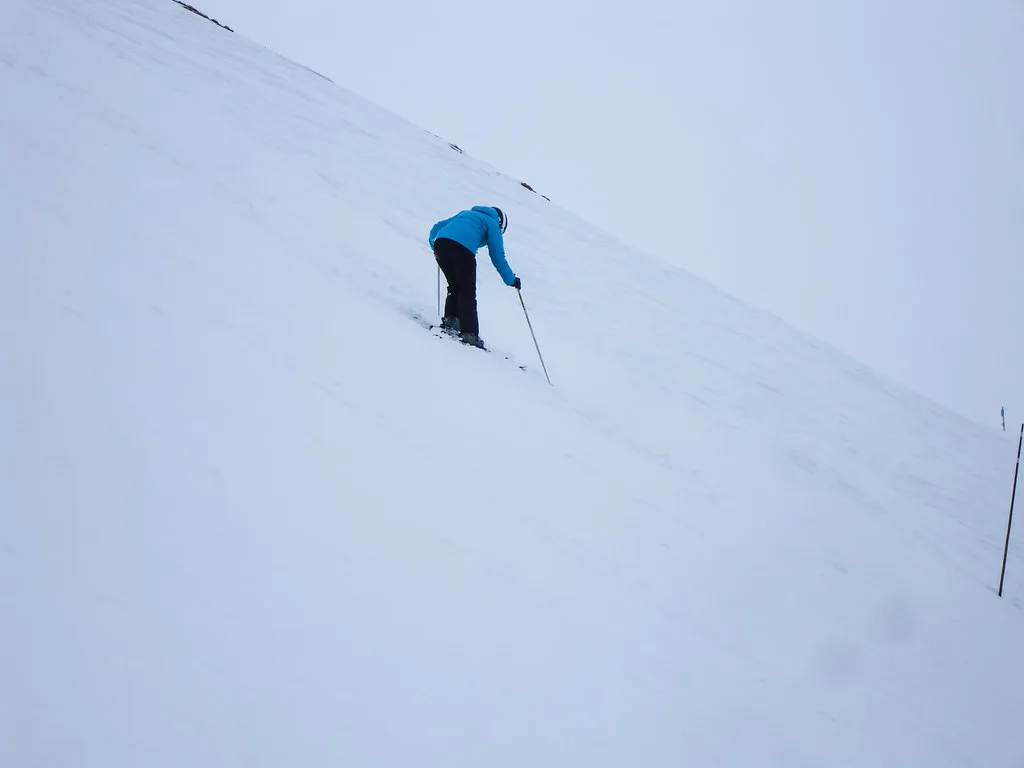
Beginners rarely benefit from the international option at all. The learning zones and gentle green and blue runs sit on the French side, so a novice buying the cross-border ticket is paying for slopes they will not reach. Buy the smaller pass and put the difference towards lessons.
Mixed-ability groups are trickier. A split arrangement, where stronger skiers buy international and the rest stay French, works only if you agree meeting points in advance and accept that the group will ski apart for part of the day. If shared skiing matters more than terrain, keep everyone on the French pass.
Beginner and Family Passes: Why Novice Zones Rarely Need the International Option
Montgenèvre holds the Famille Plus label, and the resort's beginner provision is concentrated around the village front de neige and the lower, gentler slopes. Wide green and blue runs and dedicated learning areas are on the French side, so the French-only pass covers everything a first-week skier needs.
Families with young children also gain from the resort's non-ski attractions, including the Monty Express coaster and a Nordic ski area that links into Italy, which give snow-free afternoons some purpose. Lift-adjacent lockers sit right in front of the slopes, a small detail that matters when you are carrying children's kit.
Book beginner passes and lessons together where possible, and confirm whether your chosen school meets at the village or at a mid-station, because that determines which lift you need on day one. The Montgenèvre Ski lessons comparison covers the main formats.
Where to Buy and Collect Your Pass in Montgenèvre
Passes are sold at the lift ticket offices in the village and online through the official shop, and buying ahead lets you skip the queue on the first morning. The shop supports reloading an existing pass, which is worth doing if you already hold a hands-free card from a previous trip.
The lift company also runs a mobile app, useful for checking lift status and weather before you commit to a border-crossing day. Collection points and pick-up arrangements change between seasons, so confirm the current desk locations and opening times on the official site before you travel.
If you are hiring equipment, sort that before the pass, because shop queues and fitting time can swallow a morning. The Montgenèvre Ski hire comparison sets out what different shops offer.
Season Dates and How Opening and Closing Frame a Pass Purchase
Montgenèvre plans a long winter, with continuous opening published as 29 November 2025 to 18 April 2026 for the current season and 28 November 2026 to 17 April 2027 for the following one. The ski area generally opens on weekends in November, snow permitting, before continuous operation begins.
Late April can be excellent on the upper slopes but soft and slushy lower down, so a late-season trip tends to concentrate on the higher sectors and makes the French-only pass more attractive. Early-season weeks are the mirror image, with limited lower runs but quieter slopes.
Season dates shift with snow and lift-company decisions, so check the live opening information close to departure rather than booking around a date from an old page.
Ski School and Hire in Brief, Before the Pass Decision
Lessons and rentals both influence which pass you need. A skier booked into a morning lesson group may only ski with the class, then join friends in the afternoon, which changes whether a six-day pass is good value or an expensive ornament.
Hire shops near the lifts let you swap equipment mid-trip, which is useful for beginners progressing quickly, whereas cheaper shops further out trade convenience for price. Decide the trade-off before you book, then buy the pass that matches the days you will actually be on snow.
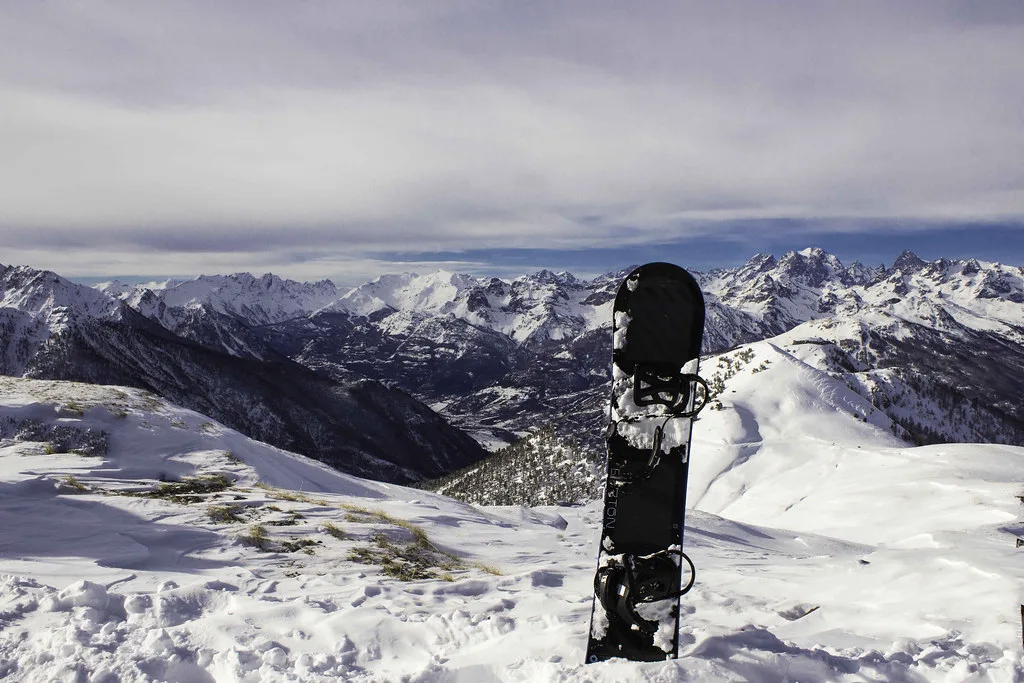
Snowboarders have their own considerations, including the Gondrans snow park and the boardercross at Chalvet, both within the French area. The Montgenèvre Snowboarding guide covers terrain, hire and lesson options.
Common Pass Mistakes Worth Avoiding
The most frequent error is buying the international pass for a short trip and never crossing the border, which is easy to do when the upgrade looks cheap. Be honest about whether you will actually ski into Italy.
The second is assuming a Montgenèvre pass covers the whole Milky Way. It does not: Sestriere, Sauze d'Oulx and the far Italian resorts need the larger Via Lattea product, sold as a separate item.
The third is leaving pass collection until the first busy morning. Buy online, carry the confirmation, and check the collection point before the lifts open so you start the day on snow rather than in a queue.
Quick Decision Summary
Choose the French-only pass if you are skiing three days or fewer, travelling with beginners, or want a simple base with no border logistics. Choose Montgenèvre plus Monts de la Lune if you have four or more ski days, ski reds comfortably, and want at least one Italian day.
Choose a season pass only if you will rack up well over two weeks on this hill in one winter, and check the live price against the promotional rates before committing. For everything else, a six-day pass is the default for a week's stay.
Use the Montgenèvre piste map Guide to plot which sectors you actually want before choosing a ticket, and confirm current prices and dates on the official sites as your trip approaches.
Plan Your Visit
The pass decision at Montgenèvre is simpler than the product list suggests: pick the area that matches your ability and appetite for a border crossing, then pick the duration that matches your days on snow. Most week-long visitors skiing at red level will be happiest with the international pass, while short breaks and beginners should keep it French. If you're weighing a larger French resort instead, the Alpe d'Huez Ski Pass guide compares pass options there.
Buy ahead through the official shop, reload an existing card if you have one, and confirm collection arrangements and current prices before you travel. With the logistics settled, the resort's real appeal, a compact two-country ski area with a long season and generous snowmaking, is yours to enjoy.
Frequently Asked Questions
Does a Montgenèvre ski pass cover the whole Milky Way?
No. The standard Montgenèvre pass covers the French side, and the international upgrade adds the Italian Monts de la Lune as far as Cesana Torinese. Sestriere, Sauze d'Oulx and the wider Via Lattea network need a separate product, which the lift company lists alongside its other tickets.
Is the France–Italy pass worth it for a short trip?
Usually not for three days or fewer. Crossing the border takes time and the return runs are longer, so the extra terrain often goes unused. The upgrade makes most sense from four ski days upwards, and especially if you want at least one full Italian day.
Can I buy a Montgenèvre lift pass before I arrive?
Yes. The official lift company shop sells day, multi-day and season products online, and it also lets you reload an existing hands-free card. Buying ahead avoids the first-morning queue at the ticket offices in the village.
Which pass should a beginner buy?
The French-only pass. Montgenèvre's learning areas and gentle green and blue runs are concentrated on the French side around the village, so a beginner paying for the international upgrade would be buying slopes they are unlikely to reach in their first week.
When does the Montgenèvre ski season run?
The resort publishes a long continuous season, roughly late November to mid-April, with weekend opening in November when snow allows. Dates are set each year with the lift company, so check the live opening information close to your travel dates before booking around them.
Where can I collect my pass in resort?
Passes are available from the lift ticket offices in Montgenèvre and through the official online shop. Collection desk locations and opening times can change between seasons, so confirm the current arrangements on the official lift company site before you travel.
Is a season pass cheaper than buying six-day passes?
It depends on how many days you will ski. Season passes generally pay off across roughly three weeks of skiing, and promotional rates can shorten that. Compare the live season price with the cost of the six-day pass for your dates before deciding.
Sources
Useful notes for your next ski trip
Optional updates to our Alpine resort guides.
You might also like
Continue reading
More guides you'll find useful