Lech Skiing in April: Late-Season Guide to the Arlberg
Plan a late-season ski trip to Lech: how the Arlberg layout works in April, which sectors hold up best, and what to book early for spring snow.
On this page
April skiing in Lech is less about chasing midwinter powder and more about reading the mountain through the day. The same Arlberg terrain that feels vast and cold in January becomes a puzzle of altitude, aspect and timing, with high north-facing slopes holding winter snow while lower valley runs soften fast. Plan around the resort's layout rather than a fixed itinerary, and a spring week rewards you.
This guide covers the Arlberg ski area, how Lech connects to Zürs, Oberlech, Zug and St Anton, terrain by ability, the Run of Fame circuit, lift passes, ski schools, hire and transfers. It deliberately does not predict April snow or quote 2026/27 dates and prices; those are best confirmed on the official Ski Arlberg season-times and ticket pages before you book.
Why April Is a Different Kind of Lech Trip
Spring shifts the daily plan. Instead of heading out early for first lifts and cold snow, April days often start firm and turn soft, so the smart rhythm is to ski high and shaded runs first and save sun-exposed lower slopes for later. Grooming, lift opening and the snowline all respond to overnight refreeze, which is why a flexible plan beats a fixed list of pistes.
The village is calmer too. Lech's upmarket, traditional character remains, but the peak-season pressure on restaurants and terraces eases, and the après-ski scene described as refined with livelier pockets becomes easier to navigate. That quieter feel is a genuine reason to choose April: fewer queues, more space on the mountain, and a village that still functions fully while feeling less crowded.
The Ski Area at a Glance: Arlberg Scale and Piste Mix
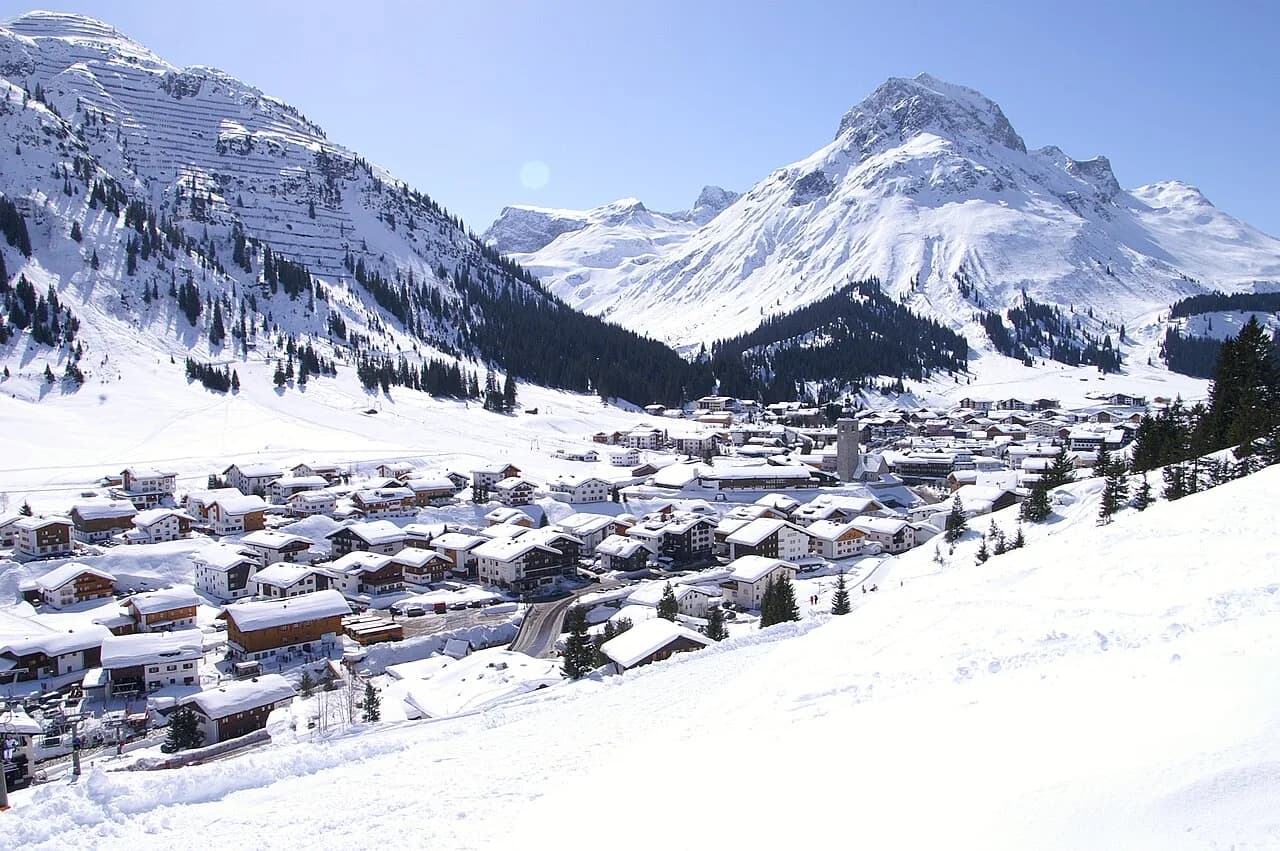
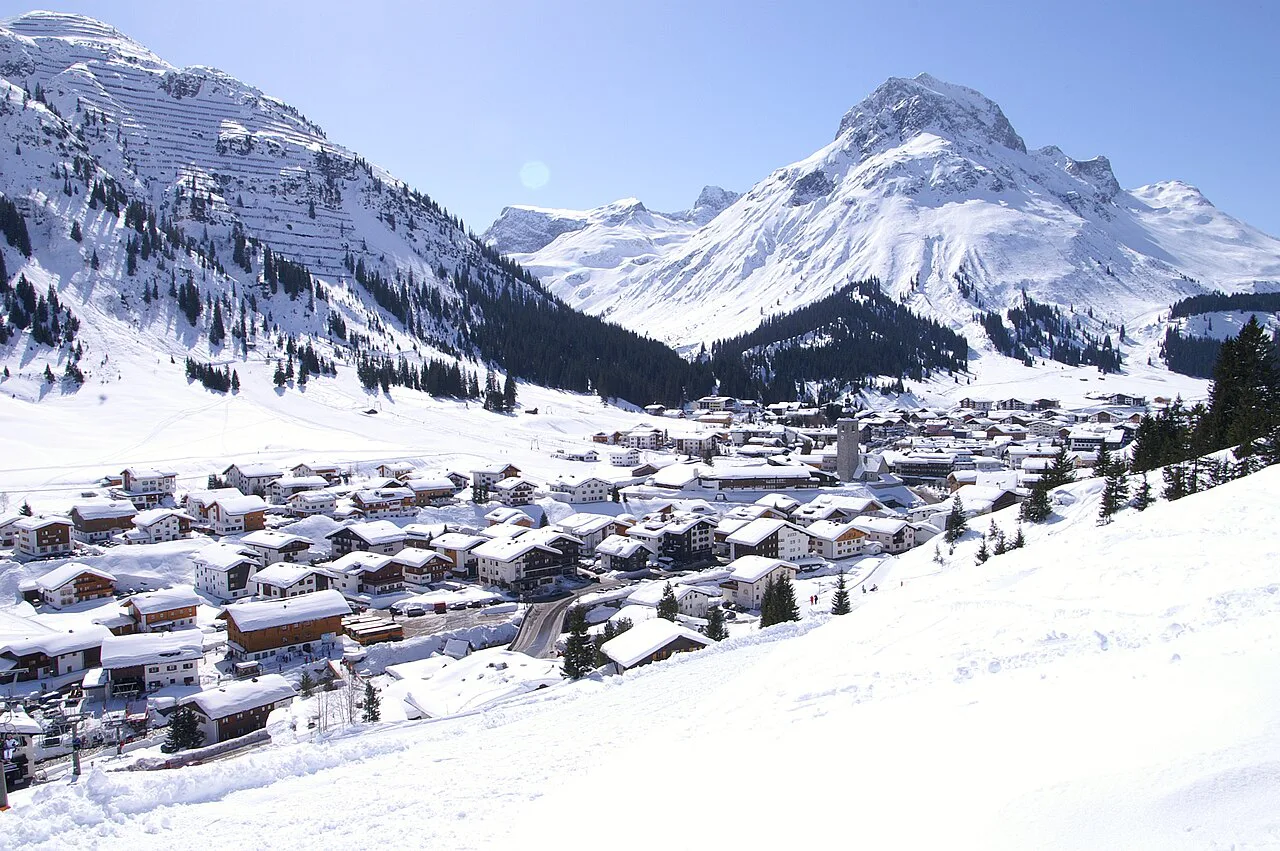
Lech sits at the heart of the Arlberg, which Ski Independence describes as Austria's largest interconnected ski area with more than 300km of pistes, a piste split of 39% blue, 43% red and 18% black, and an altitude range from 1304m to 2811m. Those numbers tell you the terrain spans a lot of vertical, which matters in April because the top of that range stays colder and holds snow longer than the valley floor.
Snow-Forecast presents Lech-specific figures that differ: 86 lifts serving 54 pistes totalling 276km, 1000m of vertical from a 2450m top to a 1450m base, 64% snowmaking coverage and 20km of cross-country trails. Treat these as source-specific rather than blending them with the wider Arlberg figures, because one counts the whole interconnected area and the other focuses on Lech. For April planning, both point the same way: a lot of terrain, a meaningful altitude band, and a lower mountain that warms first.
Use the slope mix to set expectations. With roughly four in ten runs rated blue, Lech is genuinely welcoming for improvers, but a big blue share also means plenty of terrain at lower altitudes, and that is exactly where spring snow turns slushy earliest. A useful April framework is to aim high in the morning and treat low-level blues as afternoon options rather than morning targets.
How Lech Connects to Zürs, Oberlech, Zug and St Anton
A single Ski Arlberg pass is valid across Lech, Zürs, St Anton, Stuben, St Christoph, Zürs, Warth, Schröcken, Sonnenkopf and Pettneu, and a free bus links the related areas according to Snow-Forecast. That pass structure is the reason base location matters: staying in Lech gives you easy access to Zürs and Oberlech, while St Anton's steeper, more extreme reputation is a day trip rather than a default.
The local geography shapes the plan. Oberlech sits around 1750m above sea level and is known for sun-soaked terraces, with parts of the village car-free during the season, while Zug lies about three kilometres from Lech in a quieter setting. Zürs, described as the cradle of Alpine skiing, has runs starting high on the peaks and finishing at accommodation doors. Each offers a different April trade-off between convenience, quiet and altitude.
Think of the Arlberg as one lift network with several villages rather than separate resorts. The practical consequence for April is that you can start in Lech, ski Zürs in the morning, and return without repacking or rebooking. Check the lift and piste status on the official live-info pages before committing to a long traverse, because spring operations can differ by sector.
Which Sectors to Target in April
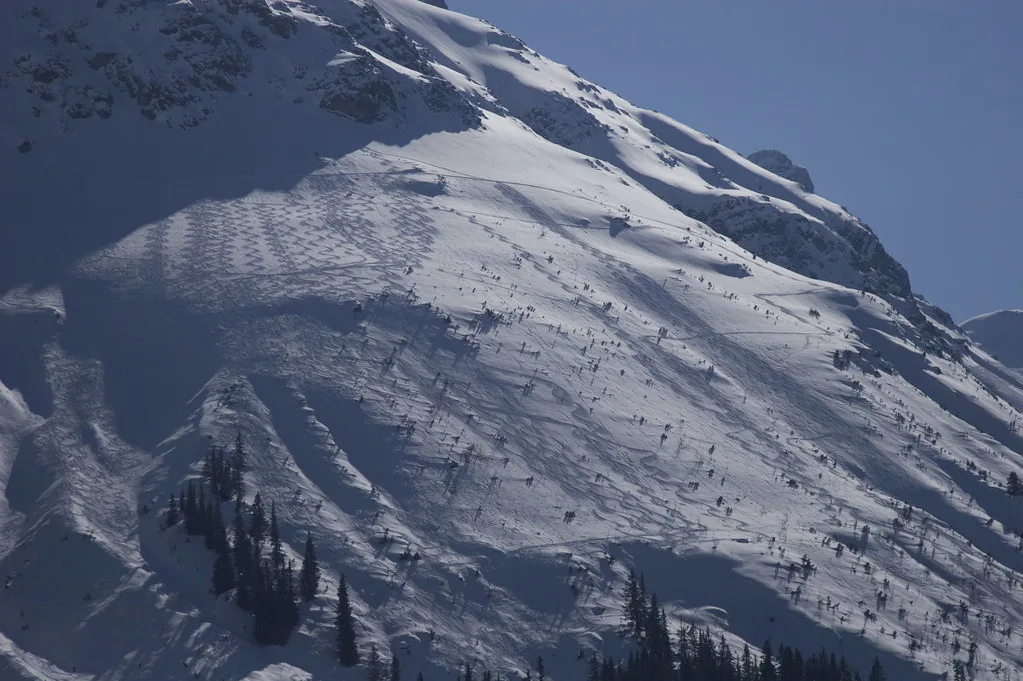
Prioritise altitude and aspect. The upper terrain around Zürs and the higher runs above Lech and Oberlech sit closer to the top of the 1304-2811m altitude range, so they hold colder snow and refreeze more reliably overnight. Lower valley runs down toward Lech village and the access runs near the base are the first to soften, so use them late rather than making them the goal of the morning.
Aim for north-facing slopes when the sun is high, then switch to sun-exposed runs once the snow has softened. In practice, that means checking the piste map for orientation before you set off, and being willing to repeat a favoured high sector rather than touring the whole area. A morning of short, high laps usually beats a long low traverse in spring conditions.
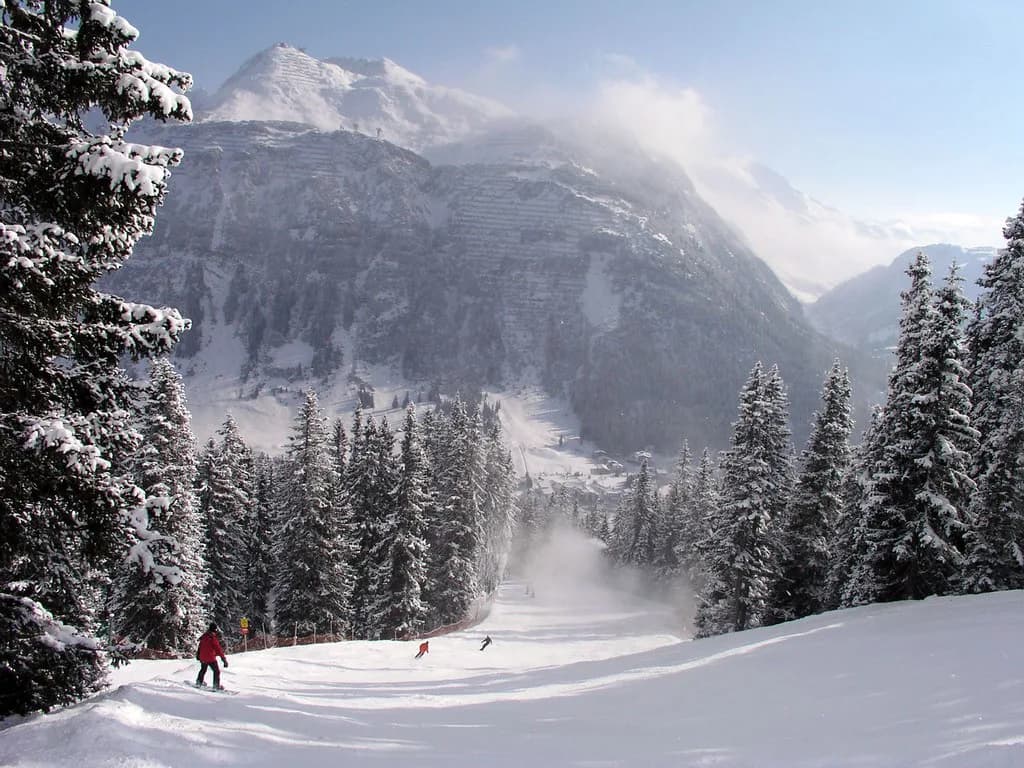
Treat the valley runs as a timing decision, not a rejection. They are often the most convenient way home, and on a cold, cloudy April day they can ski well; on a warm afternoon they turn heavy. Build in a return leg before the snow gets slushy, and keep an eye on the official lift and piste status as the day warms.
Terrain by Ability: Beginners, Improvers and Experts
Beginners have a real advantage in Lech: the resort works well for all abilities, with a good range of ski schools for anyone building confidence, and roughly 39% of Arlberg pistes are rated blue. In April, though, the beginner zones at lower altitude are also the most exposed to soft snow, so plan morning lessons and expect the surface to change through the day.
Intermediates are the group Lech suits best. The 43% red split gives cruisey, groomed runs that reward confidence, and the vast Arlberg network means you can move between sectors without repeating the same descent. In April, choose reds that start high and finish at a mid-mountain lift rather than dropping all the way to the valley.
Experts should look beyond the groomed blue and red majority. The 18% black share and St Anton's more challenging and extreme terrain, including terrain parks, are the natural targets, and Snow-Forecast notes a terrain park and halfpipe in Lech itself. In spring, the best expert skiing is often high and shaded, with early starts and firm snow rather than afternoon slush.
The 85km Run of Fame: A Full-Day Commitment
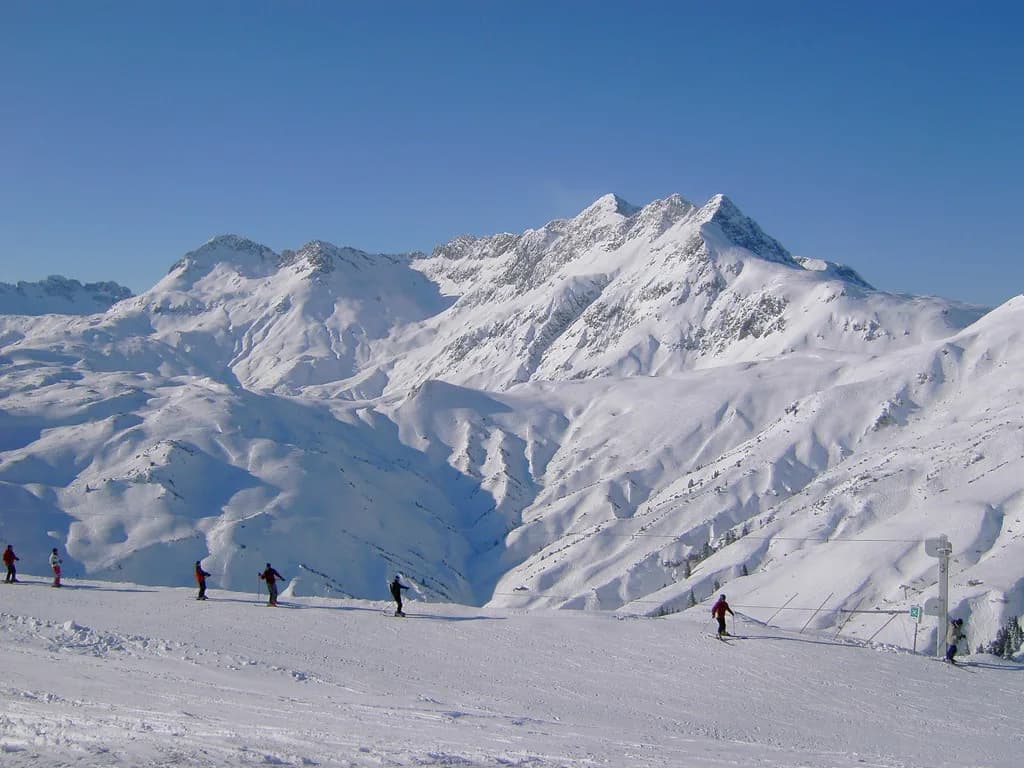
The Run of Fame is the longest ski circuit in the Alps, an 85km route that lets you explore all corners of the Arlberg ski area. It is a full-day commitment rather than a morning warm-up, requiring a plan for lifts, timing, meals and the return leg, so treat it as the centrepiece of a trip day rather than something you squeeze in around other plans.
April is a reasonable month for the circuit only if the full route is open and the snow holds across every sector it touches. Because the loop spans low and high terrain, a warm spell can make parts of it heavy or marginal while the high sections remain fine. Check lift and piste status on the official live-info pages before you commit, and keep a shorter high-altitude alternative in reserve.
Lift Passes and Where to Buy
Ski Arlberg operates separate webshops for its regions, including one for Lech, Oberlech and Zürs, alongside cash desks and ticket machines in resort. Buying online in advance can save time at the ticket window, while the cash desks suit anyone who wants to decide after seeing conditions. Which product makes sense depends on how many days you ski and whether you plan to cross into St Anton or Warth, so compare the pass options rather than defaulting to a single day ticket.
Prices and products for 2026/27 are published on the official Ski Arlberg tickets page, and they should be checked there rather than assumed from previous seasons. For an April trip, confirm which pass covers the sectors you actually intend to ski, and whether multi-day products extend across the villages you plan to visit. Leaving the exact pass choice until you know your days and sectors is sensible; leaving it until the ticket window on a busy morning is not.
Ski Schools and Hire: What to Arrange Before You Travel
Book ski school and equipment hire before you travel, especially for a spring week when school groups and late-season visitors still compete for instructors and popular kit sizes. Lech has a range of ski schools and sports shops listed by the tourist board, and arranging lessons and rental together often simplifies the first morning. If you are hiring, collect gear the afternoon before your first ski day rather than queuing at opening.
Spring conditions reward the right kit. A softer snow surface means a slightly wider, more forgiving ski can be easier than a stiff carving model, and hire shops can advise on the day's conditions. Ask for a setup that suits the snow you are likely to meet rather than the snow you hoped for, and reserve anything specific, such as boots in unusual sizes, in advance.
Getting There: Airports, Transfers and the Rail Option
Ski Independence lists transfer times of 1hr40mins from Innsbruck, 2hr30mins from Zurich and 2hr30mins from Munich, while Snow-Forecast also identifies Zurich as the nearest airport and Langen as the nearest train station. In practice, Innsbruck is the quickest road transfer, Zurich is the nearest major airport, and Munich offers the widest flight choice at the cost of a longer drive.
Rail via Langen am Arlberg is a genuine alternative to a road transfer, particularly for travellers who prefer not to drive in spring conditions. From Langen, the local bus network connects onward, and a free bus links the Arlberg areas. Build in margin for the final leg, because arrival-day delays are more likely than midweek ones, and confirm the current local bus arrangements with the tourist office for your dates.
Where to Stay: Lech, Oberlech, Zug or Zürs
Your base changes how you ski in April. Lech village is convenient and characterful, with easy access to the ski area and an understated, elegant feel; Oberlech is higher and sunnier, with car-free sections in season; Zug, about three kilometres from Lech, is quieter; and Zürs puts you high with runs finishing at accommodation. Each trades convenience against quiet and altitude.
For a spring trip, higher bases and villages with lifts immediately at hand reduce the amount of low-altitude skiing you need to do at the start and end of each day. Lech village is the most practical all-round choice for a first visit, while Oberlech and Zürs suit anyone who wants to be on the snow quickly. Book beds early: April is quieter, but the best-located hotels still fill.
What to Book Early and What Can Wait
Lock in accommodation, ski school places and any specific hire gear before you travel, because these are the items that do not improve with waiting. Lift passes can usually be bought online or at the resort once you know your dates and sectors, and local buses need no booking. Treat the pass and the daily plan as decisions to make close to arrival, and the beds and lessons as things to secure now.
Check the official season-times page before you commit to dates, because the closing weekend and late-season lift operations are the single biggest planning variable for April. Ski Arlberg publishes season times and live lift and piste information on its site, and those pages, not last season's calendar, are what you should plan around. If you want a comparison with another Austrian spring destination, Mayrhofen skiing in April follows a similar calendar logic.
Après-Ski and Dining in the Quieter Spring Weeks
Lech's après-ski is refined and upmarket, with livelier options for anyone who wants a party: the Tannbergerhof terrace is a known spot with heated outdoor tables, the Arlberg Club House has an upmarket bar and club, and the Yurt next to Hotel Arlberg hosts DJ sets. In April, terraces come into their own, so plan the end of the ski day around a sunny stop rather than a rushed descent.
Dining is a serious part of a Lech trip, with a high concentration of award-winning restaurants and options ranging from Michelin-starred cooking to simple fondue. Spring weeks are easier to book than peak season, but the most sought-after tables still benefit from advance planning. Balance a splurge dinner with simpler mountain lunches so the budget survives the week.
Practical Spring Kit: Slush, Sun and Afternoon Refreeze
April kit is about range, not deep cold. Bring a lighter shell, thin layers, good goggles for bright light and high-factor sun protection, because the combination of strong sun and reflective snow burns quickly. Waterproofing matters more than insulation on slushy afternoons, and a spare pair of gloves is worth the space.
Plan around the refreeze. Firm early-morning snow rewards sharp edges, so have skis tuned or hire a suitable pair, and expect the surface to change markedly by mid-afternoon. Finish on a high run before the lower mountain turns heavy, and use the official live information to check lift and piste status if the weather shifts.
Plan Your Visit
April in Lech rewards skiers who plan around altitude and timing rather than a fixed list of runs. Aim high in the morning, keep low valley runs for the warmer part of the day, and treat the Run of Fame as a full-day project only when the whole circuit is open. A single Ski Arlberg pass makes Zürs, Oberlech and St Anton accessible from one base, which is the real luxury of the area.
Book beds, lessons and specific hire gear early, then leave pass choice and daily plans until you have checked the official season times and live lift status. Confirm current prices and 2026/27 dates on the official Ski Arlberg pages before booking, and use the piste map to choose sectors by aspect. For the wider resort picture, the Lech Ski Season Dates and What the Opening Weekend Means for Planning guide sets out how the season is structured.
Frequently Asked Questions
Is there still good skiing in Lech in April?
Lech's terrain spans a wide altitude range, and in April the higher, north-facing slopes generally hold winter snow better than the lower valley runs. Whether conditions suit you depends on the overnight refreeze and the day's warmth, so check the official live lift and piste information rather than relying on a forecast made weeks ahead.
When does the Lech ski season usually end?
Ski Arlberg publishes season times for each winter on its official site, the reliable place to confirm closing dates for lifts and sectors. Exact April closing days vary by year and by area, so check the season-times page before booking travel or accommodation for a late-season trip.
Is Lech good for beginners in April?
Yes, with a caveat. Lech has a good range of ski schools and a large share of blue pistes, so beginners are well served, but the lower beginner areas soften first in spring. Book morning lessons, start early and expect the surface to change through the day.
How much does a Ski Arlberg lift pass cost?
Prices vary by season, pass length and product, and are published on the official Ski Arlberg tickets page. Check the current price list there before you book, and confirm which pass covers the villages and sectors you plan to ski.
Can you ski from Lech to St Anton?
Yes. A single Ski Arlberg pass is valid across Lech, Zürs, St Anton, Stuben, St Christoph, Warth, Schröcken, Sonnenkopf and Pettneu, and a free bus links the related areas. St Anton's terrain is steeper and more extreme, so treat it as a day trip and check connections and lift status before setting out.
What is the Run of Fame in Lech?
The Run of Fame is an 85km ski circuit billed as the longest in the Alps, taking in all corners of the Arlberg ski area. It is a full-day commitment, so attempt it only when the whole route is open and the snow holds across both high and low sections.
How do you get to Lech from the UK?
Fly to Innsbruck, Zurich or Munich and transfer by road: Ski Independence gives transfer times of about 1hr40mins from Innsbruck and 2hr30mins from Zurich and Munich. Rail via Langen am Arlberg is an alternative, with local buses connecting onward to the villages.
Is Lech expensive for a ski holiday?
Lech is an upmarket resort with a high concentration of award-winning restaurants, so dining and accommodation can push costs up. You can manage the budget by choosing simpler mountain lunches, booking beds early for the best choice and comparing pass products for the days you actually ski.
Sources
Useful notes for your next ski trip
Optional updates to our Alpine resort guides.
You might also like
Continue reading
More guides you'll find useful