Flaine Piste Map: How to Read the Grand Massif Ski Area
Use the Flaine piste map to plan days across the Grand Massif, from the bowls above Flaine to Samoëns, Les Carroz, Morillon and Sixt.
On this page
A Flaine piste map is not really a picture of one resort. The official map folds Flaine into the wider Grand Massif, the interconnected ski area it shares with Samoëns, Les Carroz, Morillon and Sixt, so the sheet in your pocket covers several distinct bases and the lifts between them.
Read it well and you can decide in advance whether a given day belongs to Flaine's own slopes or to a linked-area circuit, which lifts make that possible, and where you want to sleep. The rest of this guide walks through the sectors, the symbols and the timing decisions that turn the map into a workable plan.
What the Flaine Piste Map Actually Covers
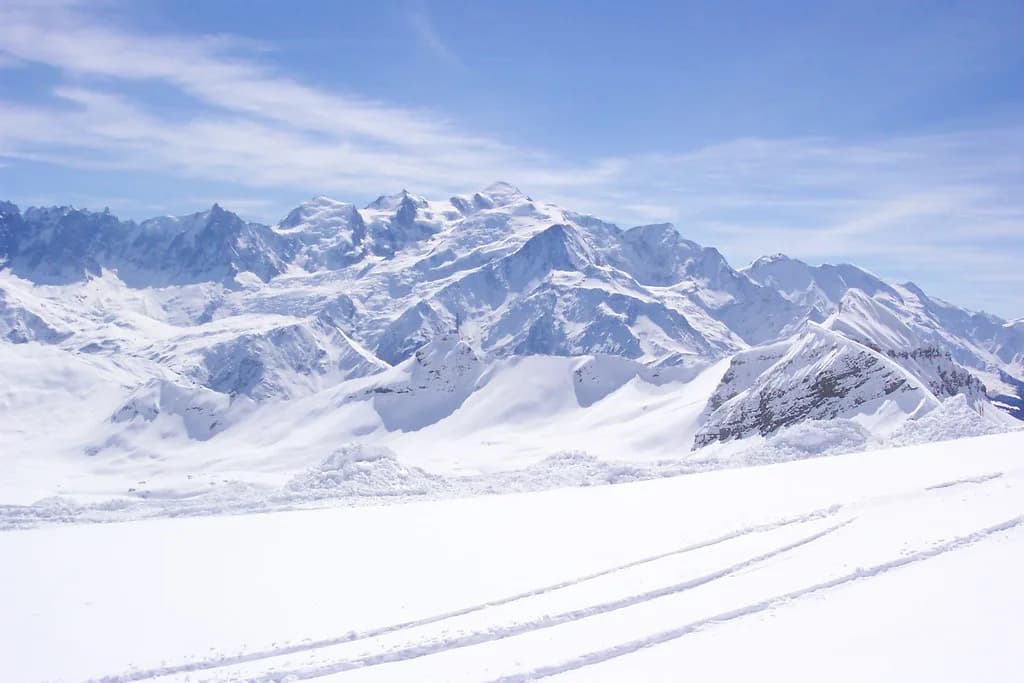
Flaine's own skiing is only part of the story. The resort's piste-map page makes clear that anyone staying in Flaine also gets access to the wider Grand Massif, described as one of France's largest interconnected ski-in/ski-out areas, set opposite Mont Blanc in the Northern Alps.
That matters when you plan: a single sheet shows the Flaine bowls alongside the villages and ridges that connect to Samoëns, Les Carroz, Morillon and Sixt. Treat the map as two tools in one, a close-up of Flaine for local laps and a network diagram for longer traverses across the massif.
The official PDF of the Grand Massif piste map confirms the scope visually, carrying the names Flaine, Les Carroz, Morillon, Samoëns and Sixt, and labelling Flaine's own sectors, including Vernant and Les Grandes Platières, within the wider layout.
The Five Map Sectors: Flaine, Les Carroz, Morillon, Samoëns and Sixt
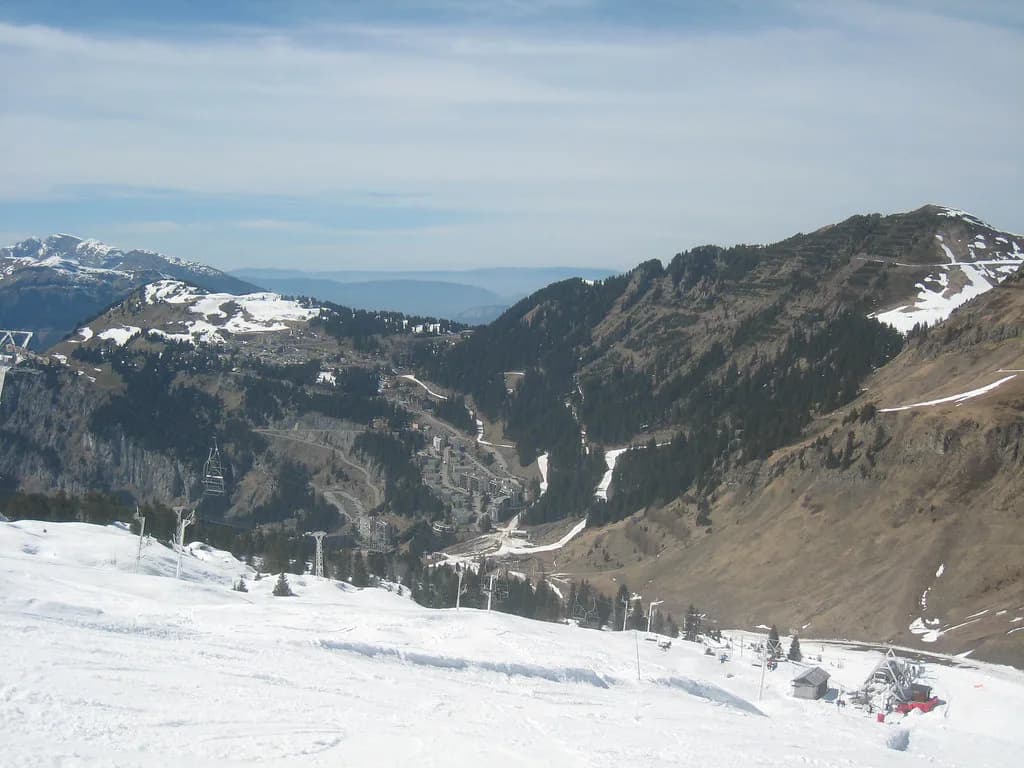
The map's five names are not decoration; they are the organising principle for a trip. Flaine sits at one end as the purpose-built, high-altitude base, while Les Carroz and Samoëns are the larger valley villages, Morillon a smaller village between them, and Sixt a quieter outpost on the far side reached through the Samoëns link.
The villages do not share identical seasons, which is why the map alone cannot settle your dates. According to the Grand Massif FAQ, Flaine runs from 5 December 2026 to 18 April 2027, Samoëns and Les Carroz from 12 December 2026 to 11 April 2027, Morillon from 19 December 2026 to 4 April 2027 and Sixt from 19 December 2026 to 7 March 2027.
A map-led plan therefore starts with the calendar: a late-April week keeps you in Flaine's own terrain, while an early-December trip before the 12th is essentially a Flaine-only proposition. Check the published dates on the official site before booking, since seasons shift year to year.
Flaine's Local Layout: The Bowl, Vernant and Les Grandes Platières
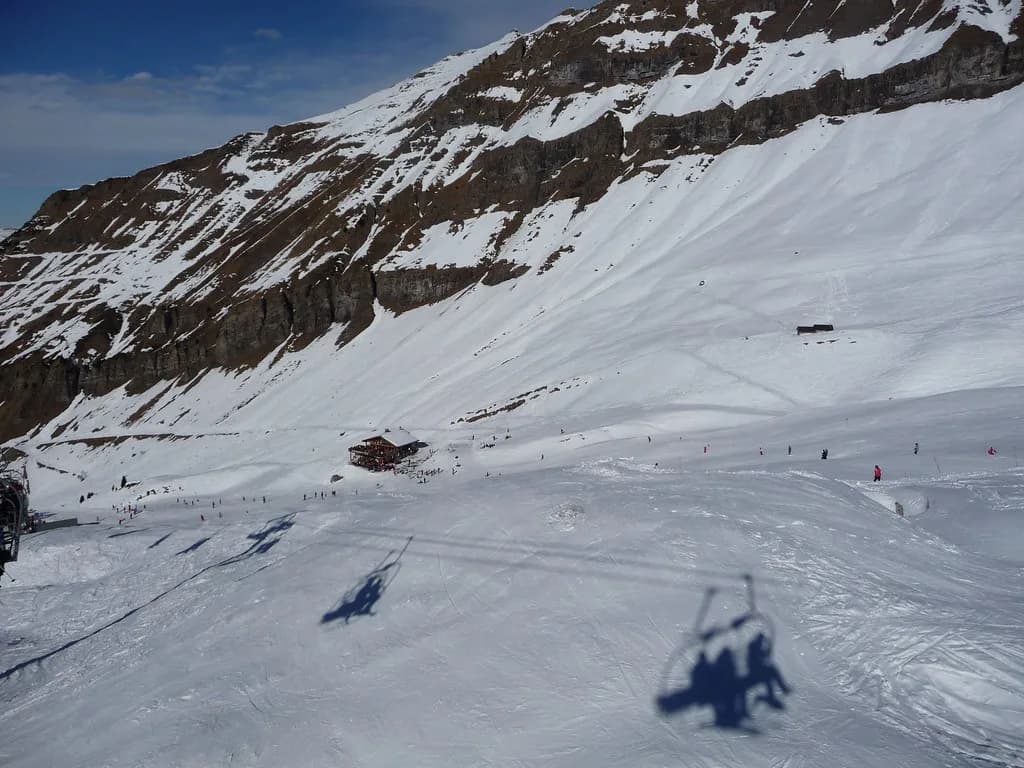
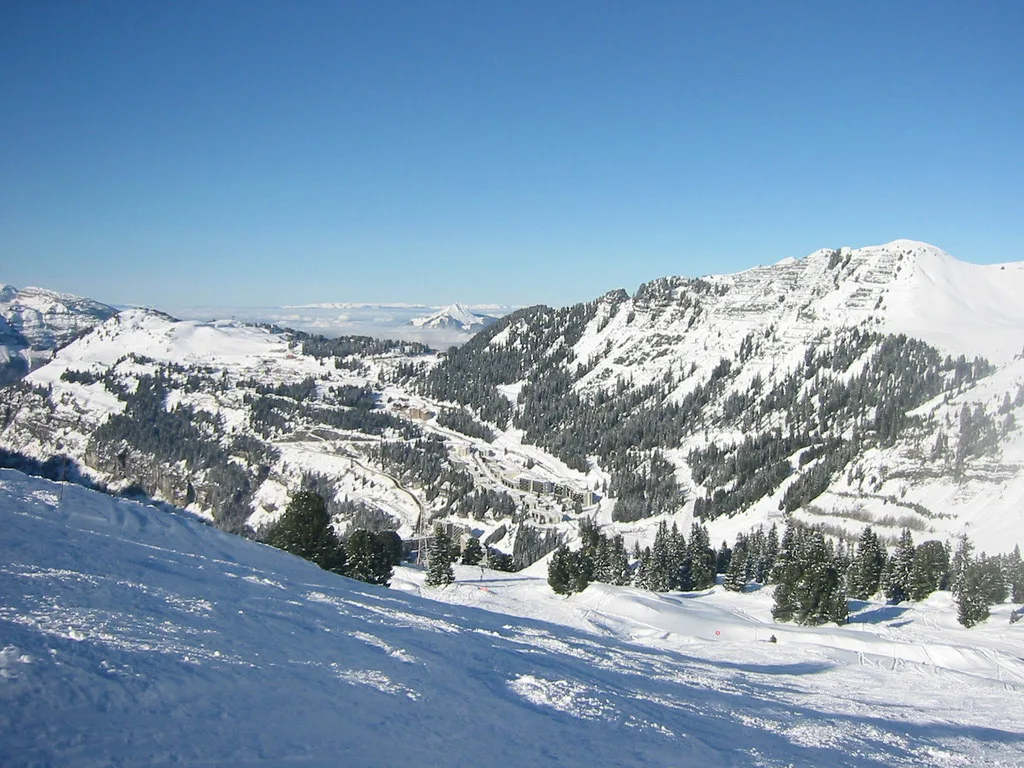
Within Flaine, the map shows two anchor sectors that shape how you ski the resort. Les Grandes Platières is the upper sector at the head of the main bowl, served by a gondola and giving onto the runs that fan back down toward the resort centre; Vernant is the separate sector below and to the side, with its own lifts and a chairlift link that ties it into the wider network.
For a first morning, that layout is simple to use. Warm up in the bowl beneath Les Grandes Platières, where the runs return to the resort, then move across to Vernant when you want a change of pitch and a route toward the rest of the massif.
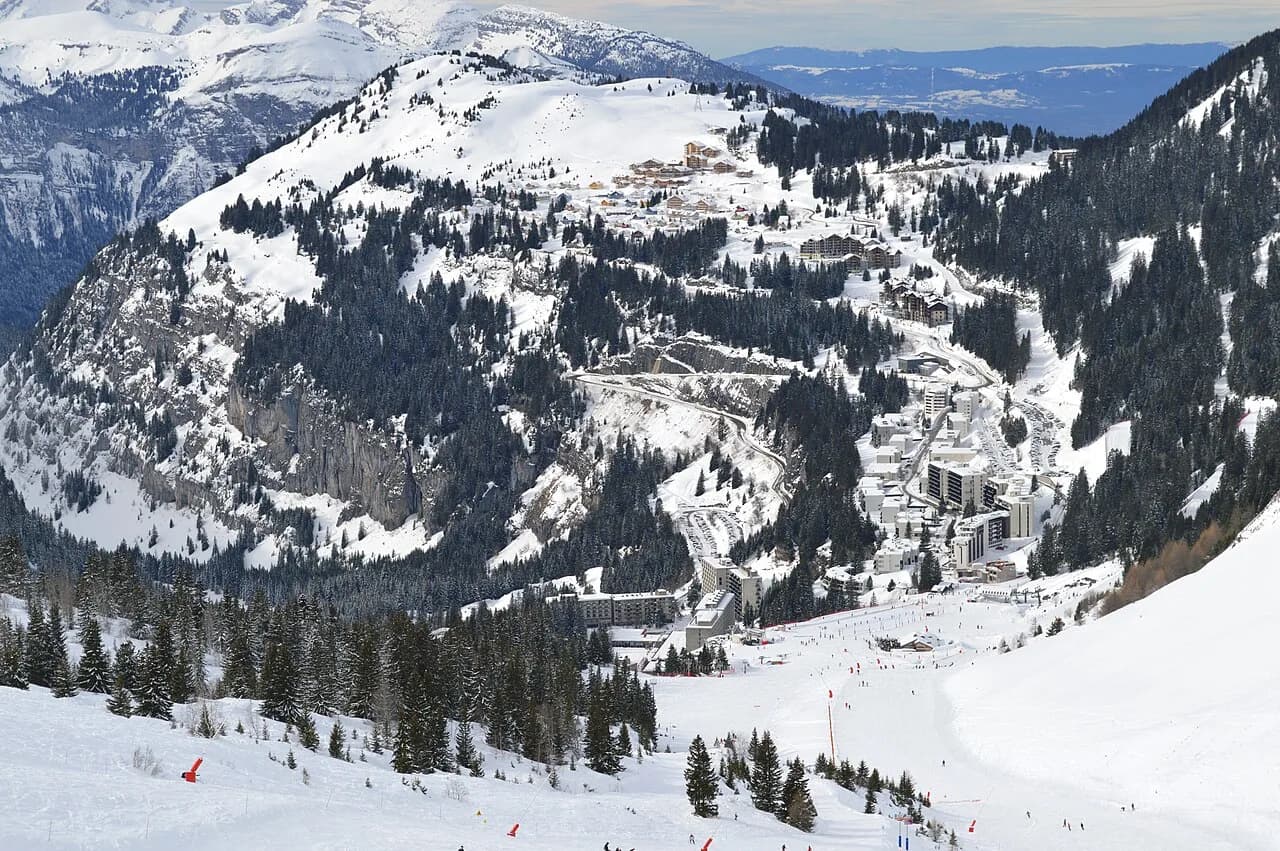
The bowl also explains Flaine's practical character: accommodation clusters at the foot of the slopes, so most days begin and end without a bus. If you want the full picture of terrain, ticketing and mountain logistics beyond the map, the Flaine Skiing Guide covers areas, tickets, lessons and equipment.
Reading the Map's Symbols: Gondolas, Chairlifts, Drag Lifts and Magic Carpets
The official map uses a consistent symbol set, and learning it takes a minute. Gondolas are marked separately from chairlifts, drag lifts and magic carpets, so you can see at a glance whether a sector relies on fast uplift or on surface lifts that suit short beginner loops.
Two more symbols earn their place in planning. Ticket desks are marked where lift passes are sold, and parking is shown at the base areas, which makes the map useful for deciding where to start a day if you are driving up from the valley rather than staying slope-side.
Run grading follows the four-colour progression from easy through medium and difficult to very difficult. Match the colours to your group honestly at the start of the week, then use the lift symbols to find the sectors where your chosen grade is concentrated.
Choosing a Base From the Map: Flaine Versus the Valley Villages
The map makes the core trade-off visible. Flaine's buildings sit directly against the slopes, so the ski-in/ski-out claim is genuine and a day starts the moment you step out; the valley villages sit lower, with their own lift bases and links up into the massif, and generally trade that doorstep convenience for a more traditional setting.
Samoëns and Les Carroz offer the largest village infrastructures and the shortest runs up to the connecting ridges; Morillon is the quieter middle option; Sixt is the most removed, reached through the Samoëns side and with the shortest season of the five. Pick your base from the lift lines you want to repeat, not from a brochure.
Whichever base you choose, confirm how the lift pass covers the linked area before booking, since products differ in scope. The Flaine ski pass page sets out product scope, durations and collection so you can align ticketing with your map plan.
Matching Runs to Ability Using the Map's Colour Grading
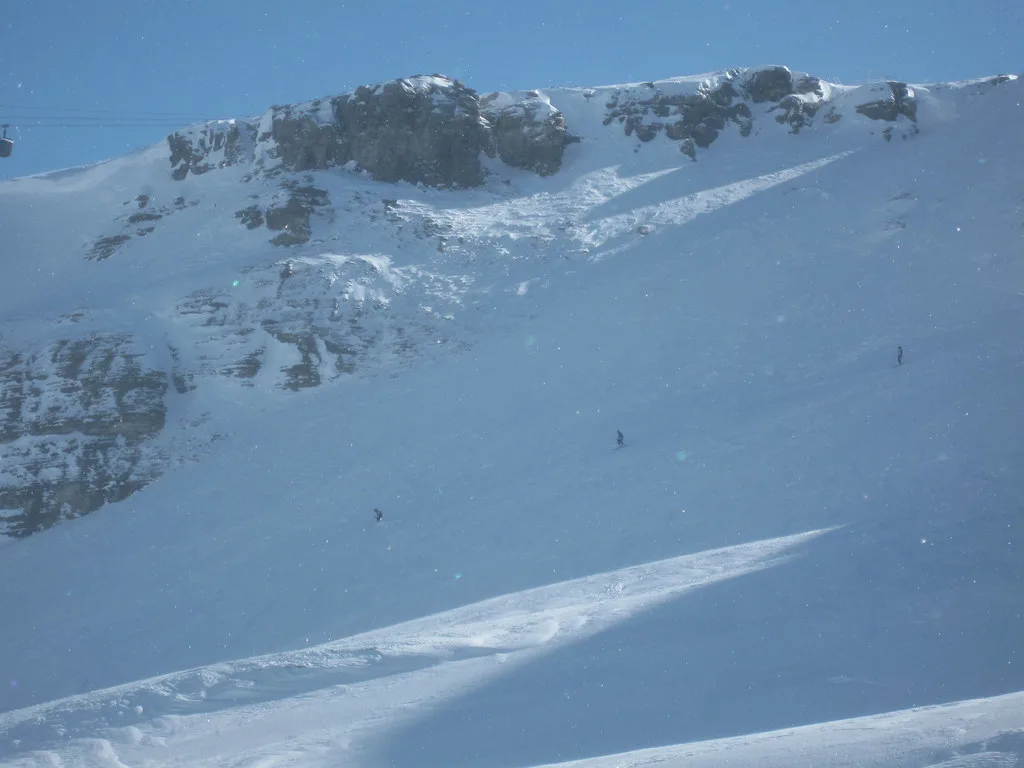
The map's four grades do most of the ability-matching work for you. Beginners are best placed in the lower zones served by magic carpets and drag lifts, where the gradients are gentle and the runs short; intermediates can build a day around the medium-graded pistes in the main Flaine bowl and the connecting routes; confident skiers head for the difficult and very difficult runs, which the map concentrates on the steeper upper and side terrain.
Groups of mixed ability should choose their meeting point before the day starts. A lift base with both a short learner loop and access to a longer descent lets stronger skiers take laps while others stay in the beginner zone, instead of splitting the group across the massif.
If your group needs instruction, book it alongside the plan rather than after arrival. Lessons at Flaine fill around peak weeks, and matching the lesson meeting point to your accommodation is easier when you have the map open. Lessons for adults and teenagers are covered in the Flaine Ski Lessons booking guide.
Planning a Circuit Day Versus a Flaine-Only Day
There are two distinct kinds of day on this map, and the better trip uses both. A Flaine-only day stays in the bowl and around Vernant, uses fewer lifts, and loses no time in transit; it suits fresh-snow mornings and short winter daylight.
A circuit day commits to the links across to Les Carroz, Samoëns, Morillon and, on the longest version, Sixt. Read the map to choose the crossing points and note that a circuit consumes hours in lift time rather than ski time, so it belongs mid-week on a settled-weather day, not on a powder morning.
The two-day split works well for most visitors. Keep day one local to learn the bowl's rhythm, then take the circuit once you know your pace, and finish the week back on Flaine's own slopes.
Where to Get the Map: Download, the Grand Massif App or Paper
There are three ways to carry the Flaine piste map. You can download it from the resort's piste-map page, use the Grand Massif app, or pick up a paper copy in resort; the Grand Massif FAQ states that paper copies cost €1 per map as part of a zero-paper, zero-waste policy.
The app adds the things a static sheet cannot: interactive piste maps with opening status, live webcams and snow reports, the events calendar and pass purchasing.
For planning at home, the PDF is the most practical option because you can zoom and annotate it. A paper copy still earns its place on the mountain, especially in cold weather when a phone battery drains fast.
Using Live Piste and Lift Status Alongside the Map
A printed map shows what could be open, not what is open today. The Grand Massif FAQ directs skiers to the Live info menu for the opening status of lifts and pistes across the whole ski area or by resort, with a tick for open and a cross for closed, mirrored in the Grand Massif app.
Use that status feed together with the map each morning. If a key link such as the Vernant connection to the wider network is closed, a circuit day collapses into a Flaine day, so check before committing to a long traverse and build an alternative in the bowl.
Lift times are published separately from the status page, which matters for late-afternoon returns. Confirm when the last lifts run on the sectors you plan to use, so a long circuit does not end with a costly taxi back around the massif.
Season Dates by Resort and Why They Matter for a Map-Led Plan
The map shows five resorts, but the calendar loosens the connections at the edges of the season. At the start, Flaine opens first, followed by Samoëns and Les Carroz, then Morillon and Sixt, so an early trip keeps you in one sector; at the end, Sixt closes first, then Morillon, then Samoëns and Les Carroz, with Flaine running longest.
For an April week, that pattern means Flaine is the surest base and the wider circuit may be partial. The Flaine ski season dates page tracks published calendars and resort-by-resort openings to help you line the map up with your dates.
Season dates do move, so confirm them on the official site before you book accommodation and passes. Once the dates are fixed, mark on the map which sectors are live during your week and plan the circuit day inside that window.
What to Book Early and How the Map Shapes That Decision
The map should drive your booking order. Choose the base first, because it fixes your daily lift access; decide the pass product second, matching its scope to whether you want Flaine-only skiing or the full linked area; then book equipment so it is waiting near your lift base rather than across the valley.
Peak school-holiday weeks put pressure on slope-side accommodation in Flaine and on hire shops close to the main lift bases. Reserve those earliest, and confirm collection hours against your arrival time. Flaine Ski hire branches, collection hours and services are set out in the hire guide.
If your dates are flexible, the map and the calendar together point to the sweet spot: mid-season weeks when all five sectors are running and the circuit is fully available.
Verdict: Who Gets the Most From the Flaine Piste Map
The map rewards skiers who plan in days rather than in runs. If you are staying a week with a mixed-ability group and want one big traverse plus several local days, the Flaine piste map is the single most useful document for your trip, and the Grand Massif app is its live companion.
If you are skiing only a couple of days from a valley base, focus on the lifts nearest your village and treat the broader map as background; the circuit is not worth the transit time on a short break.
Either way, download the map before you travel, note the sectors and symbols, and pair it with the live status feed on the morning itself. For comparison with how another large French resort presents its terrain, the Alpe d Huez piste map guide shows a different approach to map layout and status checks.
Plan Your Flaine Trip Around the Map
Start with the sectors, not the runs. Decide whether your week is Flaine-based or spread across the Grand Massif, check the published seasons for each village, and let the lift lines on the map pick your base and pass product.
Then build the days: one local bowl day to settle in, one circuit day when the status feed shows the links open, and the rest matched to ability and weather. That structure gets more out of the map than any list of named pistes.
Frequently Asked Questions
Where can I download the Flaine piste map?
The resort's official piste-map page offers a downloadable Grand Massif map, and the same map is available inside the Grand Massif app, which also carries live opening status and webcams. A paper version can be bought in resort for a small charge. Download it before you travel so you can annotate it at home.
Does the Flaine piste map cover the whole Grand Massif?
Yes. The official map covers Flaine together with Les Carroz, Morillon, Samoëns and Sixt, because staying in Flaine gives access to the linked Grand Massif ski area. That makes it a planning tool for circuits as well as a close-up of Flaine's own bowl and the Vernant sector.
What is Flaine like for skiing?
Flaine is a purpose-built resort with accommodation directly against the slopes, so most days start at the lift base. The map shows a main bowl beneath Les Grandes Platières plus the separate Vernant sector, and the lifts link onward to the rest of the Grand Massif for longer days out.
Is Flaine a good base for a late-season ski trip?
Flaine has the longest published season in the Grand Massif, running later into April than Samoëns, Les Carroz, Morillon and Sixt. In a late-April week, expect Flaine's own terrain to be the reliable choice and check live lift status before planning a wider circuit.
Does the Flaine lift pass cover the whole Grand Massif?
Pass products differ in scope, so check which area your chosen pass covers before buying. Match the ticket to your map plan: a Flaine-only week needs less than a circuit-focused week, and the pass page sets out product scope and collection details.
What do the symbols on the Flaine piste map mean?
The map separates gondolas, chairlifts, drag lifts and magic carpets with distinct symbols, marks ticket desks and parking at the base areas, and grades runs from easy through to very difficult. Reading those symbols first lets you match lifts to your group's ability and find the shortest route to the slopes.
When do the Grand Massif resorts open for the season?
Flaine opens first in early December and closes last in mid-April, with Samoëns and Les Carroz, then Morillon and Sixt following later in December and closing earlier in spring. Dates shift year to year, so confirm them on the official site before booking.
Should I use the app or a paper map on the mountain?
Use both. The app gives live piste and lift status, which a printed map cannot, while a paper copy works in cold weather when a phone battery drains. Download the map at home for planning, and carry the app for morning status checks.
Sources
Useful notes for your next ski trip
Optional updates to our Alpine resort guides.
You might also like
Continue reading
More guides you'll find useful